Strata Building Maintenance and Cleaning Guide
We have maintained strata buildings across Sydney long enough to know that the buildings with the best outcomes are the ones where cleaning and maintenance are treated as a single integrated program rather than separate line items. Our team services everything from heritage walk-ups in Newtown to modern towers in Chatswood, and every successful building has one thing in common — a structured approach to maintenance that protects asset values and keeps levies predictable. Our strata cleaning sydney crew works with strata managers to build detailed maintenance programs that address every common area, every surface type, and every compliance requirement in a single coordinated plan.
Why Integrated Maintenance Programs Outperform Piecemeal Approaches
We have watched buildings that manage cleaning, garden maintenance, and building repairs as separate contracts consistently underperform compared to those with integrated programs. The problem with piecemeal management is coordination — when the cleaning contractor does not know about upcoming painting works, they waste time cleaning surfaces that are about to be repainted. When the garden team is unaware of a planned car park pressure wash, they schedule irrigation for the same day. Our integrated approach coordinates all maintenance activities through a single management framework, which we have found reduces wasted effort by roughly 25 percent and catches cross-discipline issues that isolated contractors miss.
A Parramatta building we service demonstrated this clearly. The previous arrangement involved three separate contractors for cleaning, gardens, and repairs. When our team took over all three disciplines, we identified $12,000 in annual savings from eliminated overlap, coordinated scheduling, and early detection of maintenance issues during routine cleaning visits. The strata manager told us it was the single most impactful change the committee had made in five years of building management.
Building Condition Assessment and Maintenance Planning
We start every new maintenance relationship with a detailed building condition assessment. Our team inspects and documents every common area element — floors, walls, ceilings, windows, doors, fixtures, mechanical systems, external surfaces, and landscape features — and grades each on a 1 to 5 condition scale. This assessment becomes the foundation for a ten-year maintenance plan that maps routine, preventive, and capital works against a realistic budget forecast aligned with section 80 capital works fund requirements under the Strata Schemes Management Act 2015.
Our Bankstown team recently completed an assessment for a 1985-built 60-lot complex that revealed $180,000 in deferred maintenance — mostly waterproofing failures, corroded fire stairs, and deteriorated common area carpets. Without a structured plan, the committee would have faced a massive special levy. We helped them prioritise the most urgent items, spread costs across four years, and integrate ongoing cleaning and maintenance to prevent similar accumulation in the future. The committee approved a modest levy increase of $300 per lot per year rather than a one-off $3,000 special levy.
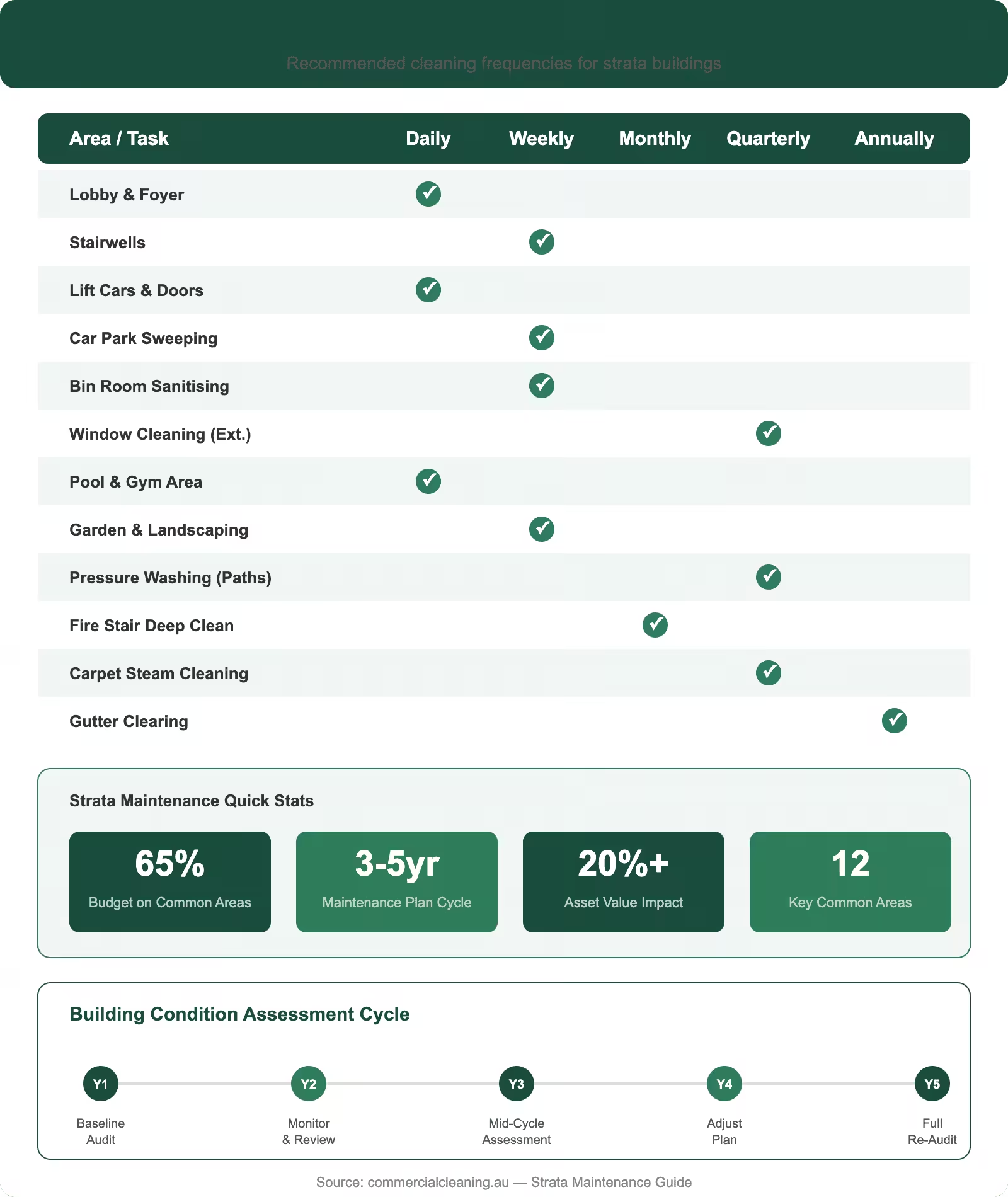
Strata Common Area Maintenance Schedule
| Area | Daily | Weekly | Monthly | Annual |
|---|---|---|---|---|
| Lobby & Foyer | Sweep, mop, glass | Deep mop, dust lights | Floor machine scrub | Strip & reseal |
| Lifts & Doors | Wipe panels + buttons | Full interior detail | Track & rail degrease | Deep restoration |
| Car Park | Litter patrol | Sweep + line check | Pressure wash bays | Full pressure + repaint |
| Pool/Gym | Sanitise surfaces | Deep clean equipment | Grout scrub | Full tile restoration |
| Bin Room | Hose down, deodorise | Deep scrub walls | Pest treatment | Full sanitise + repaint |
Cleaning Standards That Protect Building Assets
Strata Common Area Maintenance Schedule requires specific protocols that we tailor to each facility based on its layout, traffic, and compliance requirements. We position cleaning as preventive maintenance because that is exactly what professional cleaning delivers. Regular carpet extraction following AS 3733 extends carpet life by three to five years compared to vacuum-only maintenance. Proper hard floor cleaning with surface-appropriate products prevents etching, staining, and premature wear that leads to costly replacement. Car park pressure washing with hot water and containment removes oil contamination before it penetrates concrete pores and causes permanent damage. Every cleaning task we perform has a direct asset-protection function that we document and report to the strata manager.
Cleaning Standards That Protect Building Assets includes specific protocols that we tailor to each facility based on its layout, traffic, and compliance requirements. Our quality assurance system generates data that committees can use to make informed maintenance decisions. When our inspection reports show accelerating wear on corridor carpets in a Surry Hills building, we can project the replacement timeline and help the committee budget accordingly. When car park concrete shows signs of aggregate exposure despite regular washing, we recommend a penetrating sealer application that costs $1,200 and extends surface life by an estimated five years — saving the owners corporation $15,000 or more in premature resurfacing.
Compliance Management Across All Disciplines
We track compliance obligations across cleaning, safety, and environmental regulations in a single framework. This includes WHS compliance under SafeWork NSW requirements, fire safety maintenance under the Building Code of Australia, stormwater protection under the Protection of the Environment Operations Act 1997, and general maintenance obligations under the Strata Schemes Management Act 2015. Our compliance dashboard gives strata managers a single view of all regulatory requirements, their current status, and upcoming deadlines.
Our Eastwood team helped one strata manager prepare for a council compliance audit by producing complete documentation covering 18 months of cleaning records, chemical safety registers, waste disposal receipts, and fire safety maintenance logs — all from our integrated reporting system. The audit passed without a single finding, and the council inspector commented that it was the most thorough documentation they had seen from a residential strata building. That level of compliance protection is what integrated maintenance delivers.
Long-Term Value and Cost Control
Long-Term Value and Cost Control targets specific protocols that we tailor to each facility based on its layout, traffic, and compliance requirements. We track total maintenance costs across our portfolio and the data consistently shows that buildings on structured maintenance programs spend 20 to 35 percent less over a ten-year cycle compared to those operating reactively. The savings come from three sources: preventive maintenance catches problems when they cost hundreds rather than thousands, coordinated scheduling eliminates wasted effort and duplication, and early detection during routine cleaning visits prevents small issues from becoming major failures.
Our Homebush portfolio data from 2019 to 2024 shows average annual maintenance costs of $48 per square metre for buildings on our integrated program compared to $68 per square metre for comparable buildings managed reactively — a 29 percent saving that compounds over time. For a typical 2,000 square metre common area, that translates to $40,000 in savings over a decade. These are real numbers from real buildings, and they represent the strongest argument we can make for investing in professional, structured building maintenance.
For specific areas that deserve extra attention in your building, revisit our guide on carpark cleaning methods.

Frequently Asked Questions
How often should strata common areas be cleaned?
Buildings above 50 lots typically need daily lobby and lift cleaning with corridors and stairwells on a twice-weekly cycle. Smaller complexes under 30 lots can often manage with three visits per week. The right frequency depends on occupancy density, foot traffic patterns, and whether the building has high-use amenities like pools or gyms that require separate cleaning schedules under NSW Health guidelines.
Who is responsible for cleaning in a strata scheme?
The owners corporation holds responsibility for maintaining common property under the Strata Schemes Management Act 2015. In practice, the strata managing agent engages a cleaning contractor on behalf of the owners corporation. Individual lot owners are responsible for their own lots, but anything outside the lot boundary — lobbies, corridors, lifts, car parks, gardens — falls to the collective body.
What cleaning compliance requirements apply to strata buildings?
Strata schemes must meet WHS Act 2011 obligations as PCBUs when engaging workers, maintain slip-resistant floor surfaces to AS 4586 standards, follow chemical storage and labelling requirements under the Globally Harmonised System, and comply with Public Health Act 2010 requirements for shared amenities like pools. Fire stairwell maintenance falls under AS 1851 and the Environmental Planning and Assessment Regulation 2021.
Can strata cleaning reduce body corporate levies?
Proactive maintenance programs often reduce reactive repair costs over time. We’ve worked with strata managers in Pyrmont and Wolli Creek where scheduled cleaning programs prevented concrete degradation in car parks and grout deterioration in lobbies — issues that would have cost tens of thousands to remediate. The savings typically outweigh the cleaning contract cost within two to three years.
What should a strata cleaning contract include?
A detailed strata contract covers scope by area (lobby, lifts, stairwells, car park, bin rooms, amenities), frequency per area, product specifications with Safety Data Sheets, public liability insurance of at least $20 million, reporting requirements including photographic documentation, and clear provisions for ad-hoc services like post-event or storm damage cleanup. ISSA’s cleaning industry benchmarking standards provide a useful framework for defining service levels in strata contracts.
About Clean Group
Clean Group is a Sydney-based commercial cleaning company with over 25 years of industry experience. Founded by Suji Siv, our team of 50+ trained professionals services offices, warehouses, medical centres, schools, childcare facilities, retail stores, gyms, and strata properties across Sydney, Melbourne, and Brisbane.
We are active members of ISSA and the Building Service Contractors Association of Australia (BSCAA). Our operations align with ISO 9001 (Quality Management), ISO 14001 (Environmental Management), and ISO 45001 (Workplace Health and Safety) standards. We hold membership with the Green Building Council of Australia and use eco-friendly, TGA-registered cleaning products wherever possible.
Every Clean Group cleaner is police-checked, fully insured, and trained in safe work procedures under SafeWork NSW guidelines. We operate 7 days a week, including after-hours and weekend services, to minimise disruption to your business.
About the Author

Suji Siv
/

Hi, I'm Suji Siv, the founder, CEO, and Managing Director of Clean Group, bringing over 25 years of leadership and management experience to the company. As the driving force behind Clean Group’s growth, I oversee strategic planning, resource allocation, and operational excellence across all departments. I am deeply involved in team development and performance optimization through regular reviews and hands-on leadership.
Read More About Suji 0291607469
 Get A Quote