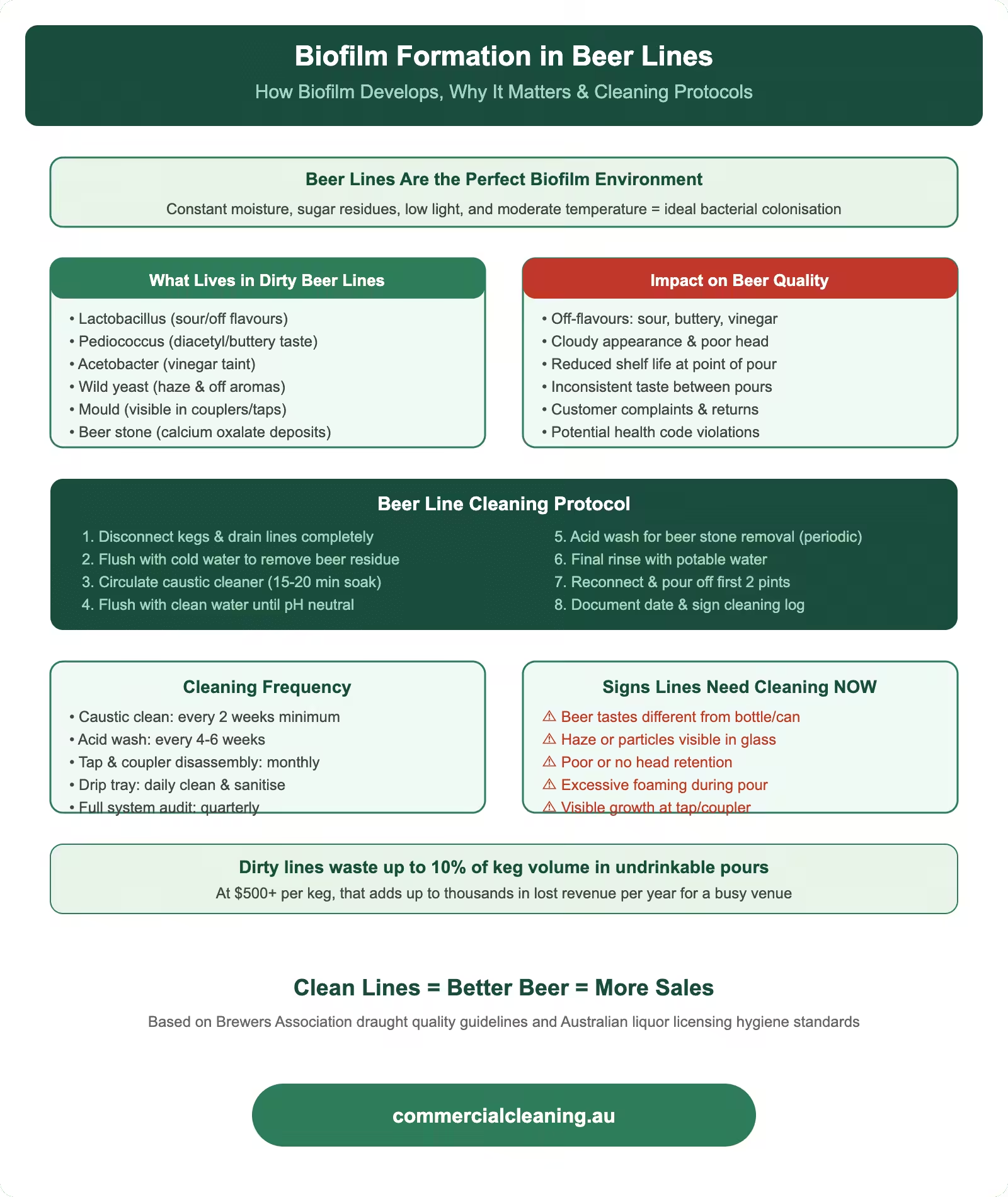
Our commercial pub cleaning team ensures quality. Draft beer systems deliver product through glycol-cooled lines (3–7 metres average) connected to couplers, taps, and pressure regulators. Biofilm—a slimy microbial layer of yeast, bacteria, and wild microorganisms—accumulates within weeks of installation. Inadequate cleaning degrades product quality, creates off-flavours, and poses food safety risks. Professional maintenance protocols confirm compliance and customer satisfaction.
Biofilm formation in beer lines showing contaminant types, beer quality impact, cleaning protocol, frequency schedule, and warning signs for line maintenance
Understanding Biofilm Formation in Beer Lines
Understanding Biofilm Formation in Beer Lines covers specific protocols that we tailor to each facility based on its layout, traffic, and compliance requirements. Yeast cells (Saccharomyces cerevisiae residue) and wild yeasts (Brettanomyces, Lactobacillus) colonise line walls creating biofilm within 5–10 days of operation. Biofilm slows beer flow, reduces carbonation, and imparts sour or vinegary off-flavours undetectable by untrained palates but noticeable to quality-conscious customers. Microbial growth accelerates in warm temperatures; lines stored above 15°C degrade faster than cold glycol-cooled systems.
Chemical cleaning alone doesn’t eliminate established biofilm; mechanical agitation combined with caustic and acid cycles removes both biofilm mass and mineral deposits. Neglected lines (30+ days without cleaning) require extended soak times and repeat acid cycles. Cost of system replacement (1200–2000 AUD) substantially exceeds routine cleaning (150–300 AUD quarterly), justifying preventive maintenance investment.
Seven-Day Cleaning Schedule for High-Volume Venues
Seven-Day Cleaning Schedule for High-Volume Venues involves specific protocols that we tailor to each facility based on its layout, traffic, and compliance requirements. Venues serving 400+ pints daily (pubs, beer halls, nightclubs) benefit from weekly cleaning cycles. Monday morning service after weekend trading requires immediate attention; 48–72 hours of residual liquid in warm lines promotes explosive microbial growth. Implement CIP (Clean-in-Place) systems operating Tuesday morning before service: caustic soda circulation (45 minutes), hot water rinse (20 minutes), acid cycle (45 minutes), and final rinse (30 minutes).
Tuesday-night post-service, flush lines with cold water; warm stagnant beer attracts flies and contaminants. Wednesday-Sunday, lines remain pressurised and chilled—minimal biofilm accumulation. This schedule maintains product quality and prevents rapid re-colonisation between cleanings. Staff training ensures procedure compliance; documentation (cleaning logs, chemical inventory) proves food safety commitment during health inspections.
Office Area Cleaning Frequency Guide
Area
Daily
Weekly
Monthly
Quarterly
Reception & Lobby
Vacuum, mop, wipe
Glass doors, furniture
Deep carpet clean
Window wash
Workstations
Surface wipe, bins
Monitor & keyboard
Drawer clean-out
Chair shampoo
Kitchen/Breakroom
Bench, sink, floor
Fridge, microwave
Deep degrease
Exhaust fan clean
Bathrooms
Full sanitise + restock
Grout scrub
Descale fixtures
Vent clean
Meeting Rooms
Table wipe, vacuum
AV equipment dust
Upholstery clean
Carpet extraction
Fourteen-Day Schedule for Moderate-Volume Venues
Office Area Cleaning Frequency Guide requires specific protocols that we tailor to each facility based on its layout, traffic, and compliance requirements. Pubs and clubs serving 100–250 pints daily tolerate 14-day cleaning cycles without product quality degradation. Fortnightly CIP cleaning (same caustic-acid protocol) maintains acceptable biofilm suppression. However, monitor product appearance weekly: cloudiness, foam collapse, or off-flavours indicate accelerated biofilm growth requiring early intervention.
Fourteen-Day Schedule for Moderate-Volume Venues includes specific protocols that we tailor to each facility based on its layout, traffic, and compliance requirements. Lower-volume venues often operate manual cleaning protocols using disconnect couplers and hand-pumped caustic/acid solutions. Cost savings ($50–100 per cleaning) offset CIP system investment recovery. Risk: procedure gaps (inadequate circulation time, incorrect chemical concentration) reduce efficacy. Contract specialised cleaners ($200–300 per visit) provide expertise and equipment reliability.
Caustic Soda (Sodium Hydroxide) Cycles
Caustic soda (sodium hydroxide, NaOH) at 2–4 percent concentration dissolves protein-based biofilm, yeast proteins, and fatty residues. Circulation temperature of 60–80°C accelerates saponification (fat breakdown). Duration: 45 minutes minimum ensures thorough penetration. Higher concentrations (above 5 percent) risk corrosion of aluminum components in coupler assemblies; follow equipment manufacturer recommendations strictly.
Safety protocols: caustic solutions cause severe skin/eye burns. Staff require gloves, aprons, and eyewash stations nearby. Handle with care; spills on concrete create permanent discolouration. Waste disposal: neutralise caustic using dilute acid (vinegar solution) before drain discharge. Comply with Environmental Protection Authority (EPA NSW) wastewater discharge standards; some venues require contractor waste hauling (500–1000 AUD annually).
Acid Cycles: Citric vs Phosphoric Acid
Citric acid (1–2 percent solution, 45 minutes circulation) removes mineral deposits (calcium, magnesium) and residual caustic residue. Food-safe and environmentally friendly, citric acid costs 80–150 AUD per cleaning cycle for high-volume systems. Phosphoric acid (0.5–1 percent, 30–45 minutes) provides stronger mineral dissolution but requires careful handling; skin contact causes irritation.
Temperature control critical: acid efficacy increases above 50°C but may damage seals if above 70°C. Post-acid rinse with cold water (15–20 minutes) removes acid residue; inadequate rinsing creates sour metallic taste in draft beer. Replace acid solution if discolour appears brown/orange indicating iron oxide dissolution from corroded components.
Glycol Chiller Maintenance
Glycol Chiller Maintenance focuses on specific protocols that we tailor to each facility based on its layout, traffic, and compliance requirements. Glycol-water coolant circulates through jackets surrounding beer lines, maintaining 2–4°C product temperature. Coolant degrades over 2–3 years; contamination by caustic/acid escape or water infiltration shortens lifespan. Quarterly coolant inspection detects discolouration (indicates contamination) or cloudiness (water presence). Annual coolant replacement (250–500 AUD) prevents compressor damage and system failure.
Chiller coil cleaning removes dust accumulation reducing cooling efficiency by 20–30 percent. Vacuum coils quarterly using dry methods; liquid contact risks electrical hazards. Monitor compressor operation; unusual noise indicates bearing wear requiring repair (1000–1500 AUD). Preventive maintenance extends system life 10+ years; neglect leads to replacement costs (3000–5000 AUD).
CIP System Operation and Troubleshooting
Commercial CIP (Clean-in-Place) systems automate solution circulation through beer lines without disconnection. Tanks hold caustic and acid concentrates; automated pumps dispense calculated volumes into hot water. Timers control cycle duration. CIP investment (3000–5000 AUD) recovers within 12–18 months through labour savings and consistent cleaning quality.
Troubleshooting: inadequate pressure (below 5 PSI) indicates pump failure or line blockage; bleeding air from pump intake resolves minor air locks. Chemical odours during cycling indicate leaking hoses (inspect copper tubing for cracks). Failed float switches prevent automatic fill; manual fill protocols maintain system operation until repair (400–600 AUD). Document maintenance (repair dates, costs, parts replaced) for warranty coverage.
Tap and Coupler Inspection
Tap handles and coupler stems accumulate beer residue hardening into crusty deposits. Weekly disassembly and cleaning (15-minute process) prevents restriction and leaks. Coupler seals degrade under caustic/acid exposure; inspect quarterly for cracks or hardening. Replacement seals cost 50–100 AUD; full coupler replacement (200–400 AUD each) becomes necessary if internal corrosion occurs.
Pressure regulator function testing ensures correct CO2 delivery and product carbonation. Regulators set between 10–15 PSI for CO2 and 15–20 PSI for mixed gas. Gauges drifting or showing no pressure indicate internal seal failure requiring replacement (300–500 AUD). Quarterly professional testing ($150–250) identifies issues before product quality degradation.
Frequently Asked Questions
1. What off-flavours indicate beer line contamination? Vinegary or acetone notes suggest Lactobacillus infection. Musty, cardboard-like flavours indicate wild yeast (Brettanomyces). Metallic taste points to corroded coupler internals or inadequate acid rinse. Flat beer (rapid carbonation loss) reflects line pressure leaks or regulator malfunction. Any flavour deviation warrants immediate system flushing and CIP cleaning.
2. Can I use vinegar instead of commercial caustic and acid solutions? Vinegar (5 percent acetic acid) cleans moderately but lacks caustic strength for heavy biofilm. Cost savings ($20–40 per cleaning) versus commercial solutions ($150–250) come with reduced efficacy. CIP systems require precise chemical concentration measurement; vinegar density and concentration vary unpredictably. Professional cleaning justifies cost; shortcuts risk product quality and customer safety.
3. How often should draught systems be professionally serviced? Annual detailed service (500–800 AUD) includes coupler/tap disassembly, seal inspection, pressure regulator testing, and chiller maintenance. Monthly monitoring (daily visual checks, weekly taste tests) identifies issues between services. Professional contractors provide insurance coverage and warranty on work; DIY approaches save cost but forfeit liability protection if contamination incidents occur.
4. What water quality impacts draught system performance? Hard water (high calcium/magnesium) accelerates mineral deposit formation requiring more frequent acid cycles. Chlorinated municipal water tastes unpleasant in final product; filtering reduces chlorine. Iron-rich water (rust staining) corrodes couplers and taps. Install water softeners (1000–2000 AUD) and carbon filters (500–800 AUD) if water quality issues exist. Test water annually ($100–200); results guide system maintenance priorities.
5. Is beer line cleaning required by food safety legislation? No specific legislative frequency mandate exists, but Section 138 (NSW Liquor Act 2007) requires hygienic venue conditions. Food Standards Australia and New Zealand (FSANZ) code requires food contact equipment cleanliness. Liquor & Gaming NSW inspectors assess product quality and system hygiene; contaminated draught beer triggers compliance violations. Documentation (cleaning logs, chemical records) demonstrates commitment to standards.
Professional beer line maintenance ensures product quality, customer safety, and regulatory compliance. Scheduled caustic-acid cleaning combined with equipment inspection prevents costly failures and protects venue reputation. Invest in systems preventing biofilm before it damages equipment and brand.
For more insights, explore our article on cleaning guide for hotels.
Clean Group is a Sydney-based commercial cleaning company with over 25 years of industry experience. Founded by Suji Siv, our team of 50+ trained professionals services offices, warehouses, medical centres, schools, childcare facilities, retail stores, gyms, and strata properties across Sydney, Melbourne, and Brisbane.
We are active members of ISSA and the Building Service Contractors Association of Australia (BSCAA). Our operations align with ISO 9001 (Quality Management), ISO 14001 (Environmental Management), and ISO 45001 (Workplace Health and Safety) standards. We hold membership with the Green Building Council of Australia and use eco-friendly, TGA-registered cleaning products wherever possible.
Every Clean Group cleaner is police-checked, fully insured, and trained in safe work procedures under SafeWork NSW guidelines. We operate 7 days a week, including after-hours and weekend services, to minimise disruption to your business.
Hi, I'm Suji Siv, the founder, CEO, and Managing Director of Clean Group, bringing over 25 years of leadership and management experience to the company. As the driving force behind Clean Group’s growth, I oversee strategic planning, resource allocation, and operational excellence across all departments. I am deeply involved in team development and performance optimization through regular reviews and hands-on leadership.