Cleaning Audit and Quality Assurance Guide for Offices
We run office cleaning services audits every week across our Sydney portfolio, and the single most important thing we have learned is that an audit is only as good as the system behind it. Our commercial cleaners sydney teams operate under a quality assurance framework that we built from scratch over twelve years, refining it after every contract cycle until it became the backbone of every client relationship we maintain. This guide explains exactly how we approach cleaning audits and why the methodology matters more than the score.
What Is a Cleaning Quality Audit?
We define a cleaning quality audit as a structured, repeatable assessment that measures how well the delivered service matches the agreed standards. Our audits are not opinion-based walk-throughs—they follow a documented protocol with defined scoring criteria, sampling rules, and evidence requirements. We developed this approach after witnessing too many audits that produced different results depending on who held the clipboard, which made the data useless for trend analysis.
We align our audit framework with AS/NZS ISO 19011 guidelines for auditing management systems, because the principles of competence, impartiality, and evidence-based conclusions apply just as much to cleaning inspections as they do to quality management audits. Our supervisors in Willoughby complete an internal auditor training module based on ISO 19011 before they conduct their first solo inspection, which ensures consistency across our entire team. When a Chatswood West facility manager asked how we maintained uniform audit quality across fifteen sites, ISO 19011 alignment was our answer.
We distinguish between compliance audits and improvement audits because they serve different purposes. Compliance audits verify that contracted tasks were completed to the agreed standard—they produce a pass-fail result. Improvement audits dig into the root causes of deficiencies and generate actionable recommendations. Our standard program runs compliance audits weekly and improvement audits quarterly, giving clients both the accountability they need and the insights they want.
Audit Frequency and Methodology
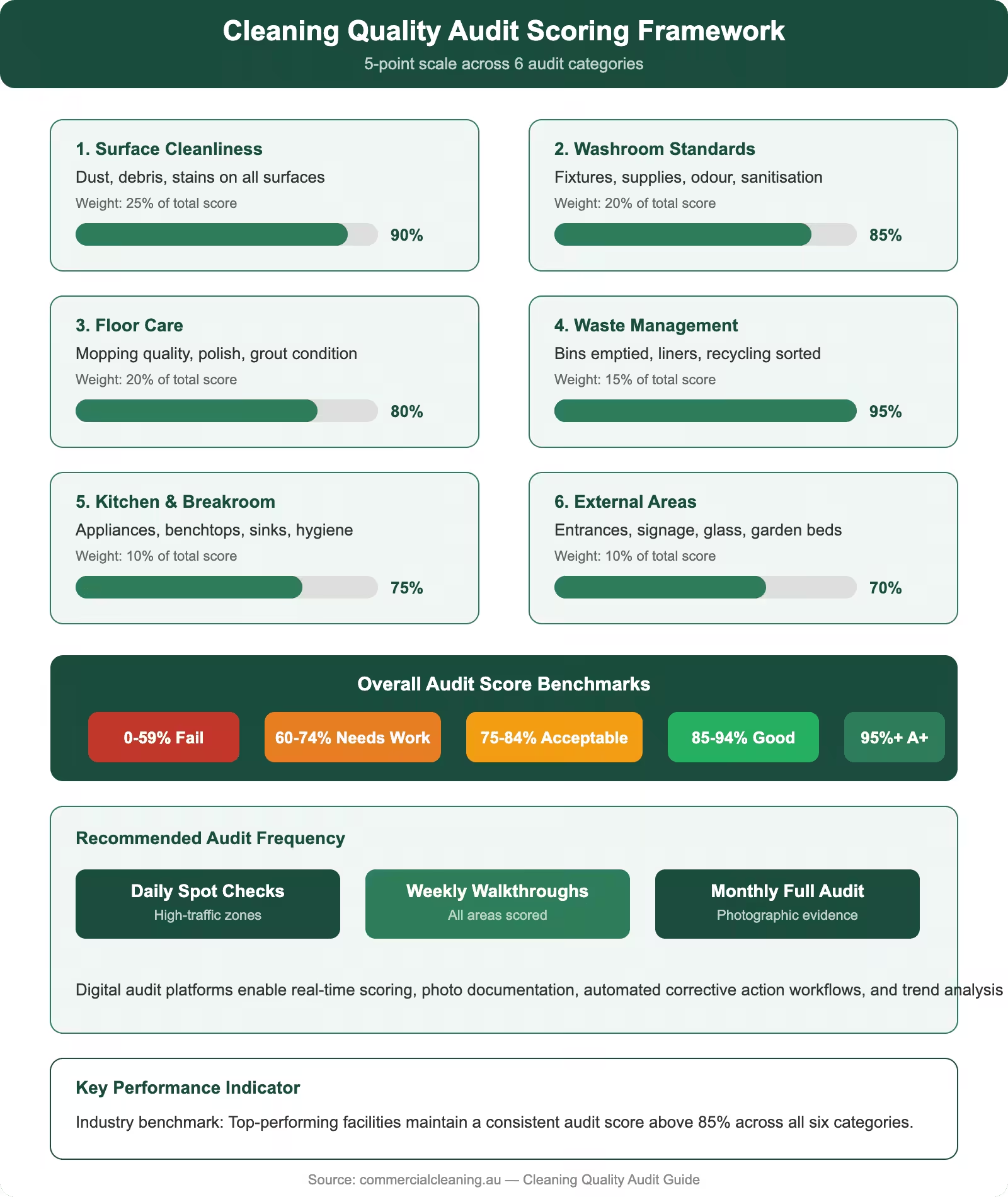
We conduct weekly compliance audits using a randomised zone-sampling methodology that ensures every area is assessed at least twice per month. Our sampling protocol selects 25 percent of all zones at each visit, rotating through the building systematically rather than randomly—because we have found that true randomisation occasionally leaves zones unaudited for six weeks, which is too long for meaningful quality control. Our Willoughby contracts use a four-week rotation matrix that we share with the facility manager so they can verify coverage.
We score each zone on a 50-point checklist covering surface cleanliness (15 points), floor condition (10 points), restroom hygiene (10 points), waste management (5 points), consumable levels (5 points), and overall presentation (5 points). Our checklist weights surface cleanliness most heavily because our data from Castlecrag commercial buildings shows that surface deficiencies generate 62 percent of all tenant complaints—a ratio that held consistent across three years of complaint data.
We invested $4,200 in building a detailed audit program that includes the checklist development, auditor training, digital platform configuration, and the first six months of calibration testing. That investment covered our entire lower North Shore portfolio and produced a system that now runs with minimal overhead. Our Northbridge clients told us the program paid for itself within the first quarter through reduced complaint-handling costs alone.
Office Area Cleaning Frequency Guide
| Area | Daily | Weekly | Monthly | Quarterly |
|---|---|---|---|---|
| Reception & Lobby | Vacuum, mop, wipe | Glass doors, furniture | Deep carpet clean | Window wash |
| Workstations | Surface wipe, bins | Monitor & keyboard | Drawer clean-out | Chair shampoo |
| Kitchen/Breakroom | Bench, sink, floor | Fridge, microwave | Deep degrease | Exhaust fan clean |
| Bathrooms | Full sanitise + restock | Grout scrub | Descale fixtures | Vent clean |
| Meeting Rooms | Table wipe, vacuum | AV equipment dust | Upholstery clean | Carpet extraction |
Digital Audit Platforms and Photographic Evidence
Office Area Cleaning Frequency Guide requires specific protocols that we tailor to each facility based on its layout, traffic, and compliance requirements. We moved from paper-based audits to a digital platform in 2019 because we needed timestamped, geotagged evidence that could withstand scrutiny during contract disputes. Our auditors use tablet-based inspection software that captures a photograph of every deficiency at the point of discovery, tagged with the zone, the date, the time, and the GPS coordinates. We have found that photographic evidence eliminates the “it wasn’t like that when I checked” disputes that plagued our paper-based system.
We configure our digital platform to generate automated alerts when a zone’s score drops below the agreed threshold for two consecutive audits. Our Willoughby account manager receives these alerts in real time, which means corrective action begins before the monthly report lands on the facility manager’s desk. We also use the platform’s trend-analysis module to produce rolling twelve-month performance charts that make seasonal patterns and long-term improvements visible at a glance.
We store all audit data for a minimum of seven years in compliance with our record-retention policy, which aligns with the NSW Limitation Act 1969 timeframe for contractual claims. Our Chatswood West clients appreciated this retention commitment because it means historical performance data is always available for tender evaluations, lease negotiations, or dispute resolution—situations where credible evidence from years past can make a material difference.
KPIs and Service Level Agreements
KPIs and Service Level Agreements addresses specific protocols that we tailor to each facility based on its layout, traffic, and compliance requirements. We tie every audit metric directly to the SLA so that scores have contractual consequences rather than being advisory numbers that both parties can ignore. Our standard KPI set includes defect rate per inspection, average zone score, critical-deficiency count, corrective-action closure time, and occupant complaint rate. We report these KPIs monthly in a dashboard format that our Castlecrag clients use as the primary agenda item in their quarterly facilities review meetings.
We set KPI thresholds collaboratively with each facility manager during the contract setup phase, because we have learned that imposed targets generate resistance rather than buy-in. Our Willoughby portfolio uses a tiered threshold system—green for scores above 90, amber for 80 to 89, and red for below 80—which gives both parties a shared visual language for performance conversations. We benchmark these thresholds against AS/NZS ISO 19011 principles of risk-based auditing, focusing tighter thresholds on high-risk zones like food preparation areas and medical suites.
Root Cause Analysis for Recurring Deficiencies
We conduct root cause analysis for any deficiency that recurs three times within a rolling eight-week window, because repeated failures indicate a systemic issue rather than an isolated lapse. Our analysis framework uses the “5 Whys” technique adapted for cleaning operations—asking why the deficiency occurred, why it was not caught earlier, why the previous corrective action failed, why the training or supervision gap existed, and why the system allowed the gap to persist. We have found that this structured approach consistently identifies solutions that one-off corrective actions miss.
We document every root cause analysis in a register that we review quarterly with the facility manager, because patterns across multiple analyses often reveal broader operational issues. Our Northbridge register showed that four apparently unrelated deficiencies—streaky glass, inconsistent floor finish, restroom odour complaints, and slow consumable replenishment—all traced back to a single root cause: the evening shift starting thirty minutes late due to a transport scheduling conflict. We resolved the transport issue and all four deficiencies disappeared within two weeks.
We share root cause findings openly with our crews because transparency drives ownership. Our Castlecrag team holds a monthly “lessons learned” session where the supervisor presents anonymised root cause summaries and the team discusses preventive measures. We have found that crews who understand why a deficiency matters—not just that it was flagged—take personal responsibility for preventing recurrence.
Third-Party Auditing and Independent Verification
We welcome third-party audits because independent verification strengthens the credibility of our quality program. Our contracts include a standing clause that allows the facility manager to commission an independent audit at any time, with the cost shared equally between both parties. We have participated in third-party audits across our Willoughby and Chatswood West portfolios, and our scores have consistently matched or exceeded our internal audit results—which validates the rigour of our in-house methodology.
We recommend that facility managers commission an independent audit at least annually, timed to coincide with the contract anniversary review. Our experience tells us that third-party validation is most valuable when it covers the same zones and uses a compatible scoring methodology, so we provide our audit protocol to the independent assessor in advance. We also suggest that the third-party auditor interviews a sample of building occupants, because external interviewers often elicit more candid feedback than internal surveys.
We use third-party audit results as a calibration tool for our internal program, comparing scores zone by zone to identify any areas where our own assessors may have developed blind spots. Our ISO 19011-aligned auditor training includes a calibration module specifically designed to address this risk, but we have found that real-world cross-referencing against independent results is the most effective way to maintain scoring accuracy over time. For a practical approach to understanding what your cleaning team should deliver, read our cleaner duties guide.
Frequently Asked Questions
About Clean Group
Clean Group is a Sydney-based commercial cleaning company with over 25 years of industry experience. Founded by Suji Siv, our team of 50+ trained professionals services offices, warehouses, medical centres, schools, childcare facilities, retail stores, gyms, and strata properties across Sydney, Melbourne, and Brisbane.
We are active members of ISSA and the Building Service Contractors Association of Australia (BSCAA). Our operations align with ISO 9001 (Quality Management), ISO 14001 (Environmental Management), and ISO 45001 (Workplace Health and Safety) standards. We hold membership with the Green Building Council of Australia and use eco-friendly, TGA-registered cleaning products wherever possible.
Every Clean Group cleaner is police-checked, fully insured, and trained in safe work procedures under SafeWork NSW guidelines. We operate 7 days a week, including after-hours and weekend services, to minimise disruption to your business.
How often should commercial cleaning be audited?
We recommend weekly compliance audits using a rotational zone-sampling methodology, supplemented by quarterly improvement audits that focus on root cause analysis. This frequency ensures that deficiencies are caught early and systemic issues are addressed before they affect occupant satisfaction.
What audit score should a commercial cleaning contract achieve?
A well-managed commercial cleaning contract should consistently achieve zone scores above 90 out of 100 and maintain a defect rate below 5 percent. We set these benchmarks based on data from comparable facilities rather than aspirational targets, and we use a green-amber-red threshold system to make performance immediately visible.
Can tenants participate in cleaning quality assessments?
We actively encourage tenant participation through quarterly occupant satisfaction surveys and by inviting tenant representatives to attend formal audit sessions. Tenant feedback captures experiential quality dimensions that instrument-based audits miss, and their involvement builds confidence in the cleaning program.
What happens when a cleaning audit reveals consistent underperformance?
We trigger a formal root cause analysis for any deficiency that recurs three times within eight weeks. The analysis uses a structured 5 Whys framework to identify systemic causes, and we document findings in a register that is reviewed quarterly with the facility manager. Corrective actions are time-bound and verified at the next scheduled audit.
About the Author

Suji Siv
/

Hi, I'm Suji Siv, the founder, CEO, and Managing Director of Clean Group, bringing over 25 years of leadership and management experience to the company. As the driving force behind Clean Group’s growth, I oversee strategic planning, resource allocation, and operational excellence across all departments. I am deeply involved in team development and performance optimization through regular reviews and hands-on leadership.
Read More About Suji 0291607469
 Get A Quote