AI and IoT in Cleaning — How Technology Is Transforming the Industry
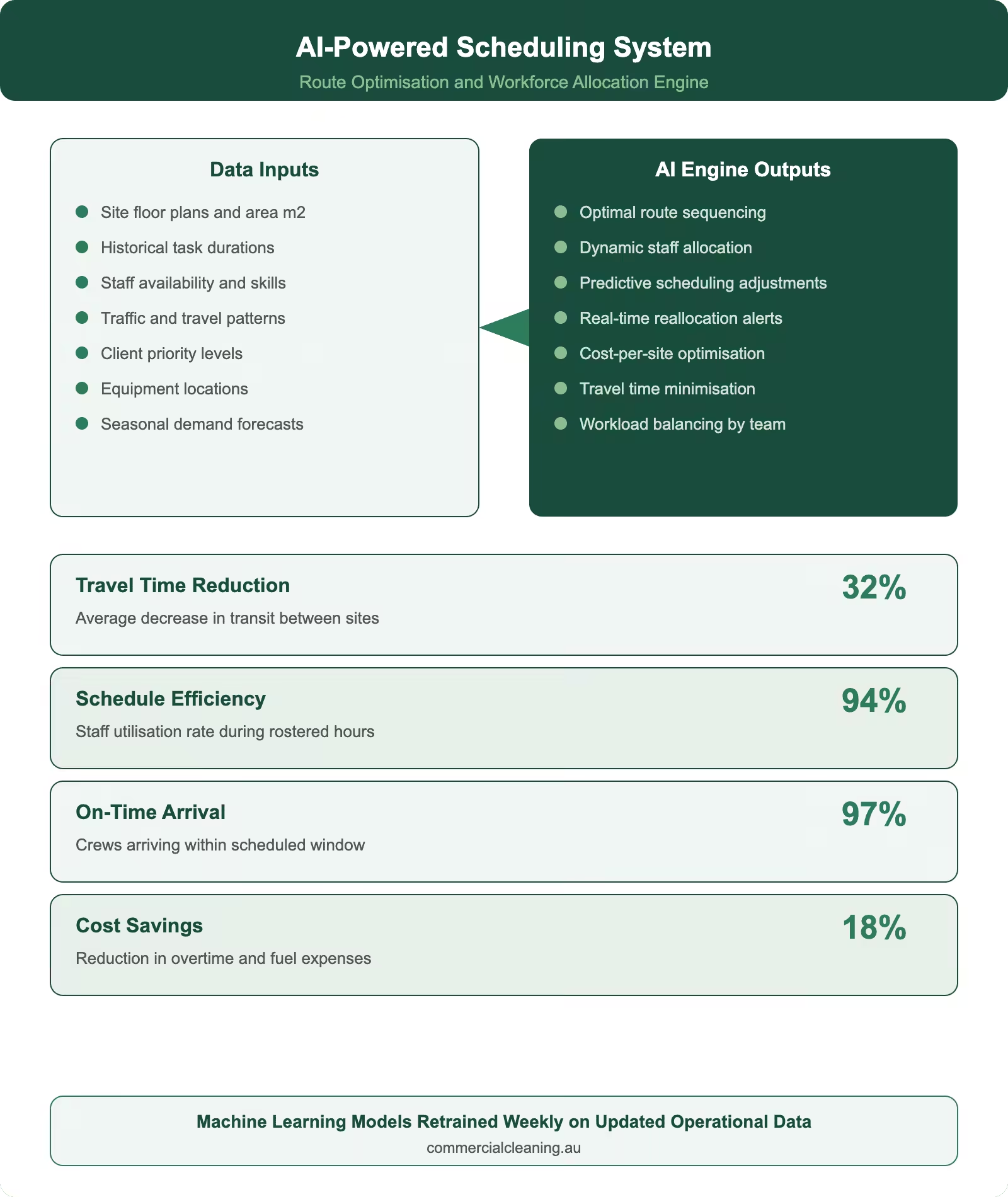
We have watched artificial intelligence and the Internet of Things transform almost every industry over the past decade, and commercial cleaning sydney is no exception. Our team began integrating smart sensors and connected devices into our cleaning operations three years ago, and the impact on efficiency, accountability and client satisfaction has exceeded our expectations. We invest in cleaning equipment australia businesses can rely on, and that now includes IoT-enabled dispensers, AI-powered scheduling platforms and real-time occupancy sensors that fundamentally change how we allocate labour and resources across our contracts in suburbs like Dee Why, Brookvale and Manly Vale.
How IoT Sensors Are Changing Commercial Cleaning
We have deployed occupancy sensors in washrooms, meeting rooms and common areas across several of our larger contracts, and the data they provide has revolutionised our cleaning schedules. Our team used to clean every washroom on a fixed timetable — every two hours regardless of usage — but our sensor data revealed that some washrooms received ten times more traffic than others on the same floor. We now use real-time usage data to trigger cleaning tasks when actual occupancy thresholds are reached, which means our cleaners focus their time where it matters most. We have measured a 25-percent reduction in unnecessary cleaning visits on sensor-equipped sites, freeing up labour hours that we redirect to higher-value tasks like deep cleaning and detail work that our clients genuinely notice.
AI-Powered Scheduling and Route Optimisation
AI-Powered Scheduling and Route Optimisation involves specific protocols that we tailor to each facility based on its layout, traffic, and compliance requirements. We implemented an AI scheduling platform in 2023 that analyses historical cleaning data, building occupancy patterns and task completion times to generate optimised daily work plans for our crews. Our team initially resisted the change because they were accustomed to supervisor-driven scheduling, but within two months our crew leaders acknowledged that the AI-generated routes reduced their total travel time between zones by approximately 18 percent. We have found that the platform also identifies staffing inefficiencies that human schedulers miss — such as overlapping tasks between floors or cleaners waiting idle during tenant-restricted access periods. Our operations across the Dee Why and Brookvale commercial precincts were the first to adopt the system, and those sites now consistently achieve the highest productivity metrics in our portfolio.
Commercial Cleaning Equipment Comparison
| Equipment | Coverage | Cost Range | Best For | Maintenance Cycle |
|---|---|---|---|---|
| Ride-On Scrubber | 3,000–5,000 m²/hr | $18,000–$45,000 | Large open floors | Weekly pads + monthly service |
| Walk-Behind Scrubber | 1,000–2,500 m²/hr | $5,000–$15,000 | Medium areas | Bi-weekly pads |
| Backpack Vacuum | 500–1,200 m²/hr | $600–$1,800 | Offices, stairs | Bag change + filter clean |
| Carpet Extractor | 200–800 m²/hr | $3,000–$12,000 | Deep carpet cleaning | Post-use flush + monthly |
| Pressure Washer | 50–200 m²/hr | $800–$5,000 | External, concrete | Quarterly nozzle + pump |
Connected Dispensers and Consumable Monitoring
Commercial Cleaning Equipment Comparison requires specific protocols that we tailor to each facility based on its layout, traffic, and compliance requirements. We have installed IoT-connected soap, sanitiser and paper towel dispensers in several client buildings, and these devices report fill levels directly to our supervisors’ mobile dashboards. Our team no longer needs to physically check every dispenser during routine rounds — instead, we receive alerts when stock drops below 20 percent, allowing us to schedule refills efficiently rather than reactively. We invested approximately $2,650 in equipping one 12-storey commercial building in Manly Vale with connected dispensers, and the return on that investment came within seven months through reduced consumable waste and elimination of empty-dispenser complaints from building occupants. Under AS 62443.1, which addresses security for industrial automation and control systems, we confirm all our IoT devices operate on isolated network segments with encrypted data transmission, because we take cybersecurity seriously even in cleaning technology deployments.
Robotic Cleaning Machines in Commercial Settings
Connected Dispensers and Consumable Monitoring includes specific protocols that we tailor to each facility based on its layout, traffic, and compliance requirements. We have trialled autonomous floor scrubbers and robotic vacuum units on several large-format sites, and our assessment is that the technology is genuinely useful for specific applications but not yet ready to replace human cleaners in complex environments. Our team found that robotic scrubbers perform exceptionally well on large unobstructed floor areas — warehouse aisles, empty car parks and wide corridors — where they can operate during off-hours without human supervision. We measured consistent cleaning coverage rates of 2,500 square metres per hour from our robotic scrubber, compared to approximately 1,800 square metres per hour from a skilled operator using a ride-on machine. However, we also found that robots struggle with obstacles, furniture layouts that change frequently and areas requiring detail attention like corners and edges. Our current approach uses robotics for bulk floor coverage and human operators for everything that requires judgement, adaptability and attention to detail.
Data-Driven Quality Assurance and Reporting
Robotic Cleaning Machines in Commercial Settings addresses specific protocols that we tailor to each facility based on its layout, traffic, and compliance requirements. We use digital inspection platforms that allow our supervisors to complete quality audits on tablets with photo documentation, timestamped checklists and automatic client reporting. Our team photographs completed tasks in real time, and our system compiles these into weekly quality reports that clients can access through a secure portal. We have found that this level of transparency has virtually eliminated disputes about cleaning standards — when a client questions whether a task was completed, we can show them exactly when it happened, who did it and what the result looked like. Our operations across Brookvale and Dee Why generate approximately 1,200 inspection data points per week, and we analyse this data monthly to identify trends, training needs and areas where our processes can improve.
Preparing Your Business for Cleaning Technology Adoption
Data-Driven Quality Assurance and Reporting targets specific protocols that we tailor to each facility based on its layout, traffic, and compliance requirements. We advise any business considering technology adoption to start small and measure results before committing to large-scale deployment. Our own journey began with a single pilot site where we tested occupancy sensors in three washrooms, and we expanded only after we had six months of data proving the operational benefits. We have found that the biggest barrier to adoption is not cost or complexity — it is change management within cleaning teams who may feel threatened by automation. Our approach has been to position technology as a tool that makes our people’s jobs easier and more focused rather than as a replacement for human labour, and we have invested heavily in training our crews to work alongside smart systems rather than resist them.
We believe the cleaning industry is at a genuine inflection point where technology separates progressive operators from those who will struggle to compete on efficiency and accountability. Our team continues to evaluate new platforms and devices as they enter the Australian market, and we encourage every facility manager to explore how technology can enhance their building maintenance programs. For a breakdown of the crew competencies that support these systems, see our guide on cleaner classification standards.
Frequently Asked Questions
How does AI improve commercial cleaning operations?
We use AI scheduling platforms that analyse occupancy patterns, task history and completion times to generate optimised daily work plans. Our experience shows an 18-percent reduction in travel time between zones and identification of staffing inefficiencies that human schedulers typically miss.
What IoT sensors are useful in commercial cleaning?
We deploy occupancy sensors in washrooms and common areas, connected soap and paper dispensers that report fill levels, and digital inspection platforms for quality audits. Our sensor data has reduced unnecessary cleaning visits by 25 percent on equipped sites.
How much does cleaning technology cost to implement?
We invested approximately $2,650 to equip one 12-storey building with connected dispensers, achieving return on investment within seven months. Costs vary significantly based on building size and technology scope, but we recommend starting with a small pilot to prove value before scaling.
Can robots replace human cleaners?
We have trialled autonomous floor scrubbers and found them excellent for large unobstructed areas like warehouse aisles and wide corridors, covering 2,500 square metres per hour. However, robots struggle with obstacles, changing layouts and detail work, so we use them alongside human operators rather than as replacements.
Is cleaning technology data secure?
We follow the principles in AS 62443.1 for industrial automation security, operating all IoT devices on isolated network segments with encrypted data transmission. We take cybersecurity seriously and verify client building data remains protected throughout our technology infrastructure.
How do smart dispensers reduce waste?
We receive alerts when dispensers drop below 20-percent capacity, allowing scheduled refills rather than reactive checks. This eliminates both empty-dispenser complaints and the over-stocking that occurs when cleaners top up already-full units during routine rounds.
What is the biggest challenge in adopting cleaning technology?
We have found that change management within cleaning teams is the primary barrier, not cost or technical complexity. Our approach positions technology as a tool that makes jobs easier and more focused, supported by thorough training so crews work alongside smart systems rather than resist them.
How does digital quality assurance work in cleaning?
We use tablet-based inspection platforms with photo documentation, timestamped checklists and automatic client reporting. Our system generates approximately 1,200 data points per week across our sites, which we analyse monthly to identify trends and training needs.
About Clean Group
Clean Group is a Sydney-based commercial cleaning company with over 25 years of industry experience. Founded by Suji Siv, our team of 50+ trained professionals services offices, warehouses, medical centres, schools, childcare facilities, retail stores, gyms, and strata properties across Sydney, Melbourne, and Brisbane.
We are active members of ISSA and the Building Service Contractors Association of Australia (BSCAA). Our operations align with ISO 9001 (Quality Management), ISO 14001 (Environmental Management), and ISO 45001 (Workplace Health and Safety) standards. We hold membership with the Green Building Council of Australia and use eco-friendly, TGA-registered cleaning products wherever possible.
Every Clean Group cleaner is police-checked, fully insured, and trained in safe work procedures under SafeWork NSW guidelines. We operate 7 days a week, including after-hours and weekend services, to minimise disruption to your business.
About the Author
Suji Siv
/

Hi, I'm Suji Siv, the founder, CEO, and Managing Director of Clean Group, bringing over 25 years of leadership and management experience to the company. As the driving force behind Clean Group’s growth, I oversee strategic planning, resource allocation, and operational excellence across all departments. I am deeply involved in team development and performance optimization through regular reviews and hands-on leadership.
Read More About Suji 0291607469
 Get A Quote