We have spent more than two decades helping businesses across Sydney choose the right cleaning equipment for their specific premises and cleaning challenges. Our team has tested hundreds of products in environments ranging from high-traffic retail stores to sterile medical facilities, and we have learned that the difference between a mediocre clean and a truly professional result almost always comes down to the tools you use. Over the years, we have refined our own supply lists based on real job-site performance, and we are sharing that hard-won knowledge here so your cleaning business can avoid the costly trial-and-error phase we went through when we first started out in the industry.
Why Your Choice of Cleaning Supplies Matters More Than You Think
We have seen cleaning businesses fail not because their staff lacked effort, but because they were using the wrong supplies for the job. Our experience across Mascot, Botany and Banksmeadow commercial precincts has shown us that matching the right product to the right surface saves significant time and produces results that keep clients coming back. We have tracked our own supply costs over the past five years and found that investing in quality equipment up front reduces our annual replacement spend by roughly 40 percent. When we first started, we made the mistake of buying budget-range mops and vacuum units, only to replace them every three months — a false economy that we quickly corrected once we understood the real cost of downtime and rework.
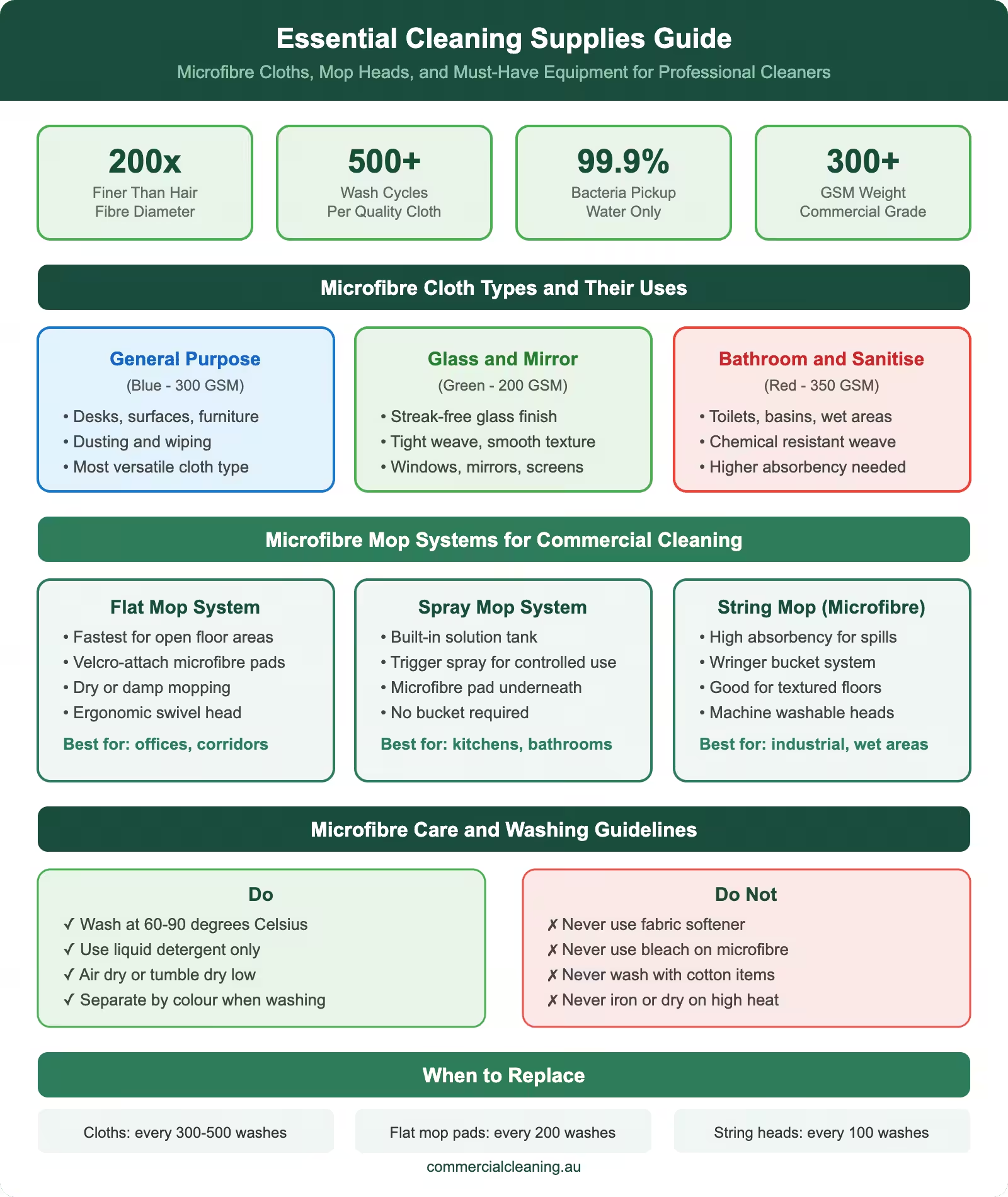
Essential cleaning supplies guide infographic covering microfibre cloths mop head types colour coding care instructions and replacement schedules for professional cleaners
Microfibre Cloths and Mop Heads
Microfibre Cloths and Mop Heads involves specific protocols that we tailor to each facility based on its layout, traffic, and compliance requirements. We consider microfibre products the single most important upgrade a cleaning business can make. Our team switched to commercial-grade microfibre cloths and flat mop heads in 2016, and we saw our chemical usage drop by nearly a third within six months. We use colour-coded microfibre systems across every job site — red for bathrooms, blue for glass, green for kitchens and yellow for general surfaces — which eliminates cross-contamination and gives our supervisors an instant visual check on compliance. We have found that 300-gsm microfibre cloths outperform cheaper 200-gsm alternatives in both absorbency and durability, lasting through 400-plus commercial wash cycles before they begin to lose effectiveness.
Office Area Cleaning Frequency Guide
Area
Daily
Weekly
Monthly
Quarterly
Reception & Lobby
Vacuum, mop, wipe
Glass doors, furniture
Deep carpet clean
Window wash
Workstations
Surface wipe, bins
Monitor & keyboard
Drawer clean-out
Chair shampoo
Kitchen/Breakroom
Bench, sink, floor
Fridge, microwave
Deep degrease
Exhaust fan clean
Bathrooms
Full sanitise + restock
Grout scrub
Descale fixtures
Vent clean
Meeting Rooms
Table wipe, vacuum
AV equipment dust
Upholstery clean
Carpet extraction
Commercial-Grade Vacuum Cleaners
Office Area Cleaning Frequency Guide requires specific protocols that we tailor to each facility based on its layout, traffic, and compliance requirements. We rely on backpack vacuums and upright commercial units depending on the site layout. Our team uses HEPA-filtered machines for every job because we have seen how much airborne particulate standard filters miss — particularly in older buildings around Mascot and Botany where dust loads tend to be higher. Under AS 3544, industrial vacuum cleaners designed for hazardous dust must meet strict filtration and containment standards, and we follow those same principles even in general commercial settings because the performance difference is measurable. We invested approximately $2,550 in our latest fleet of four commercial backpack units, and those machines have already paid for themselves through faster job completion times and fewer client complaints about residual dust.
Mops, Buckets and Wringer Systems
Commercial-Grade Vacuum Cleaners includes specific protocols that we tailor to each facility based on its layout, traffic, and compliance requirements. We have tried every mopping system on the market, and our team has settled on dual-chamber bucket setups with side-press wringers as our standard across all commercial contracts. We find that separating clean solution from dirty water makes a noticeable difference on hard floors — particularly polished concrete and vinyl, which show streaking immediately if you are recirculating soiled water. Our crews in the Banksmeadow industrial area mop an average of 1,200 square metres per shift, and the dual-chamber system lets them maintain consistent water quality without returning to the utility room every 15 minutes. We replace our mop heads fortnightly on high-volume sites and monthly on lighter contracts, which we have found is the sweet spot for performance before fibre degradation becomes visible.
Spray Bottles and Chemical Dispensing Systems
Mops, Buckets and Wringer Systems addresses specific protocols that we tailor to each facility based on its layout, traffic, and compliance requirements. We switched to proportioning dispensers three years ago and our chemical waste dropped by over 25 percent almost overnight. Our staff had been free-pouring concentrates into spray bottles, and we discovered through our own audits that some team members were using nearly double the recommended dilution ratio — wasting product and leaving residue on surfaces. We now use wall-mounted dilution control units at every client site where we have a dedicated cleaning store, and portable proportioning bottles for smaller locations. We have found that standardising dilution ratios also protects our team from unnecessary chemical exposure, which matters enormously to us as employers who take workplace health seriously.
Personal Protective Equipment
Spray Bottles and Chemical Dispensing Systems targets specific protocols that we tailor to each facility based on its layout, traffic, and compliance requirements. We issue every team member a full PPE kit on their first day, and we replace items the moment they show wear. Our standard kit includes nitrile gloves in three sizes, safety glasses, non-slip footwear and high-visibility vests for warehouse and car park work. We have also added P2 respirator masks for any task involving strong solvents or fine particulate, because we believe our people deserve the same protection that AS 3544 mandates for operators of industrial dust-extraction equipment. Our PPE spend averages about $38 per employee per month, which we consider a non-negotiable investment in our team’s wellbeing and our own duty-of-care obligations.
Scrubbing Pads, Scourers and Specialised Brushes
Personal Protective Equipment focuses on specific protocols that we tailor to each facility based on its layout, traffic, and compliance requirements. We keep a detailed range of abrasive and non-abrasive pads because every surface demands a different approach. Our team uses white pads for delicate surfaces like marble and coated timber, red pads for standard scrubbing on ceramic tile, and black stripping pads only when we are removing old floor finish before recoating. We have learned from experience across sites in Mascot and Botany that using the wrong pad grade on a polished surface creates micro-scratches that are nearly impossible to correct without professional re-polishing — a mistake that cost us a significant rework bill early in our history. We also stock detail brushes for grout lines, stainless-steel fixtures and ventilation grilles, because these areas accumulate grime that flat pads simply cannot reach.
Signage, Caddies and Organisational Accessories
Scrubbing Pads, Scourers and Specialised Brushes covers specific protocols that we tailor to each facility based on its layout, traffic, and compliance requirements. We never underestimate the importance of wet-floor signs, caution barriers and well-organised cleaning caddies. Our team carries colour-coded caddies that match our microfibre system, so every product and cloth needed for a specific area is within arm’s reach. We have measured a 15-percent improvement in task completion speed since we introduced pre-loaded caddies, simply because our cleaners no longer walk back and forth to the supply trolley for forgotten items. We also keep a stock of bilingual wet-floor signs for client sites in Banksmeadow and Mascot where multilingual workforces are common, because clear hazard communication is a legal requirement and a practical necessity that we take seriously.
Signage, Caddies and Organisational Accessories involves specific protocols that we tailor to each facility based on its layout, traffic, and compliance requirements. We have built our supply list through years of hands-on testing, job-site failures and constant refinement, and we genuinely believe these eight categories form the backbone of any professional cleaning operation. Our team reviews our equipment inventory every quarter, retiring underperforming products and trialling new options, because we know that staying current with cleaning technology and materials is what separates a good cleaning business from a great one.
Frequently Asked Questions
What are the most necessary cleaning supplies for a new cleaning business? We recommend starting with commercial-grade microfibre cloths, a HEPA-filtered vacuum cleaner, a dual-chamber mop bucket system, proportioning spray bottles, a full PPE kit for every team member, a range of scrubbing pads, detail brushes and organisational caddies with wet-floor signage. We have found that these eight categories cover at least 90 percent of the tasks a new cleaning business will encounter in its first year of commercial contracts.
How much should a cleaning business budget for initial equipment? We spent approximately $2,550 on our latest vacuum fleet alone, but a complete startup kit covering all eight supply categories typically runs between $3,500 and $6,000 depending on the quality tier you choose. We always advise new operators to invest in mid-range to high-end equipment from the outset because our own experience shows that budget products cost more in replacements over a 12-month period.
Why is microfibre better than traditional cotton cloths for commercial cleaning? We have measured up to a 30-percent reduction in chemical usage since switching to microfibre, and our team finds that microfibre cloths capture far more bacteria and fine particulate than cotton alternatives. We use 300-gsm commercial-grade microfibre because it survives hundreds of wash cycles without losing absorbency, whereas cotton cloths in our experience begin degrading after 50 to 80 washes.
What vacuum cleaner features matter most for commercial cleaning? We prioritise HEPA filtration, lightweight ergonomic design and a minimum 1,200-watt motor for our commercial units. Our team has found that backpack vacuums outperform uprights in open-plan offices and retail spaces because they allow the operator to move freely without dragging a heavy base unit. We also look for machines that meet the filtration principles outlined in AS 3544 for industrial vacuum cleaners.
How often should cleaning supplies be replaced? We replace microfibre cloths after approximately 400 commercial wash cycles, mop heads every two to four weeks depending on usage intensity, vacuum filters quarterly and scrubbing pads as soon as we notice reduced abrasive performance. Our quarterly inventory review catches items that are past their effective life before they start compromising our cleaning results on client sites.
What PPE do commercial cleaners actually need on the job? We issue nitrile gloves, safety glasses, non-slip footwear and high-visibility vests as our baseline kit. We add P2 respirator masks for any task involving solvents, strong chemicals or fine dust. Our PPE spend averages $38 per employee per month, which we view as required rather than optional given our obligations under workplace health and safety legislation.
Are chemical dispensing systems worth the investment for small cleaning businesses? We saw a 25-percent drop in chemical waste within the first month of switching to proportioning dispensers, so we believe they pay for themselves quickly even for smaller operations. Our experience showed that free-pouring led to inconsistent dilution ratios and unnecessary chemical exposure for our staff, both of which the dispensing system eliminated almost immediately.
How do you keep cleaning supplies organised across multiple job sites? We use pre-loaded colour-coded caddies that match our microfibre system, so each caddy contains exactly what a cleaner needs for a specific zone. We measured a 15-percent improvement in task speed after introducing this system, and our supervisors can instantly verify compliance just by checking that the right caddy is being used in the right area.
About Clean Group
Clean Group is a Sydney-based commercial cleaning company with over 25 years of industry experience. Founded by Suji Siv, our team of 50+ trained professionals services offices, warehouses, medical centres, schools, childcare facilities, retail stores, gyms, and strata properties across Sydney, Melbourne, and Brisbane.
We are active members of ISSA and the Building Service Contractors Association of Australia (BSCAA). Our operations align with ISO 9001 (Quality Management), ISO 14001 (Environmental Management), and ISO 45001 (Workplace Health and Safety) standards. We hold membership with the Green Building Council of Australia and use eco-friendly, TGA-registered cleaning products wherever possible.
Every Clean Group cleaner is police-checked, fully insured, and trained in safe work procedures under SafeWork NSW guidelines. We operate 7 days a week, including after-hours and weekend services, to minimise disruption to your business.
Hi, I'm Suji Siv, the founder, CEO, and Managing Director of Clean Group, bringing over 25 years of leadership and management experience to the company. As the driving force behind Clean Group’s growth, I oversee strategic planning, resource allocation, and operational excellence across all departments. I am deeply involved in team development and performance optimization through regular reviews and hands-on leadership.