Fish Lane and West End have transformed from industrial wastelands into Brisbane’s most vibrant arts and cultural precinct. Once dominated by factories and warehouses, these inner-city streets now pulse with galleries, boutique bars, restaurants, and mixed-use residential developments. The Aria apartment tower brought 1,100+ new residents to the area, adding density to existing creative businesses and hospitality venues.
Cleaning this precinct isn’t like servicing a standard commercial office. The aesthetic demands are higher, operational complexity greater, and stakes genuinely significant when protecting artworks, heritage finishes, and food service standards. We’ve spent three decades managing commercial cleaning across Brisbane, and we’ve learned that spaces built on creativity require a different mindset.
This guide covers what we’ve discovered about cleaning galleries, boutique venues, heritage brick-and-timber buildings, and mixed-use developments in Fish Lane and West End. Whether you run a gallery, manage a small restaurant, oversee a body corporate with ground-floor tenancies, or want to understand professional cleaning in these precincts, you’ll find practical detail here. And if you’re looking for a Brisbane office cleaning with expertise to handle these challenges, we’re here to help.
Fish Lane and West End: Cleaning a Gentrification Precinct
Gentrification creates cleaning challenges that don’t exist in single-use precincts. Fish Lane runs east-west through Fortitude Valley and connects directly to West End, a neighbourhood that has transformed dramatically in 15 years.
Heritage brick facades are preserved and celebrated. Industrial timber joinery—old warehouse ceilings, exposed beams, reclaimed wood shopfronts—sits alongside contemporary glass and steel. Street art is not graffiti to be removed; it’s carefully placed public art that’s part of the brand. Mixed-use developments mean families live above bars and galleries; residents park in laneways where gallery events spill onto the street.
From a cleaning standpoint, this density means we manage multiple building types, codes, and stakeholder expectations simultaneously. Creative tenants in Fish Lane and West End have higher expectations than industrial park operators. A gallery owner paying a premium for heritage exposed-brick shopfronting won’t tolerate dusty frames or smudged glass. A restaurant operator in a precinct marketed to fine diners can’t afford kitchen compliance failures. We approach this as a portfolio of smaller contracts, not a single large one. That’s the only way to do it well.
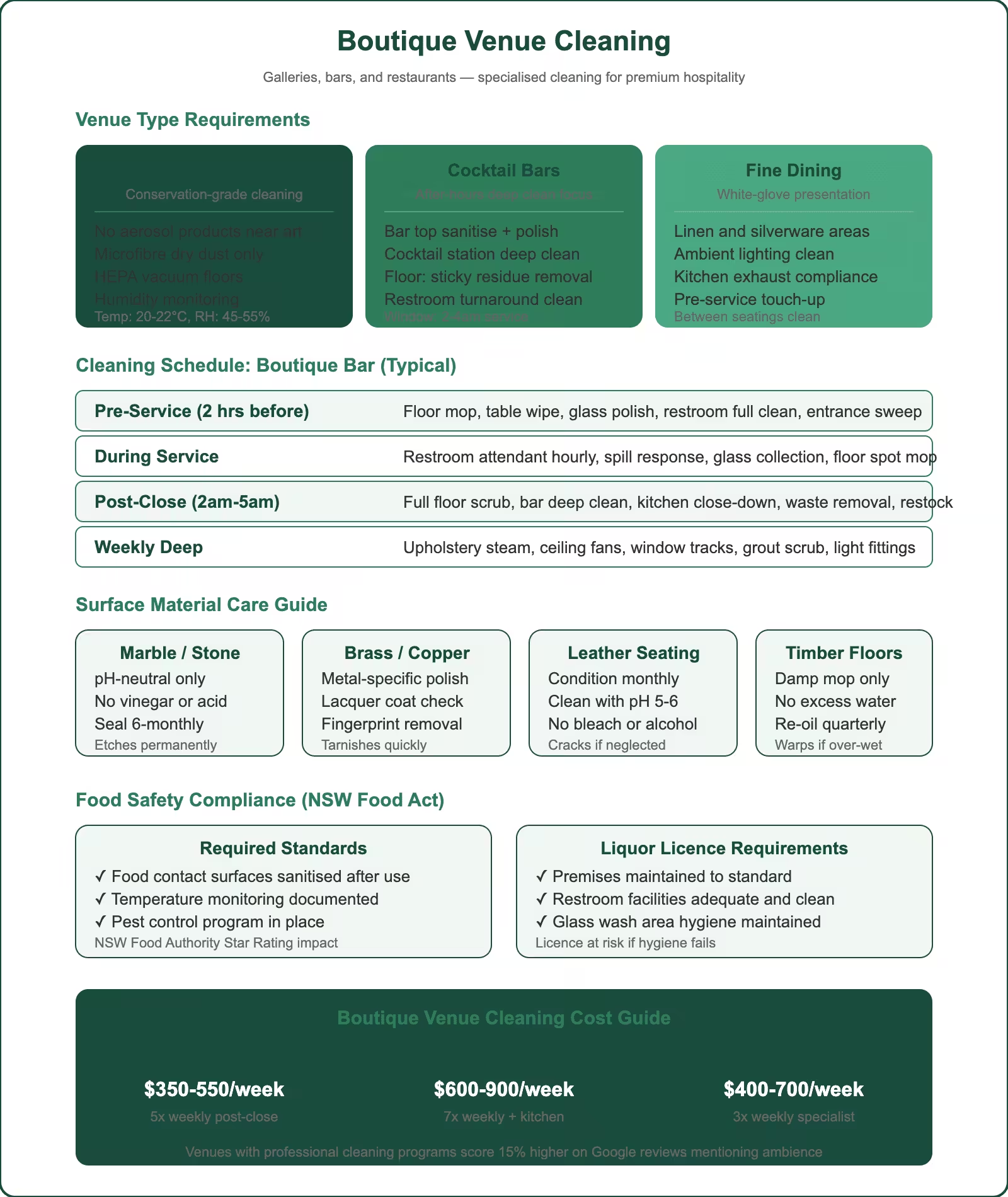
Boutique venue cleaning guide for galleries bars and restaurants showing venue requirements, schedules, surface care, and food safety compliance
Boutique Venue Cleaning: Galleries, Bars and Restaurants
Boutique Venue Cleaning involves specific protocols that we tailor to each facility based on its layout, traffic, and compliance requirements. Boutique venues are small by definition but operate with high expectations. A gallery with 200 square metres of white wall space, carefully lit timber floors, and monthly exhibitions is far more demanding to clean than a 2,000-square-metre warehouse office.
The difference comes down to density and precision. In a commercial office, you clean high-touch points, floors, desks, and bathrooms. In a gallery, you protect artwork, manage dust particles settling on sculptures or paintings, control humidity around temperature-sensitive pieces, and protect architectural finishes.
For bars and small restaurants, a 50-seat venue can’t have greasy fingerprints on wine glasses or overlooked spills. The kitchen demands FSANZ-compliant cleaning daily. The grease trap—undersized for small kitchens—needs professional attention. All this must happen before service begins or after it ends.
Successful cleaning requires: scheduled visits outside trading hours (galleries close at 5–6pm; bars at 2–3am); equipment that doesn’t mark surfaces (soft-bristle brushes, microfibre cloths, pH-neutral products); attention to detail (gallery spaces require three touches—dust removal, surface cleaning, final inspection); and ongoing communication with venue managers.
Heritage Brick and Timber Care During Ongoing Renovation
Heritage Brick and Timber Care During Ongoing Renovation requires specific protocols that we tailor to each facility based on its layout, traffic, and compliance requirements. Fish Lane and West End are constantly under renovation. Buildings convert from offices to residences, warehouses become galleries, shopfronts are rebuilt. This creates a specific problem: how do you maintain heritage brick and timber surfaces while construction dust is actively being created?
Heritage brick facades can look dull and stained if coated with construction dust and mortar splatter. Reclaimed timber shopfronts attract fine particles that settle into wood grain. Exposed-beam ceilings collect dust difficult to remove without damaging finishes. Dust containment becomes critical if you’re cleaning a gallery or ground-floor bar while renovation happens above or next door.
We manage this through protective sheeting and sealing (plastic sheeting over windows and doorways, protective film on exposed brick, sealed HVAC conduits); dust containment barriers (clear polycarbonate panels or heavy plastic sheeting on aluminium frames to isolate active work areas); specialised cleaning products (alkaline cleaners for brick, never acidic ones; pH-neutral products for timber; low-pressure rinse or hand-cleaning instead of high-pressure spray); and regular intermediate cleaning during renovation periods to prevent dust accumulation.
Pre-Event and Post-Event Protocols for Arts Venues
Galleries, performance spaces, and boutique venues operate on an event-driven calendar. A gallery might change exhibitions monthly. A venue might host live music three nights a week. Each creates specific cleaning demands.
Exhibition changeover happens within 48 hours or less. We work with gallery managers weeks in advance, handling wall cleaning (removing adhesive residue), floor preparation, and debris removal. Opening-night cleaning includes window and glass cleaning, floor polish, wall spot-cleaning, bathroom detailing, and inspection for marks or dust visible under opening-night lighting. Performance venue turnaround occurs between 11pm and 9am—emptying bins, cleaning tables and chairs, mopping floors, sanitising bathrooms. Post-function deep-cleans handle sticky floors, spilled wine, crumbs, and heavily used bathrooms after private functions.
Food Service Compliance for Boutique Hospitality
Food Service Compliance for Boutique Hospitality addresses specific protocols that we tailor to each facility based on its layout, traffic, and compliance requirements. Small restaurants, cafes, and bars operate under the same food safety standards as large chains, but with tighter margins and less infrastructure. A boutique venue might have a kitchen the size of a standard office, a grease trap designed for 30 seats but serving 60.
FSANZ (Food Standards Australia New Zealand) sets the compliance baseline. Brisbane City Council adds local requirements. We verify venues meet both standards.
Compliance Area
Boutique Venue Challenge
Our Approach
Grease trap maintenance
Small kitchen = undersized trap; overflow risk if not cleaned regularly
Monthly professional cleaning and pump-out; sizing assessment for upgrading if needed
Kitchen deep-clean frequency
Limited closed hours mean less time for detailed cleaning
After-hours deep-cleans (late night or early morning) on a schedule matching peak service periods
Pest control integration
Urban density = higher pest pressure; no dedicated external storage area
Coordinated cleaning and pest inspection; sealed storage solutions; regular internal audits
Allergen protocols
Cross-contamination risk in shared prep spaces
Colour-coded cleaning tools; allergen-aware scheduling; post-service sanitisation of shared surfaces
Waste management
Limited bin and waste storage space on-site
Daily waste removal schedule; arrangement with landlord for external waste bins; odour management
The key principle is simple: we integrate cleaning into the compliance system. This means understanding prep schedules, peak service times, and audit cycles. We’re available for rapid response if issues arise—a grease trap overflow, a pest sighting, or an unexpected inspection.
Protecting Artwork and Architectural Finishes During Cleaning
Protecting Artwork and Architectural Finishes During Cleaning targets specific protocols that we tailor to each facility based on its layout, traffic, and compliance requirements. A gallery space is fundamentally different from a warehouse office. You can’t use standard cleaning products near artworks. High-intensity pressure washing damages heritage brick. Acidic tile cleaner etches reclaimed stone. Solvent-based degreasers mark timber finishes.
We’ve worked with galleries and heritage architects on Fish Lane and West End long enough to understand the chemistry involved. Paintings, sculptures, and installations respond differently to humidity, dust, and chemical fumes. We use non-VOC (volatile organic compound) cleaning products in galleries—products that won’t off-gas or create fumes. We control humidity and avoid high-traffic cleaning during open hours. Large gallery windows are often fitted with UV-filtering glass to protect interior artworks; standard glass cleaners can leave residue that interferes with UV properties, so we use pH-neutral, residue-free cleaners and inspect them under UV light after cleaning. Heritage timber and canvas are sensitive to moisture fluctuation, so we coordinate cleaning schedules with gallery climate control and use microfibre cloths and damp (not wet) techniques rather than spray-based cleaning. Heritage brick facades need alkaline cleaners (pH 10–12), never acidic ones. We use low-pressure application or hand-cleaning. For reclaimed timber shopfronts and heritage wood joinery, we treat surfaces with soft-bristle brushes and pH-neutral cleaners, avoiding high-temperature cleaning or steam that can raise wood grain or damage finishes.
Mixed-Use Scheduling: Residential Above, Hospitality Below focuses on specific protocols that we tailor to each facility based on its layout, traffic, and compliance requirements. A defining feature of Fish Lane and West End development is the vertical stacking of uses. Residents live in apartments above bars, galleries below restaurants, offices adjacent to late-night venues. This creates a scheduling puzzle few other precincts face.
Brisbane City Council has noise limits around the clock, with tighter limits during night hours (10pm–7am). A bar needing deep-cleaning at 11pm must manage noise from pressure washers. We schedule high-noise work during daytime hours when limits are higher. Ground-floor venues must accommodate resident movement. We schedule cleaning around peak resident times—not early morning when residents leave for work. Mixed-use buildings have rules about cleaning schedules and access. We work with building managers to understand these rules and schedule accordingly. We coordinate with other cleaning contractors to avoid scheduling conflicts and achieve consistent standards across the building.
A gallery with monthly exhibitions might need weekly deep-cleans during changeover weeks, then standard weekly or fortnightly cleans during exhibitions. High-traffic galleries might need daily spot-cleaning plus weekly or fortnightly deep-cleans. We assess each space individually.
Can standard cleaning products be used in galleries?
Not safely. Standard products often contain VOCs, dyes, or residues that damage artworks or architectural finishes. We use non-VOC products, pH-neutral cleaners, and microfibre techniques. We always test new products on inconspicuous areas first.
What’s the difference between our grease trap and our neighbour’s?
Small kitchens often have grease traps sized for lower capacity than peak demand. We assess your specific setup and recommend a maintenance schedule and possible upgrades.
Can cleaning happen during trading hours?
Limited cleaning can happen during trading hours—spot-cleaning of high-touch surfaces, emptying bins, light floor work. Deep-cleaning should happen outside trading hours to avoid disrupting customers or creating food safety risks.
How do body corporates manage cleaning in mixed-use buildings?
Body corporates set rules about when and where cleaning happens, who’s responsible for which areas, and how costs are allocated. We work with building managers to understand these rules and schedule accordingly.
For specialised cleaning in Fish Lane and West End—whether you’re managing a gallery, running a boutique restaurant, operating a mixed-use building, or overseeing heritage renovation—our approach is built on experience working in these exact spaces. We understand the chemistry of heritage materials, the compliance demands of food service venues, the scheduling complexity of mixed-use buildings, and the protection that artworks and architectural finishes require. If you need industrial facility cleaning or any other commercial cleaning across Brisbane, we’re experienced across the full range of commercial and retail spaces.
About Clean Group
Clean Group is a leading commercial cleaning company with over 25 years of experience, providing professional cleaning services to offices, strata buildings, medical facilities, schools, gyms, and retail spaces across Australia. With a commitment to WHS compliance, eco-friendly practices, and consistent quality, Clean Group delivers tailored cleaning solutions backed by a 100% satisfaction guarantee.
Hi, I'm Suji Siv, the founder, CEO, and Managing Director of Clean Group, bringing over 25 years of leadership and management experience to the company. As the driving force behind Clean Group’s growth, I oversee strategic planning, resource allocation, and operational excellence across all departments. I am deeply involved in team development and performance optimization through regular reviews and hands-on leadership.