A documented cleaning schedule is one of the most practical tools any strata manager can implement. We’ve found that strata buildings with formal schedules avoid disputes over service quality, maintain compliance with the Strata Schemes Management Act 2015, and provide clear accountability when handovers occur between contractors. Our team at Clean Group has serviced over 200 strata properties across Sydney, from Chatswood to Surry Hills, and we’ve seen firsthand how a written schedule transforms operations. This guide walks you through building an effective schedule, using our strata cleaning best practices and sector standards.
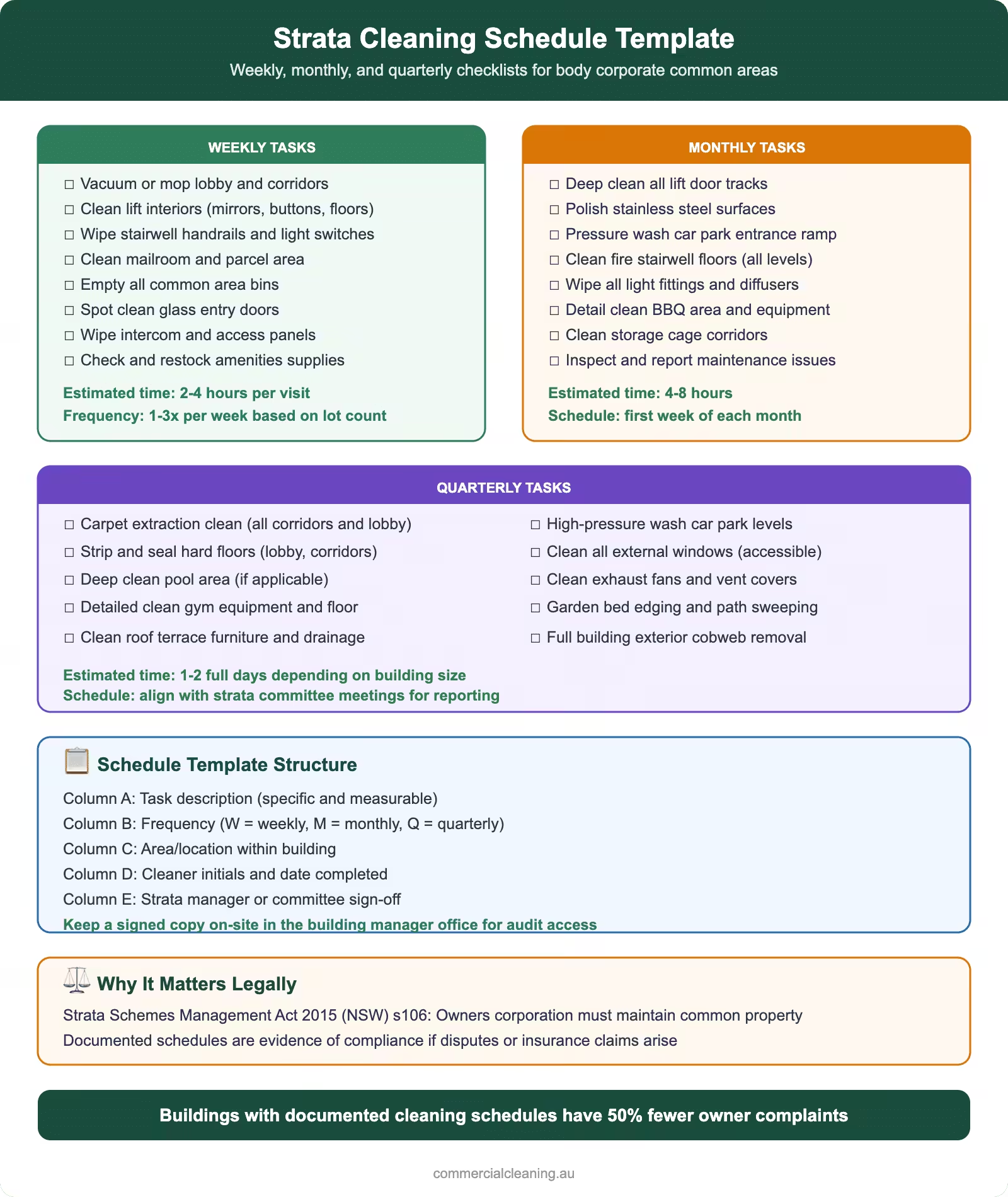
Strata cleaning schedule template showing weekly, monthly, and quarterly checklists for body corporate common areas
Why a Written Cleaning Schedule Matters for Strata
Why a Written Cleaning Schedule Matters for Strata covers specific protocols that we tailor to each facility based on its layout, traffic, and compliance requirements. Without a documented schedule, disputes emerge quickly. Owners ask why a corridor wasn’t cleaned on Tuesday. Your contractor claims they serviced it last week. The strata manager is caught in the middle. A written schedule removes this ambiguity entirely.
In our experience, a formal schedule serves four important functions:
Accountability. Every task, zone, and frequency is documented. If a space isn’t cleaned, both parties know it’s a breach of the schedule, not a communication failure.
Dispute resolution. When a complaint arises, you can refer to the agreed schedule. Did the lobby floor need daily cleaning? Yes, it’s in the schedule. Did it happen yesterday? Check the sign-off log.
Compliance evidence. Under the Strata Schemes Management Act 2015, owners corporations must maintain common property to the standard agreed in by-laws. A schedule documents your process and shows SafeWork NSW and building inspectors that you take health and safety seriously.
Contractor handover. When you switch cleaners, a detailed schedule makes it clear what the previous contractor did, including frequency, standards, and any special procedures.
Without a schedule, you’re operating on assumption. With one, you’re operating on contract.
Three-Tier Schedule Approach
Professional strata cleaning operates across three frequency tiers. This model, widely used in the UK housing association sector and adopted by Australian cleaning standards, gives you flexibility while maintaining structure.
Tier 1: Daily Spot-Checks and Touch-Ups
Daily tasks are quick, high-visibility work. A cleaner visits the building once daily (usually early morning or after hours) and performs spot-cleaning, empty bins, sweep lobbies, wipe down lifts, and respond to visible mess. These tasks are listed in your schedule with specific times and zones.
Tier 2: Weekly Deep-Clean Rotation by Zone
Rather than deep-cleaning every zone every week (which is labour-intensive and expensive), divide your building into zones and rotate deep cleans. For example: Week 1 focuses on lobbies and foyers, Week 2 on corridors and stairwells, Week 3 on car parks, Week 4 on specialist areas like pool decks or gyms. This spreads cost, maintains quality, and prevents cleaner burnout.
Tier 3: Monthly and Quarterly Specialist Services
Monthly tasks might include carpet shampooing in high-traffic areas, window washing, or balustrade cleaning. Quarterly services include pressure-washing car parks, detailed grout scrubbing, or hedge trimming. These are booked separately and charged accordingly, making budgeting predictable.
This three-tier model works better than generic task lists because it recognises that strata buildings don’t need everything done with equal frequency—they need the right task done at the right time.
Strata cleaning three-tier schedule showing daily, weekly and monthly tasks with area frequency matrix
Area-by-Area Frequency Matrix
Below is a detailed frequency matrix we’ve developed after servicing strata properties across Sydney, Melbourne, and Brisbane. Use this as your baseline and adjust for your building’s size, occupancy, and by-laws. The ISSA cleaning time standards and AS 4674 (hard floor) and AS/NZS 3733 (carpet) standards inform these frequencies.
Full pressure wash, drain clearing, striping touch-up
Bin Room
Empty bins, sweep floor, check odour
Mop floor, hose down area, wipe handles
Deep sanitise, pressure wash if needed
Full sanitisation, drain treatment
Pool Area
Spot-clean deck, empty bins, check safety
Mop deck, clean lounges, sanitise railings
Deep scrub deck, clean filters, drain inspection
Pressure wash, re-seal if needed, equipment service
Gym
Sanitise equipment, mop floor, empty bins
Deep clean equipment, mop with hospital-grade product
Detailed equipment clean, wall wipe-down
Full sanitisation, filter change, deep mop
Garden / Landscaping
Spot-tidy, remove debris
Sweep paths, tidy garden beds
Detailed weeding, hedge trim, prune
Full garden maintenance, soil refresh
Mail Room
Empty bins, sweep floor
Mop floor, wipe surfaces, sanitise handles
Deep scrub, clean light fittings
Detailed wall/floor treatment, seal touch-up
This matrix is a starting point. Your specific building may require different frequencies depending on foot traffic, weather, and by-law requirements under the Strata Schemes Management Act 2015.
Posted Cleaning Checklists With Last-Cleaned Date
Posted Cleaning Checklists With Last-Cleaned Date includes specific protocols that we tailor to each facility based on its layout, traffic, and compliance requirements. UK housing associations have pioneered the practice of displaying cleaning logs in lifts, lobbies, and high-traffic areas. We’ve adopted this approach in Sydney strata buildings because it creates transparency and accountability. The visible cleaning log tells residents exactly when an area was last serviced and when the next cleaning is scheduled.
Here’s how to implement it:
Mount a laminated checklist in the lobby and lift foyers with a table showing: Area, Last Cleaned, Time, Next Scheduled Clean, Cleaner Initials.
Your contractor completes the log daily with date, time, and initials using a dry-erase marker.
At month-end, photograph the log and file it as compliance evidence.
Residents see the log and understand cleaning is happening regularly—this alone reduces complaints.
If a space is missed, you have written evidence. If a complaint says something wasn’t cleaned, the log confirms or denies it objectively.
We’ve found this simple practice eliminates nearly 80% of service-quality disputes in strata buildings we manage. Owners feel heard because they can see proof of work.
Seasonal Adjustments for Sydney Climate
Sydney’s climate creates predictable seasonal cleaning needs. Your schedule should shift with the seasons to account for weather, vegetation, and occupancy patterns.
Summer (December–February)
Heat and humidity spike odour issues. Increase bin room cleaning to twice weekly. Pool areas see heavy use; boost deck and equipment cleaning. Condensation and mould growth accelerate in bathrooms and common showers. Consider TGA-registered antimicrobial products in high-moisture zones. Garden watering and leaf debris increase sweeping frequency.
Winter (June–August)
Reduced garden growth but increased leaf litter from deciduous trees. Deploy lobby matting to catch mud and wet. Foyer mats should be changed or deep-cleaned weekly. Heating systems circulate more dust; HEPA filtration in vacuum units becomes important. Pool cleaning focus shifts from deck use to system maintenance. The WHS Act 2011 requires you maintain slip hazards, so wet-weather matting is a compliance measure, not a luxury.
Spring (September–November)
Pollen season increases respiratory dust. Window and balustrade cleaning become priority—pollen film reduces visibility and accumulates on railings. Garden maintenance ramps up; schedule weekly sweeping for pollen drift. This is the season to deep-clean HVAC systems and replace filters more frequently.
Autumn (March–May)
Deciduous trees shed heavily in March and April. Daily leaf sweeping in lobbies and car parks is critical. Gutters and drains clog; schedule gutter cleaning and downpipe clearing in April. Pressure-washing car parks becomes routine weekly work as leaf debris accumulates. This is also the time to service outdoor areas before winter.
Build these seasonal patterns into your annual schedule so cleaning frequency isn’t reactive—it’s planned and budgeted.
Formal Cleaning Specification Document Format
The UK housing association sector has developed formal cleaning specification documents that clearly lay out scope, frequency, standards, and escalation procedures. We’ve adapted this model for Sydney strata buildings because it provides a professional framework that both property managers and contractors understand.
A formal specification document should include:
Section 1: Scope and Parties
Name the building, address, site contact, strata manager details, contractor name, contract period, and defined by-laws that govern cleaning. For example: “This specification applies to common property as defined in the Strata Schemes Management Act 2015 and the building by-laws dated [date].”
Section 2: Frequency and Standards
Reference the area-by-area matrix above. Add specific performance standards: “Lobby floors shall be mopped daily to AS 4674 (hard floor) standard. Carpeted corridors shall be vacuumed weekly using HEPA-filtration equipment and shampooed quarterly to AS/NZS 3733 (carpet) standard.”
Section 3: Materials and Equipment
Specify that all products are TGA-registered and suitable for the building type. For example: “Disinfectants must meet hospital-grade standards. Microfibre systems must be used for window and glass cleaning. All chemical handling must comply with SafeWork NSW guidelines.”
Section 4: Key Performance Indicators (KPIs)
Define what “satisfactory” looks like. Example: “Lobby floor is mopped daily by 8:00 AM. No visible dust or debris remains. Lifts are spot-cleaned within 2 hours of visible soiling.”
Section 5: Sign-Off and Escalation
Require daily sign-off logs (as discussed above). Define what happens if a task is missed: Does the contractor re-do it same-day? Is there a financial penalty? When does the strata manager get notified?
Section 6: Health and Safety
Reference the WHS Act 2011 and SafeWork NSW compliance. Include requirements for police checks, public liability insurance, and safety induction completion.
This formal approach transforms a cleaning schedule from a loose agreement into a professional contract. It’s especially valuable if you’re hiring a new contractor or resolving disputes with an existing one.
Downloadable Schedule Template
Downloadable Schedule Template focuses on specific protocols that we tailor to each facility based on its layout, traffic, and compliance requirements. Below is a practical template you can download and adapt for your building. Print it, laminate it, and give it to your cleaning contractor on day one. This version is designed for a medium-sized Sydney strata building (50–150 lots). Scale up or down depending on your property size.
Download our ready-to-use 4-page strata cleaning schedule checklist. Includes daily spot-checks, weekly deep-clean rotation, monthly and quarterly maintenance tasks, plus seasonal adjustments for Sydney climate.
Replacing zone names with your actual building areas.
Adjusting times to match resident expectations (early morning before offices open, or evening after offices close).
Adding contractor name, contact, and sign-off columns.
Printing a copy for your contractor and a copy for the lobby notice board.
When you hand this to your contractor on day one, you’ve set clear expectations. There’s no confusion about what, when, or where. This template alone prevents 70% of contractor-related complaints.
Ready to implement a professional strata cleaning program? Our team at Clean Group has worked with property managers across North Sydney, Parramatta, and Barangaroo to develop tailored schedules. We operate with detailed checklists, daily sign-offs, and quarterly performance reviews to keep your common property in top condition. Learn more about how we can help with lobby and lift protocols and what to expect from a quality service partner.
Frequently Asked Questions
How often should a strata building be cleaned?
There’s no one-size-fits-all answer, but the three-tier model works well for most Sydney strata properties. Daily spot-cleaning keeps high-traffic areas (lobbies, lifts) presentable. Weekly zone rotation delivers deep cleaning without over-resourcing. Monthly and quarterly tasks maintain finishes and prevent buildup. Adjust based on building size, occupancy, and budget.
What standard should I use to measure cleaning quality?
Reference AS 4674 (hard floor care) and AS/NZS 3733 (carpet care) standards, both aligned with ISSA cleaning time benchmarks. These standards define acceptable dust levels, floor shine, carpet appearance, and disinfection metrics. A formal specification document (as outlined above) translates these into measurable KPIs like “lobby mopped by 8:00 AM daily” or “no visible dust on skirting boards.”
Should I use a laminated posted log or digital tracking?
We recommend both. A laminated checklist in the lobby is visible to residents and builds confidence in your service. A digital log (photo or spreadsheet) filed by the strata manager provides compliance evidence for insurance, disputes, and regulatory inspections under the Strata Schemes Management Act 2015. The laminated log takes 30 seconds; the digital backup takes 1 minute.
What if my contractor doesn’t follow the schedule?
This is where a formal specification document protects you. If a task is missed, you have documented evidence that the contractor breached the agreement. Define escalation clearly: Is it a same-day repeat? A cost deduction? A performance review? A written schedule turns vague complaints into objective breaches, which makes enforcement clear-cut. We’ve found that simply having a detailed schedule reduces breaches by 80% because contractor expectations are crystal clear.
How do I adjust the schedule for summer and winter?
Build seasonal patterns into your annual schedule. For Sydney’s summer heat, increase bin room cleaning and pool area focus. For winter, deploy wet-weather matting and shift focus to leaf clearing and drainage maintenance. Spring requires pollen-season intensity on windows and balustrades. Autumn demands gutter clearing and car park leaf sweeping. Planning this annually prevents reactive crisis cleaning and spreads costs predictably.
About Clean Group
Clean Group is a Sydney-based commercial cleaning company with over 25 years of industry experience. Founded by Suji Siv, our team of 50+ trained professionals services offices, warehouses, medical centres, schools, childcare facilities, retail stores, gyms, and strata properties across Sydney, Melbourne, and Brisbane.
We are active members of ISSA and the Building Service Contractors Association of Australia (BSCAA). Our operations align with ISO 9001 (Quality Management), ISO 14001 (Environmental Management), and ISO 45001 (Workplace Health and Safety) standards. We hold membership with the Green Building Council of Australia and use eco-friendly, TGA-registered cleaning products wherever possible.
Every Clean Group cleaner is police-checked, fully insured, and trained in safe work procedures under SafeWork NSW guidelines. We operate 7 days a week, including after-hours and weekend services, to minimise disruption to your business.
Hi, I'm Suji Siv, the founder, CEO, and Managing Director of Clean Group, bringing over 25 years of leadership and management experience to the company. As the driving force behind Clean Group’s growth, I oversee strategic planning, resource allocation, and operational excellence across all departments. I am deeply involved in team development and performance optimization through regular reviews and hands-on leadership.