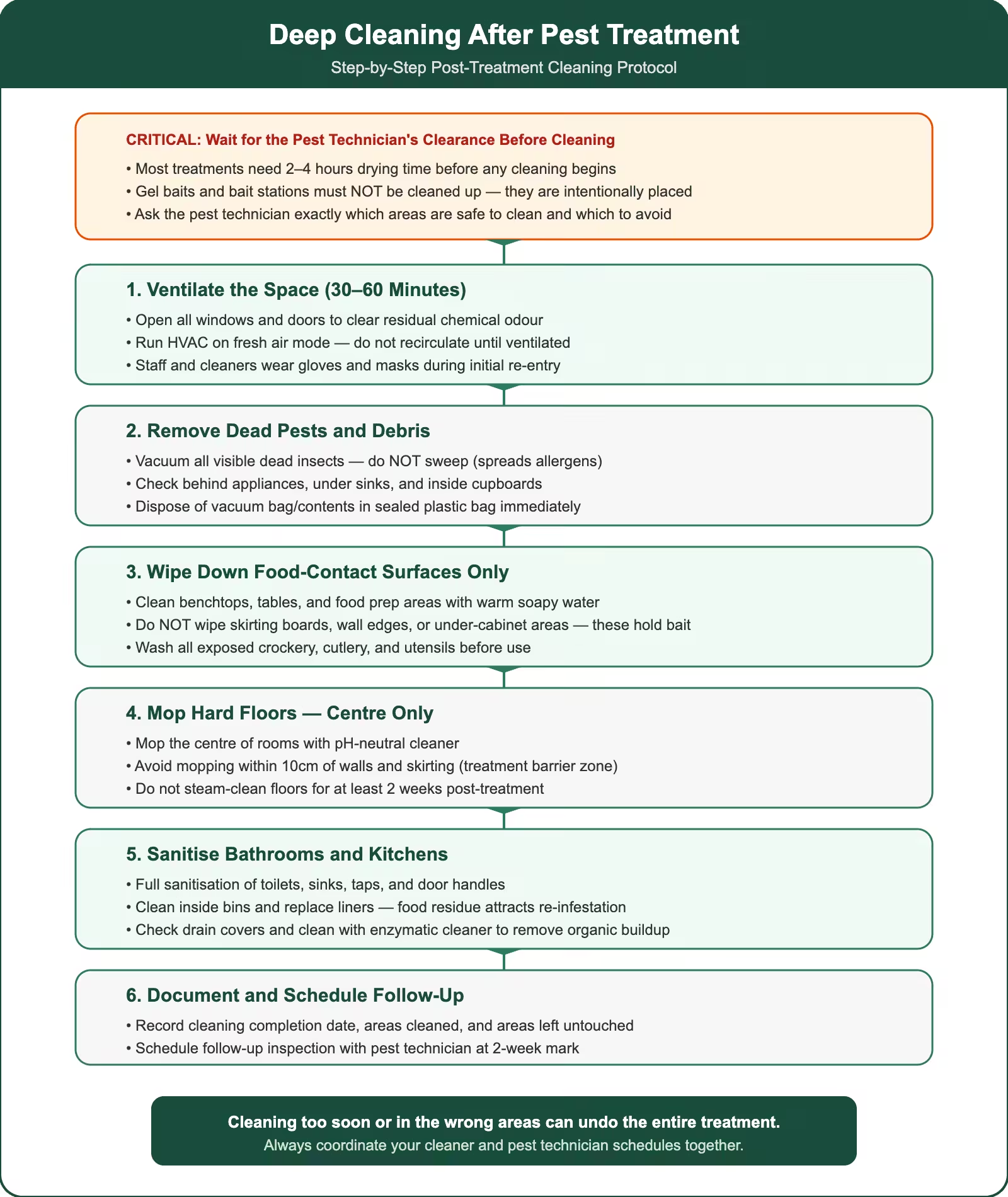
When a pest treatment wraps up in a commercial building, the space is not ready for occupants until a proper deep clean has been completed. We have coordinated post-pest-treatment cleans in offices, retail spaces, and warehouses across Sydney for over a decade, and the process requires specific timing, chemical knowledge, and coordination with the pest control operator that a standard clean does not cover. Getting it wrong means either compromising the pest treatment by cleaning too early or exposing staff to chemical residues by returning too soon.
Deep cleaning protocol after pest treatment showing ventilation, pest removal, surface cleaning, floor mopping, sanitisation, and follow-up documentation steps
Why Deep Cleaning After Pest Treatment Is Different
Why Deep Cleaning After Pest Treatment Is Different covers specific protocols that we tailor to each facility based on its layout, traffic, and compliance requirements. A standard deep clean targets accumulated dirt, biological contaminants, and grime on every surface. A post-pest clean adds a dimension that most cleaning companies underestimate: you are working around active chemical barriers that need to survive the clean. The pesticide sprayed along skirting boards, wall junctions, and floor perimeters is designed to remain effective for thirty to ninety days. Our team needs to know exactly where those treatment zones sit so we can clean the occupied surfaces without destroying the pest operator’s work.
We learned this the hard way through a situation we inherited, not one we caused. A Surry Hills retail tenancy had their cockroach treatment wiped out within a fortnight because the previous cleaning contractor mopped right up to the skirting boards forty-eight hours after the spray was applied. The perimeter barrier dissolved, the cockroaches came back, and the tenant paid for a full re-treatment. Since that job, we request the pest operator’s treatment map before every post-treatment clean so our crew knows which surfaces to avoid and for how long.
Timing: When to Clean After Different Pest Treatments
Timing: When to Clean After Different Pest Treatments involves specific protocols that we tailor to each facility based on its layout, traffic, and compliance requirements. The safe cleaning window depends entirely on the treatment type and the specific products used. The pest control operator’s Safety Data Sheet is the primary reference for re-entry and surface cleaning times. These are the general guidelines we follow based on our experience across hundreds of post-treatment cleans in commercial buildings around Sydney.
Treatment-Specific Timing Guide
Treatment Type
Safe Re-Entry
Surface Cleaning Window
Perimeter Barrier Protection
General spray (cockroaches, ants)
2-4 hours
24-48 hours for contact surfaces
Avoid mopping within 150mm of walls for 6-8 weeks
Fumigation or fogging
24-48 hours with ventilation
After full ventilation confirmed
N/A — foggers do not create barriers
Rodent baiting
Immediate (bait stations enclosed)
Immediate — clean rodent droppings and urine trails
Do not move or clean around bait stations
Termite treatment (chemical barrier)
Per pest operator instructions
72+ hours for interior surfaces
Do not disturb soil or perimeter treatments
Bed bug heat treatment
Once temperature returns to ambient
Immediately after cooldown
N/A — heat treatment leaves no chemical residue
The Deep Cleaning Scope After Pest Treatment
Our post-treatment scope divides into two distinct work categories: removing chemical residues from surfaces that building occupants will touch, and sanitising areas contaminated by the pests themselves. Both are necessary, but the methods and chemicals differ.
Residue Removal from Contact Surfaces
Once the pest operator’s recommended waiting period has passed, we clean every surface that people will come into contact with — desks, chairs, door handles, kitchen benchtops, bathroom fixtures, communal tables, and telephone handsets. We use warm water with a pH-neutral detergent rather than alkaline or solvent-based cleaners, because strong alkaline products can react with synthetic pyrethroid pesticides and because a neutral detergent is sufficient to remove surface-level chemical film without penetrating into treated areas.
The US National Pesticide Information Center recommends a top-down cleaning sequence after indoor pesticide application — start with upper shelves and work downward so dislodged residue falls onto surfaces that have not yet been cleaned. We adopted this method after comparing it to our previous zone-by-zone approach and finding it reduced the number of passes required by roughly a third. It also prevents cross-contamination between upper and lower surfaces.
Sanitation of Pest-Contaminated Areas
Cockroach droppings, rodent urine trails, nesting material, and dead insect carcasses are biological hazards that sit outside the scope of a normal wipe-down. Rodent droppings carry genuine health risks — leptospirosis and hantavirus among them — and our team treats every rodent contamination clean as a biohazard task under the WHS Regulation 2017 (NSW). Staff wear P2 respirators, disposable nitrile gloves, and full coveralls. All droppings are dampened with hospital-grade disinfectant before removal to prevent particulate matter becoming airborne.
A Mascot warehouse job drove this point home for us. The tenant had not reported rodent activity for months, and when we inspected the ceiling void above the office area we found over two hundred droppings, shredded nesting material, and gnawed electrical insulation. Our team spent a full day on the ceiling void alone, working alongside an electrician who was repairing damaged wiring. That experience is why we now inspect above ceiling tiles on every post-treatment clean — the visible floor area rarely tells the full story.
Ventilation and Air Quality After Treatment
For spray and fogging treatments, proper ventilation before cleaning begins is not negotiable. SafeWork NSW requirements under the Work Health and Safety Act 2011 mandate that workers are not exposed to atmospheric contaminants above workplace exposure standards, and the pest operator’s Safety Data Sheet specifies the minimum ventilation period for each product.
As a baseline, we run the building’s HVAC system on full fresh air intake for at least thirty minutes before our team enters, and we open every window that can be opened. In sealed buildings — which describes most CBD office towers — we coordinate with the building manager to switch the HVAC to one hundred per cent outside air mode for a minimum two-hour flush before work starts. The distinction matters: recirculated air simply moves contaminated air around the building, while fresh air mode actually displaces it. We carry portable VOC monitors on every post-treatment job and will not start cleaning until the readings confirm the air meets safe exposure limits.
Coordinating Between Pest Control and Cleaning Teams
Poor coordination between the pest operator and the cleaning crew is the single biggest cause of failed post-treatment outcomes. These are two separate trades that must work in sequence, and our experience has taught us that relying on the facilities manager to relay information between them is not reliable enough.
Our protocol involves three coordination steps that add about an hour of planning time but have prevented every repeat-treatment scenario we have encountered. First, we request the pest operator’s treatment report before scheduling the clean — this report identifies products used, application zones, re-entry intervals, and no-clean areas. Second, our site supervisor speaks directly with the pest technician, not through the facilities manager, to confirm exactly which surfaces are safe to clean. Third, we schedule a joint walk-through with the pest operator and the facilities manager before our crew starts, so everyone agrees on the scope, the exclusions, and the timeline.
This three-step coordination adds about an hour to our planning time but has prevented every repeat treatment scenario we have seen other providers cause. For facilities managers dealing with a post-treatment clean, our team can coordinate directly with your pest control provider to manage the entire process. Read more about seasonal deep cleaning for commercial properties.
Frequently Asked Questions
How soon can I have the office cleaned after pest control treatment?
It varies by treatment type. General spray treatments for cockroaches or ants allow contact-surface cleaning after twenty-four to forty-eight hours, but the floor perimeter within one hundred and fifty millimetres of skirting boards should not be mopped for six to eight weeks to preserve the chemical barrier. Fogging and fumigation require twenty-four to forty-eight hours of active ventilation before anyone — including our team — enters the space. We confirm the specific windows with the pest operator’s Safety Data Sheet for each product used on your site.
Will deep cleaning after pest treatment reduce the treatment’s effectiveness?
Only if it is done incorrectly. Mopping into the floor perimeter, scrubbing skirting boards, or using alkaline cleaners in treated zones will break down the pesticide barrier. We clean only the occupant-contact surfaces during the initial post-treatment visit and avoid every area the pest operator has identified as an active treatment zone. Our pH-neutral detergents do not react with common commercial pesticides including synthetic pyrethroids and neonicotinoids.
Do you handle rodent contamination cleanup as well?
Yes, and we treat it as a biohazard task under WHS Regulation 2017 (NSW). Our crew wears P2 respirators and disposable PPE, dampens all droppings with hospital-grade disinfectant before removal, and inspects concealed areas including ceiling voids, wall cavities, and service risers where rodent activity typically goes undetected until a treatment flushes them into visible spaces.
Should the pest control company do the cleaning as well?
Pest operators are trained in pest management, not commercial cleaning. Some offer a basic surface wipe, but a proper post-treatment deep clean requires different equipment, different chemicals, and different training. Our cleaners hold Certificate III in Cleaning Operations (CPP30316) and have completed specific training modules on post-treatment protocols. We coordinate closely with the pest operator but handle the cleaning scope independently because the two skill sets are distinct.
What if pests return after cleaning — is it the cleaner’s fault?
Pest re-emergence typically indicates one of two things: the treatment zones were disturbed during cleaning, or the initial treatment was insufficient. Our photographic documentation of every post-treatment clean — showing exactly which areas were cleaned and which were left untouched per the pest operator’s instructions — provides clear evidence if a dispute arises. Across hundreds of coordinated post-treatment cleans, we have only seen re-emergence where the pest operator and cleaner failed to communicate properly beforehand.
About Clean Group
Clean Group is a leading commercial cleaning company in Sydney, providing professional cleaning services to offices, strata buildings, medical facilities, schools, gyms, and retail spaces across the greater Sydney region. With over 25 years of experience and a commitment to WHS compliance, eco-friendly practices, and consistent quality, Clean Group delivers tailored cleaning solutions backed by a 100% satisfaction guarantee.
Hi, I'm Suji Siv, the founder, CEO, and Managing Director of Clean Group, bringing over 25 years of leadership and management experience to the company. As the driving force behind Clean Group’s growth, I oversee strategic planning, resource allocation, and operational excellence across all departments. I am deeply involved in team development and performance optimization through regular reviews and hands-on leadership.