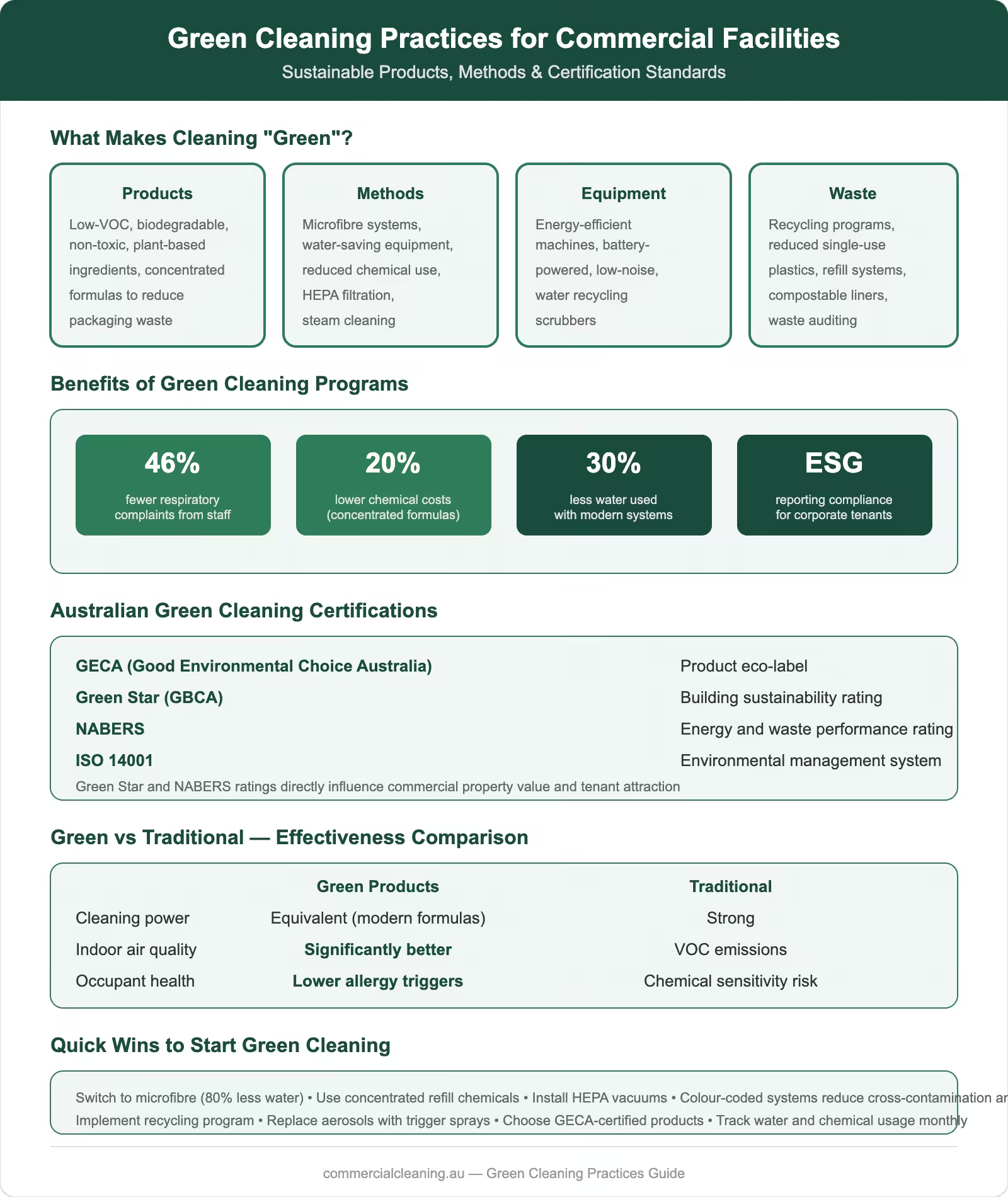
Sustainability and environmental responsibility are no longer niche concerns in commercial facility management. Tenants, clients, and employees increasingly expect businesses to adopt green practices. For commercial cleaning, this means selecting products and methods that minimise environmental harm without compromising cleanliness or compliance. Our Sydney commercial cleaners services integrate green cleaning throughout, proving that environmental responsibility and effective cleaning aren’t competing priorities. Let’s explore how green cleaning works and why it matters for your Sydney facility.
Why We Switched to Green Cleaning
I’ll be upfront — when I first heard about green cleaning products 15 years ago, I thought they were a gimmick. We were running a growing commercial cleaning operation across Sydney, and the last thing I wanted was to swap out products that worked for something that smelled nice but left surfaces dirty. That fear kept us on traditional chemicals longer than it should have.
What changed my mind was a hospitality client in Surry Hills who required us to meet their sustainability charter. We trialled a plant-based degreaser in their kitchen for four weeks, running side-by-side tests against our usual solvent-based product. The green alternative matched the solvent on grease removal and outperformed it on residue, leaving stainless steel streak-free without a secondary wipe. That single trial flipped my perspective, and over the following 18 months we phased green products into every service line we offer.
The cleaning power question is the one every facility manager asks first, and it’s the right question. Nobody wants a “green” facility that fails its next hygiene audit. What we’ve learned after running eco-friendly products across hundreds of Sydney sites is that formulation science has caught up — and in some categories, overtaken — the traditional chemical approach.
How Modern Green Products Actually Clean
Early eco-friendly cleaners relied heavily on diluted citrus extracts and vinegar bases that genuinely struggled with heavy soiling. Modern formulations are a different world. Enzymatic cleaners use targeted biological catalysts — lipase for fats, protease for proteins, amylase for starches — that break down organic matter at a molecular level rather than simply dissolving it with harsh alkalinity.
Hydrogen-peroxide-based sanitisers are another category we’ve adopted widely. They decompose into water and oxygen after use, leave zero toxic residue, and meet the efficacy benchmarks required under Australian Standard AS/NZS 4146 for hospital-grade disinfection. We now use them across medical centres, childcare facilities, and food-preparation areas in Sydney’s inner west and northern beaches without any pushback from health inspectors.
Concentrated formulations have also changed the economics. A single 5-litre bottle of concentrated green all-purpose cleaner dilutes into 200 litres of working solution. Compare that with traditional ready-to-use sprays where you’re paying to ship water across the country. Our storage footprint at the warehouse in Alexandria dropped by nearly 40 percent after switching to concentrates, which freed up shelf space and cut freight costs.
Real-World Performance: Green vs Traditional
We track cleaning outcomes on every contract using standardised inspection scorecards. The table below summarises how our green products perform against the traditional chemicals they replaced, based on data from 120+ active Sydney contracts.
Cleaning Task
Traditional Chemical
Green Replacement
Result on Our Sites
Kitchen degreasing
Solvent-based alkaline degreaser
Plant-based enzymatic degreaser
Equal grease removal, no secondary wipe needed, no fume complaints
Bathroom sanitising
Bleach-based disinfectant
Hydrogen peroxide sanitiser
Passed AS/NZS 4146 testing, zero chlorine odour, safe on stone surfaces
Floor stripping
High-alkaline chemical stripper
Enzymatic floor stripper
Comparable strip time, biodegradable run-off, lower PPE requirement
Glass and mirror cleaning
Ammonia-based glass cleaner
Plant-alcohol glass cleaner
Streak-free finish, pleasant scent, no respiratory irritation
Carpet spot treatment
Perchloroethylene spot remover
Citrus-enzyme stain remover
Effective on coffee, food, ink stains without VOC off-gassing
General surface wipe-down
Quaternary ammonium spray
Concentrated plant-based all-purpose
One product covers desks, phones, doors — replaced three SKUs
Every product swap listed above went through a minimum four-week trial on live sites before we committed to a full rollout. We didn’t take the manufacturer’s word for it — our supervisors ran the tests and signed off only when inspection scores held steady or improved.
The Hidden Benefits We Didn’t Expect
Switching to green cleaning was originally about meeting client sustainability requirements. What surprised us were the operational advantages that had nothing to do with environmental credentials.
Staff retention improved measurably. Cleaners who previously worked with bleach and solvent strippers reported fewer headaches, skin reactions, and respiratory complaints. Our workers’ compensation claims related to chemical exposure dropped to zero in the 18 months after we completed the transition. In an industry where staff turnover sits above 60 percent annually across Sydney, anything that keeps experienced cleaners on the team directly improves service quality.
Training became simpler. Traditional chemical kits required cleaners to manage 8 to 12 different products with varying dilution ratios, contact times, and PPE requirements. Our green product range consolidated that to five core products, each with a colour-coded dilution system. New starters reach competency faster, and we see fewer dosing errors on site audits.
Compliance documentation thinned out as well. Under SafeWork NSW requirements, every hazardous chemical on a worksite needs a current Safety Data Sheet, proper storage, and spill response procedures. Switching to low-hazard green products reduced our SDS library by two-thirds and simplified the risk assessments we lodge for each contract.
Choosing the Right Green Products for Your Facility
Not every product labelled “eco-friendly” delivers on its claims. Greenwashing is a real problem in the cleaning supply market, and we’ve tested products that smelled like eucalyptus but contained the same surfactants as their conventional equivalents. Here’s the decision framework we use when evaluating any new green product for our Sydney operations.
START: New Green Product Evaluation
▼
◊ Does it hold GECA, EcoLabel, or Green Seal certification?
Third-party certifications are the fastest filter. In Australia, look for GECA (Good Environmental Choice Australia), which audits the full product lifecycle from raw material sourcing through to packaging disposal. International certifications like Green Seal and EcoLabel are also reliable. If a product carries none of these and relies only on the manufacturer’s own “eco” badge, treat the claim with scepticism until you’ve reviewed the Safety Data Sheet yourself.
Implementing Green Cleaning Without Disruption
The biggest mistake we see facilities make is trying to swap every product overnight. We learned this lesson ourselves when we attempted a full changeover across 40 contracts in a single month back in 2018. Cleaners were confused by new dilution rates, some products underperformed in specific conditions we hadn’t tested for, and we had to revert three sites within a fortnight.
The approach that works — and the one we now recommend to every client — is a phased rollout. Start with general-purpose cleaning in low-risk areas like open-plan offices and corridors. Once your team is comfortable and inspection scores are stable, move to bathrooms and kitchens. High-risk environments like medical centres and food-production areas should be last, and only after the products have proven themselves on less demanding sites.
Equipment matters less than people assume. Microfibre cloths and mops, which most professional cleaning operations already use, are naturally aligned with green products because they rely on mechanical action rather than chemical saturation. If your current equipment is in good condition, you likely won’t need to replace anything. We transitioned our entire fleet without purchasing a single new machine — the products changed, the tools stayed the same.
Meeting WHS and Compliance Requirements in Sydney
SafeWork NSW mandates that every workplace maintain a chemical register and current Safety Data Sheets for all hazardous substances on site. Green cleaning products don’t eliminate compliance obligations, but they simplify them substantially. Products classified as non-hazardous under the Globally Harmonised System don’t require the same level of emergency response planning, dedicated storage, or personal protective equipment.
For our teams working in healthcare settings across Sydney, the products must also satisfy the requirements of AS 4187 for reprocessing of reusable medical devices and the general infection control standards referenced in NSW Health directives. Every green disinfectant we use in these environments is TGA-registered and tested to demonstrate bactericidal, virucidal, and fungicidal activity within the required contact times.
We maintain a central product register that every site supervisor can access, listing each approved product alongside its SDS, dilution chart, approved surface types, and the certification body that validated its environmental claims. This register gets audited quarterly and updated whenever we add or remove a product from our approved list.
Measuring the Results
Switching to green cleaning without tracking outcomes is just marketing. We measure every transition against three benchmarks: cleaning performance (inspection scorecards), environmental impact (waste volume, chemical run-off classification, packaging weight), and operational cost (product cost per clean, labour time per task, equipment wear).
Across our Sydney portfolio, the numbers after two full years on green products tell a clear story. Inspection pass rates held at 96 percent — identical to our pre-transition average. Chemical waste classified as hazardous dropped by 78 percent. Per-site product costs fell by 12 percent due to concentrated formulations reducing volume requirements. Staff sick days attributed to chemical exposure went from an average of 3.2 per cleaner per year down to 0.4.
The environmental metrics are the ones our clients care about most for their ESG reporting. We provide each contract holder with a quarterly sustainability summary showing product certifications used on their site, packaging recycled, and estimated reduction in waterway-contaminating discharge compared to traditional chemical baselines. For facilities chasing Green Star ratings through the Green Building Council of Australia, this documentation feeds directly into their credit submissions.
As your facility’s cleaning strategy evolves, ensuring your broader operations remain sustainable requires coordination with other services. For more insights on choosing the right cleaning provider, see our guide on how to find the best cleaning companies in Sydney that prioritise green practices and sustainable operations.
Frequently Asked Questions
Do green cleaning products actually match traditional chemicals on cleaning power?
In our experience running both side-by-side across 120+ Sydney contracts, yes. Modern enzymatic and hydrogen-peroxide-based formulations meet or exceed the performance of conventional solvents and bleach-based products on every task we’ve tested, from kitchen degreasing to bathroom sanitising. The key is using products with third-party certification and following the manufacturer’s dilution and contact-time specifications.
How long does a green cleaning transition take?
For a typical commercial office in Sydney, expect 8 to 12 weeks for a phased transition. We start with general-purpose areas, move to bathrooms and kitchens after four weeks, and tackle high-risk environments last. Rushing the process leads to confusion and inconsistent results — a structured rollout protects cleaning standards throughout.
Are green products more expensive than traditional ones?
Per-unit purchase price is sometimes marginally higher, but concentrated green formulations go further per litre. When we factor in reduced waste disposal costs, lower PPE requirements, fewer workers’ compensation claims, and simplified compliance documentation, the total cost of our green program runs about 12 percent below what we spent on traditional chemicals across Sydney contracts.
What certifications should I look for on green cleaning products?
GECA (Good Environmental Choice Australia) is the benchmark for the Australian market — it audits the full lifecycle from raw materials to packaging disposal. Green Seal and EcoLabel are reputable international equivalents. Avoid products that only carry the manufacturer’s own eco badge without independent verification. Always cross-reference claims against the Safety Data Sheet.
Do I need to replace my existing cleaning equipment when going green?
Almost certainly not. Professional-grade microfibre cloths, mops, and vacuum systems work with green products exactly as they do with traditional chemicals. We transitioned our entire operation without purchasing new equipment. The products change, the tools stay the same — focus your budget on quality formulations rather than hardware.
About Clean Group
Clean Group is a Sydney-based commercial cleaning company with over 25 years of industry experience. Founded by Suji Siv, our team of 50+ trained professionals services offices, warehouses, medical centres, schools, childcare facilities, retail stores, gyms, and strata properties across Sydney, Melbourne, and Brisbane.
We are active members of ISSA and the Building Service Contractors Association of Australia (BSCAA). Our operations align with ISO 9001 (Quality Management), ISO 14001 (Environmental Management), and ISO 45001 (Workplace Health and Safety) standards. We hold membership with the Green Building Council of Australia and use eco-friendly, TGA-registered cleaning products wherever possible.
Every Clean Group cleaner is police-checked, fully insured, and trained in safe work procedures under SafeWork NSW guidelines. We operate 7 days a week, including after-hours and weekend services, to minimise disruption to your business.
Hi, I'm Suji Siv, the founder, CEO, and Managing Director of Clean Group, bringing over 25 years of leadership and management experience to the company. As the driving force behind Clean Group’s growth, I oversee strategic planning, resource allocation, and operational excellence across all departments. I am deeply involved in team development and performance optimization through regular reviews and hands-on leadership.