We have cleaned commercial carpets in Sydney offices for over fifteen years, and we have learned that carpet maintenance is one of the most misunderstood aspects of facility management. Our team sees offices every week where managers assume that regular vacuuming is enough to keep carpets in acceptable condition — and then wonder why their flooring looks worn and tired after just three years of a ten-year expected lifespan. As clinic carpet cleaning providers who also service commercial office environments, we bring the same evidence-based approach to carpet care that we apply to healthcare cleaning, because the principles of systematic maintenance and measurable outcomes apply equally to both. We have restored carpets in Revesby office parks that building managers had already scheduled for replacement, saving them tens of thousands of dollars in unnecessary capital expenditure.
Our commercial carpet cleaning programmes are built on understanding fibre science, soil dynamics, and extraction technology rather than simply applying a one-size-fits-all approach. We have worked with every major carpet fibre type found in Australian commercial installations, and we know from hard-won experience that the cleaning method that works brilliantly on solution-dyed nylon will destroy a wool blend if applied without modification. We have cleaned office carpets across Padstow and Panania where previous contractors caused irreversible browning by using excessive moisture on jute-backed carpets — a mistake we would never make because our pre-cleaning fibre assessment eliminates that risk before we apply any moisture to the surface.
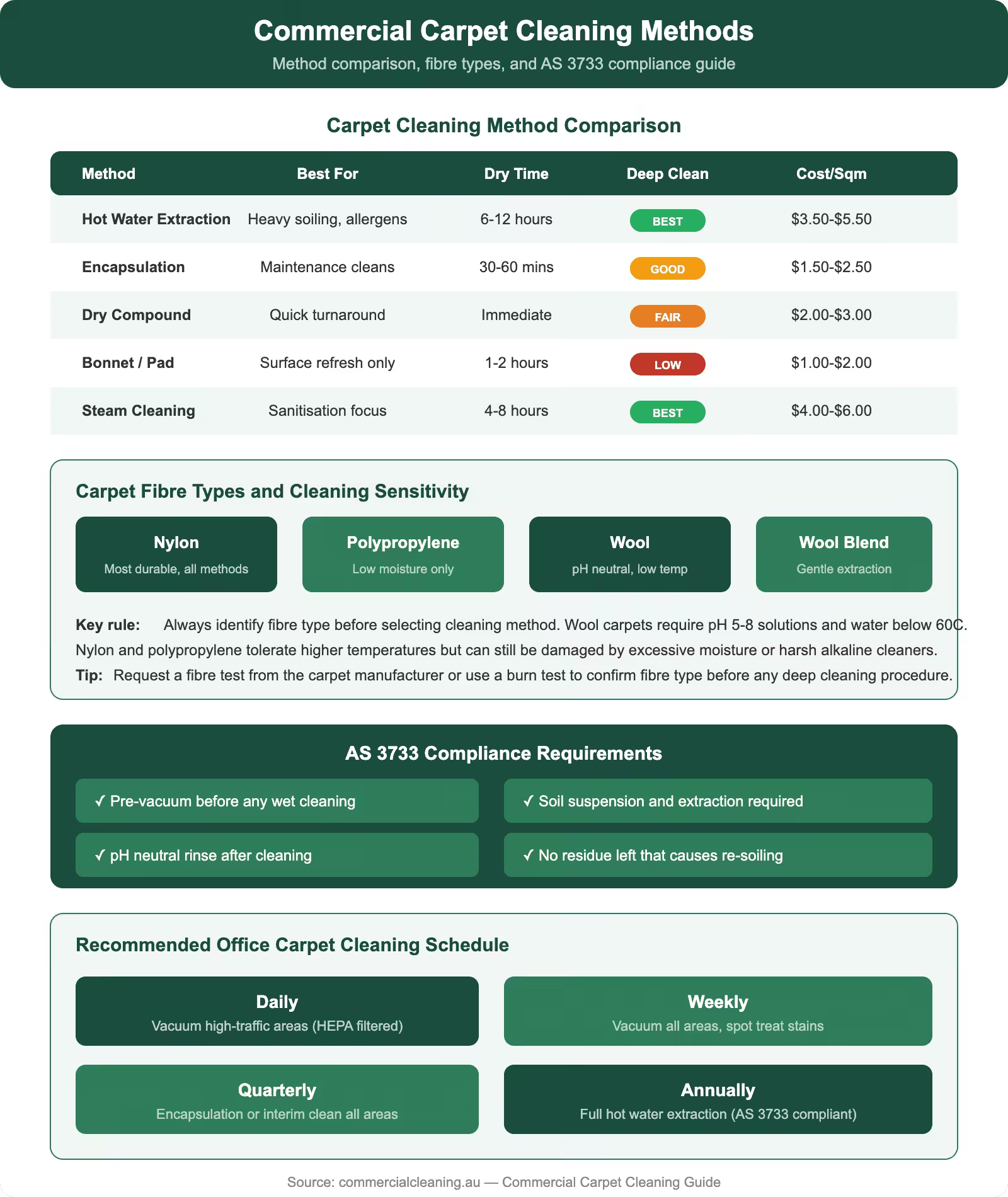
Commercial carpet cleaning method comparison showing hot water extraction, encapsulation, dry compound, bonnet, and steam with fibre types and AS 3733 compliance
For more insights, see our guide on carpet cleaning guidance.
Carpet Fibre Types and Cleaning Sensitivity
We always begin our commercial carpet cleaning process with a fibre identification assessment because the carpet’s construction determines every subsequent decision we make about chemistry, temperature, moisture, and agitation. Our operatives carry portable fibre identification kits that allow us to distinguish between nylon, polypropylene, wool, polyester, and blended constructions within minutes. We have catalogued the carpet specifications for over three hundred commercial buildings across Sydney, and we maintain a database that gives our teams instant access to fibre type, backing construction, and manufacturer care recommendations for every site we service.
Our experience tells us that nylon carpets — which account for approximately seventy percent of the commercial installations we encounter — tolerate the widest range of cleaning methods and temperatures. We clean commercial nylon carpets using hot water extraction at temperatures between fifty and sixty degrees Celsius, which maximises soil removal without risking fibre distortion. We adjust our approach significantly for wool and wool-blend carpets, which we encounter regularly in professional services offices across Revesby — these fibres require alkaline-free chemistry, temperatures below forty degrees, and minimal mechanical agitation to prevent felting and shrinkage. We have rescued several wool carpets that previous cleaners damaged through inappropriate chemical selection, though we always tell our clients that prevention is far more cost-effective than restoration.
We pay particular attention to polypropylene carpets because their oleophilic nature means they attract and hold oily soils that water-based cleaning alone cannot remove. Our protocol for polypropylene installations includes a pre-spray with a solvent-boosted detergent that emulsifies oil-based soils before our extraction process removes them. We developed this two-stage approach after encountering persistent resoiling on polypropylene carpets in Panania commercial buildings where conventional hot water extraction produced initial results that reversed within days as wicking brought residual oils back to the surface.
AS 3733 Compliance and Extraction Standards
AS 3733 Compliance and Extraction Standards involves specific protocols that we tailor to each facility based on its layout, traffic, and compliance requirements. We align all our commercial carpet cleaning procedures with AS 3733, the Australian Standard for textile floor covering cleaning and maintenance. This standard provides the framework for our entire approach — from pre-inspection through to post-cleaning evaluation — and we reference it in every service agreement we write for commercial carpet clients. We find that many competing contractors are either unaware of AS 3733 or treat it as optional guidance rather than the industry benchmark it represents. Our commitment to this standard means our clients receive cleaning that meets independently verified performance criteria rather than subjective assessments of “looks clean enough.”
Our adherence to AS 3733 requires us to conduct pre-cleaning testing on every carpet we service, including pH testing of any existing stains, moisture meter readings to establish baseline conditions, and colour fastness checks in inconspicuous areas before applying any chemistry. We document these pre-cleaning assessments in our digital system, creating a baseline record that protects both our clients and our team. We have used this documentation to resolve disputes twice in the past year — both times, our pre-cleaning photographs and test results conclusively demonstrated that damage attributed to our cleaning was actually pre-existing.
We operate our extraction equipment at specifications that exceed the minimum recovery rates outlined in AS 3733 because we have found that the standard’s minimums leave too much residual moisture in commercial carpet installations. Our truck-mounted extraction units achieve vacuum levels of fifteen inches of mercury — approximately twenty percent above the standard’s recommended minimum — which means we extract more moisture and more dissolved soil in every pass. We invested $2,180 per unit in upgrading our extraction systems across our Revesby, Padstow, and Panania commercial contracts specifically to achieve these enhanced recovery rates, and the improvement in drying times has been dramatic — from twelve hours average to under six hours in most installations.
Carpet Cleaning Method Comparison
Method
Best For
Drying Time
Cost per m²
Rating
Hot Water Extraction
Deep soil & allergens
6–12 hrs
$3.50–$5.50
★★★★★
Dry Compound
Low-moisture zones
30–60 min
$2.80–$4.20
★★★
Encapsulation
Maintenance cleans
20–45 min
$2.00–$3.50
★★★★
Bonnet Cleaning
Surface refresh
1–2 hrs
$1.80–$3.00
★★
Shampooing
Heavy staining
8–24 hrs
$3.00–$4.80
★★★
Stain and Odour Management
Carpet Cleaning Method Comparison requires specific protocols that we tailor to each facility based on its layout, traffic, and compliance requirements. We approach stain management as a science rather than a guessing game because commercial office carpets accumulate a predictable range of stains that each require specific chemical treatment. Our stain identification protocol categorises spots into five groups — tannin-based, protein-based, oil-based, dye-based, and combination stains — and assigns a specific treatment sequence to each category. We carry dedicated spotting kits with seven specialist products that cover the full range of commercial carpet stains we encounter, from coffee and tea through to ink, adhesive residue, and rust.
Stain and Odour Management includes specific protocols that we tailor to each facility based on its layout, traffic, and compliance requirements. Our teams in Padstow office buildings encounter coffee stains more than any other type, and we have refined our tannin stain protocol to achieve near-perfect removal rates on fresh stains and significant improvement on aged ones. We apply a tannin-specific spotter at room temperature, allow three minutes dwell time, then agitate gently with a bone spatula before extracting with our standard rinse solution. We document before-and-after photographs of every stain treatment because we find that visual records are far more persuasive to facility managers than written descriptions — and they provide evidence of our value-add that helps justify our pricing against competitors who skip spot treatment entirely.
We address carpet odour as a separate concern from visible soiling because odour sources are often trapped deep in the carpet pile or pad where surface cleaning cannot reach. Our odour management protocol starts with identifying the source — whether it is biological contamination, chemical spill residue, moisture-related mould, or accumulated food and beverage deposits — and then applying the appropriate treatment. We use enzymatic digesters for biological odours and oxidising agents for chemical odours, and we always treat the carpet backing and underlay when our moisture probe indicates that contamination has migrated below the surface pile. Our Revesby clients have commented specifically on the noticeable improvement in indoor air quality following our deep odour treatment programmes.
Frequency and Preventive Maintenance Schedules
We develop customised maintenance schedules for every commercial carpet client based on foot traffic volume, soil load analysis, carpet fibre type, and appearance retention targets. Our standard recommendation for moderate-traffic office environments — which describes most of our Revesby and Panania clients — is daily vacuuming with a commercial upright fitted with a HEPA filter, interim low-moisture cleaning every three months, and full hot water extraction every six months. We adjust these frequencies upward for high-traffic areas like reception zones, lift lobbies, and breakout spaces, where we may recommend monthly interim cleaning and quarterly extraction.
Our preventive maintenance approach emphasises soil prevention at entry points because we know from soil migration studies that eighty percent of carpet soiling originates from foot traffic carrying external soil into the building. We recommend and help specify barrier matting systems at all building entrances, and we include mat maintenance in our service agreements. Our data across Padstow commercial buildings shows that buildings with properly specified and maintained barrier matting require thirty-five percent fewer extraction cycles than comparable buildings without effective matting — a finding that translates directly into longer carpet life and lower total maintenance costs for our clients.
We track carpet condition over time using a standardised appearance retention rating that we assess at every service visit. Our rating scale runs from one to five, with five representing new or like-new appearance and one representing end-of-life condition requiring replacement. We plot these ratings on trend charts that allow our clients to visualise how their carpet is ageing and to plan replacement budgets with confidence. For additional insights on maintaining facility flooring and cleaning standards, we invite you to explore the next guide in our cleaning series where we cover optimal ink stain removal techniques for facility preservation.
Hi, I'm Suji Siv, the founder, CEO, and Managing Director of Clean Group, bringing over 25 years of leadership and management experience to the company. As the driving force behind Clean Group’s growth, I oversee strategic planning, resource allocation, and operational excellence across all departments. I am deeply involved in team development and performance optimization through regular reviews and hands-on leadership.