We manage hazardous waste disposal for commercial properties including laboratories, manufacturing facilities, automotive workshops, and buildings undergoing renovation, and the compliance requirements in this space are among the strictest our team encounters. Our experience has taught us that hazardous waste is one area where cutting corners creates genuine risk — to staff, to the environment, and to our clients’ operating licences. We wrote this guide because arranging proper commercial waste Sydney commercial properties depend on becomes significantly more complex when hazardous materials are involved. Every protocol below comes from our direct experience managing hazardous waste under NSW EPA regulatory oversight.
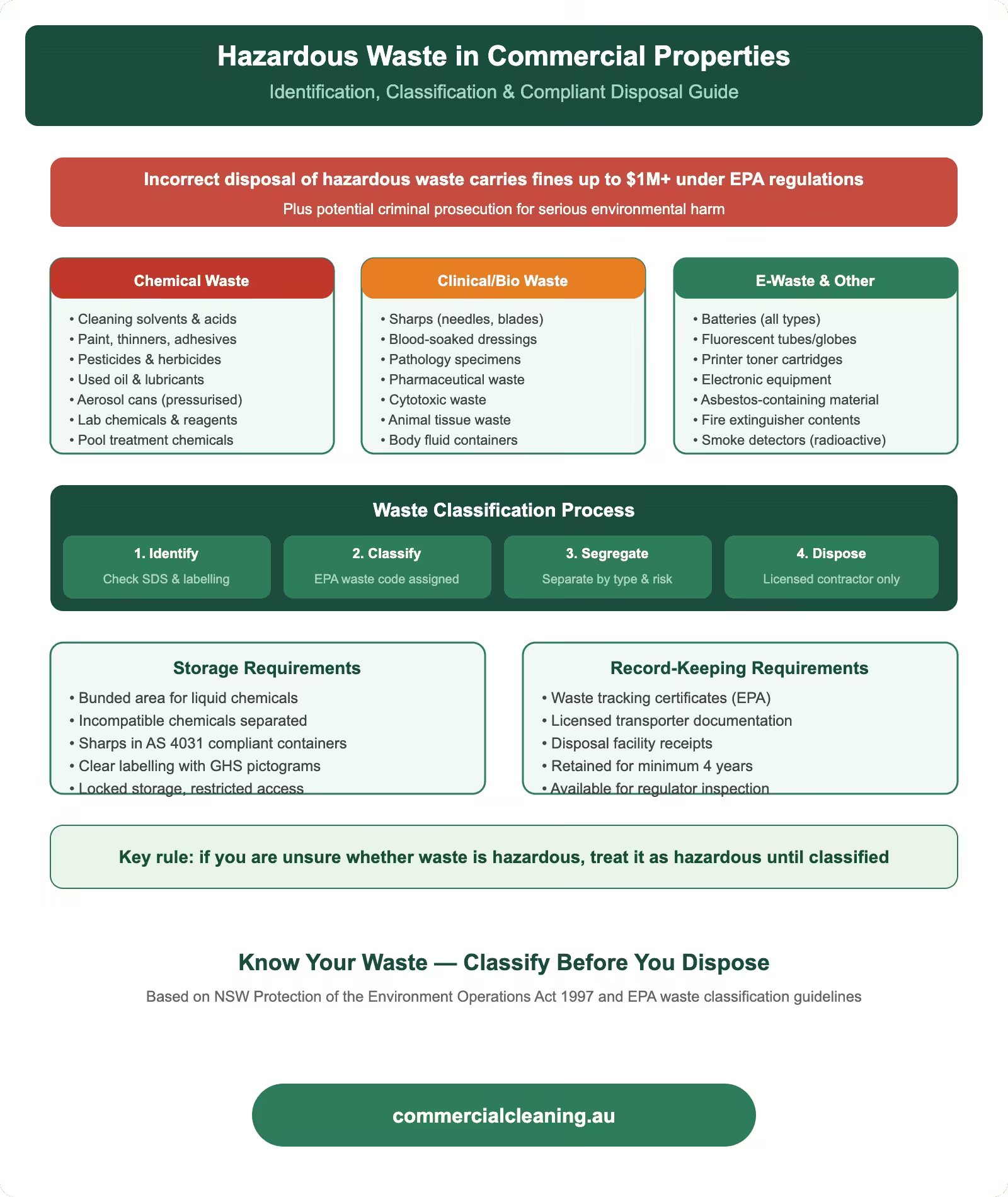
Hazardous waste identification and classification for commercial properties showing chemical, clinical, and e-waste categories with disposal process and storage requirements
Identifying and Classifying Hazardous Waste in Commercial Properties
Identifying and Classifying Hazardous Waste in Commercial Properties covers specific protocols that we tailor to each facility based on its layout, traffic, and compliance requirements. We classify hazardous waste according to the NSW EPA waste classification guidelines, which require generators to assess their waste against specific chemical, physical, and ecotoxicological criteria before disposal. Our team identifies hazardous waste at commercial properties by reviewing Safety Data Sheets for all chemicals in use, inspecting storage areas for expired or abandoned products, and testing unknown materials through accredited laboratories when SDS documentation is unavailable. We have found that the most common hazardous waste streams in commercial properties are waste solvents, paint residues, fluorescent tubes containing mercury, lead-acid batteries, and asbestos-containing materials discovered during renovation work.
We pay particular attention to waste that business owners often do not recognise as hazardous. Our team has audited commercial properties in Kogarah where expired cleaning chemicals, used printer toner cartridges, and old electronic equipment were being disposed of through general waste bins without anyone realising the regulatory implications. We educate our clients on the hazardous waste categories that commonly appear in their industry and install dedicated collection points for each stream so hazardous materials never enter the general waste chain. We follow AS 1678 emergency procedure guide standards when developing our hazardous waste transport documentation, ensuring that every consignment carries the correct emergency response information in case of a spill or accident during transport.
Storage Requirements and Containment Standards
We design hazardous waste storage areas at every client site according to the NSW EPA requirements and the specific characteristics of the waste being stored. Our team ensures that incompatible waste types are segregated — acids stored separately from bases, flammables isolated from oxidisers, and corrosives contained in bunded areas capable of holding at least one hundred and ten percent of the largest container’s volume. We install appropriate signage, provide spill kits matched to the hazard types present, and verify that storage areas have impervious flooring, adequate ventilation, and restricted access.
We conduct monthly inspections of every hazardous waste storage area on our contracts. Our team checks container integrity, label legibility, bund condition, spill kit contents, and compliance with maximum storage quantities and durations. We have found that hazardous waste storage compliance deteriorates quickly without regular monitoring — containers develop leaks, labels fade, bunds accumulate rainwater that reduces containment capacity, and storage durations creep beyond the maximum periods specified in EPA licences. We address every deficiency immediately and report the findings to our client’s WHS manager for their records. A building manager in Carlton told us that our monthly storage inspections were the only systematic check their hazardous waste area received, and our reports had identified three containment issues that could have become reportable incidents if left uncorrected.
Commercial Waste Stream Comparison
Waste Type
Bin Colour
Collection
Cost per Pickup
Regulation
General Waste
Red lid
2–5× weekly
$45–$120
EPA General
Co-mingled Recycling
Yellow lid
1–3× weekly
$30–$80
WARR Act 2001
Paper/Cardboard
Blue lid
1–2× weekly
$25–$60
WARR Act 2001
Organic/Food
Green lid
2–4× weekly
$35–$90
EPA Food Waste
Clinical/Hazardous
Yellow bag
Licensed schedule
$150–$400
EPA Hazardous Waste
Licensed Transport and Disposal Chain Management
Commercial Waste Stream Comparison requires specific protocols that we tailor to each facility based on its layout, traffic, and compliance requirements. We arrange all hazardous waste transport through licensed operators who hold current NSW EPA approvals for the specific waste categories they carry. Our team verifies transporter licences before every engagement, confirms that vehicles carry the required dangerous goods placards and emergency equipment, and ensures that drivers hold appropriate dangerous goods driver licences. We maintain copies of all transporter licences in our compliance files and re-verify them annually. We have rejected transporters who arrived at our sites with expired licences or incomplete documentation, because using an unlicensed transporter exposes our clients to significant regulatory penalties.
We track every hazardous waste consignment from generation to final disposal using a documented chain-of-custody system. Our team records the waste description, classification, quantity, generator details, transporter details, and receiving facility details for every load, and we retain these records for the minimum period required by the EPA. We have found that maintaining complete disposal documentation protects our clients during regulatory audits because they can demonstrate full traceability for every kilogram of hazardous waste generated at their property. We also verify that receiving facilities hold the appropriate EPA licences for the waste types they accept, because disposing of hazardous waste at an unlicensed facility creates liability for the generator regardless of who arranged the transport.
Emergency Response and Spill Management
We maintain a hazardous waste emergency response plan for every property where we manage hazardous waste streams, and our team rehearses spill response procedures during quarterly training sessions. Our emergency plans cover containment, evacuation, decontamination, and reporting procedures for each hazard class present at the site, and we tailor the plans to the specific chemicals and quantities stored. We carry hazardous waste spill response kits on every vehicle that services properties with hazardous waste streams, and these kits contain absorbent materials, neutralising agents, containment booms, disposable PPE, and waste bags appropriate for the hazard types at each site.
We have responded to hazardous waste spills at three commercial properties over the past five years, and in every case our team contained the material before it reached stormwater drains or caused environmental harm. Our training program includes hands-on spill response exercises using simulated scenarios that test containment speed, PPE selection, and notification procedures. We require every team member who handles hazardous waste to pass a practical assessment before they are authorised to work unsupervised on hazardous waste tasks. One spill response at an automotive workshop in Allawah involved a ruptured waste oil container that released approximately forty litres onto the workshop floor — our team contained the spill within five minutes using absorbent booms and granules, preventing any material from reaching the external drainage system. The remediation and disposal of contaminated absorbent material cost $2,010, but the facility owner told us that the rapid response likely prevented a much more expensive environmental cleanup and potential EPA enforcement action.
Compliance Auditing and Record Management
We provide quarterly hazardous waste compliance audits for every property we manage, covering waste classification accuracy, storage compliance, transport documentation, disposal records, and staff training currency. Our team generates formal audit reports with risk ratings for any deficiencies and tracks corrective actions through to completion. We have supported our clients through EPA inspections using our audit documentation, and properties with our management systems in place have consistently passed without enforcement notices.
We believe that hazardous waste compliance is a continuous obligation that requires active management rather than periodic attention. Our team monitors regulatory changes and updates our protocols and training materials whenever new requirements are introduced. We communicate changes proactively and implement updated procedures before compliance deadlines. We consider hazardous waste management one of the most important services we provide because the consequences of non-compliance — environmental damage, health impacts, regulatory penalties, and reputational harm — are severe and largely preventable through proper systems and ongoing vigilance. Learn more about managing workplace recycling in our detailed guide.
Hi, I'm Suji Siv, the founder, CEO, and Managing Director of Clean Group, bringing over 25 years of leadership and management experience to the company. As the driving force behind Clean Group’s growth, I oversee strategic planning, resource allocation, and operational excellence across all departments. I am deeply involved in team development and performance optimization through regular reviews and hands-on leadership.