We have been purchasing cleaning chemicals in both bulk and retail quantities for over fifteen years across our Sydney operations, and our team has accumulated detailed cost data that reveals exactly when bulk buying makes financial sense and when it doesn’t. Our procurement experience spans everything from single bottles of glass cleaner for small offices to pallet loads of concentrated disinfectant for large facility contracts. We share this analysis because we believe facility managers deserve transparent information to make smart purchasing decisions rather than relying on supplier claims about savings.
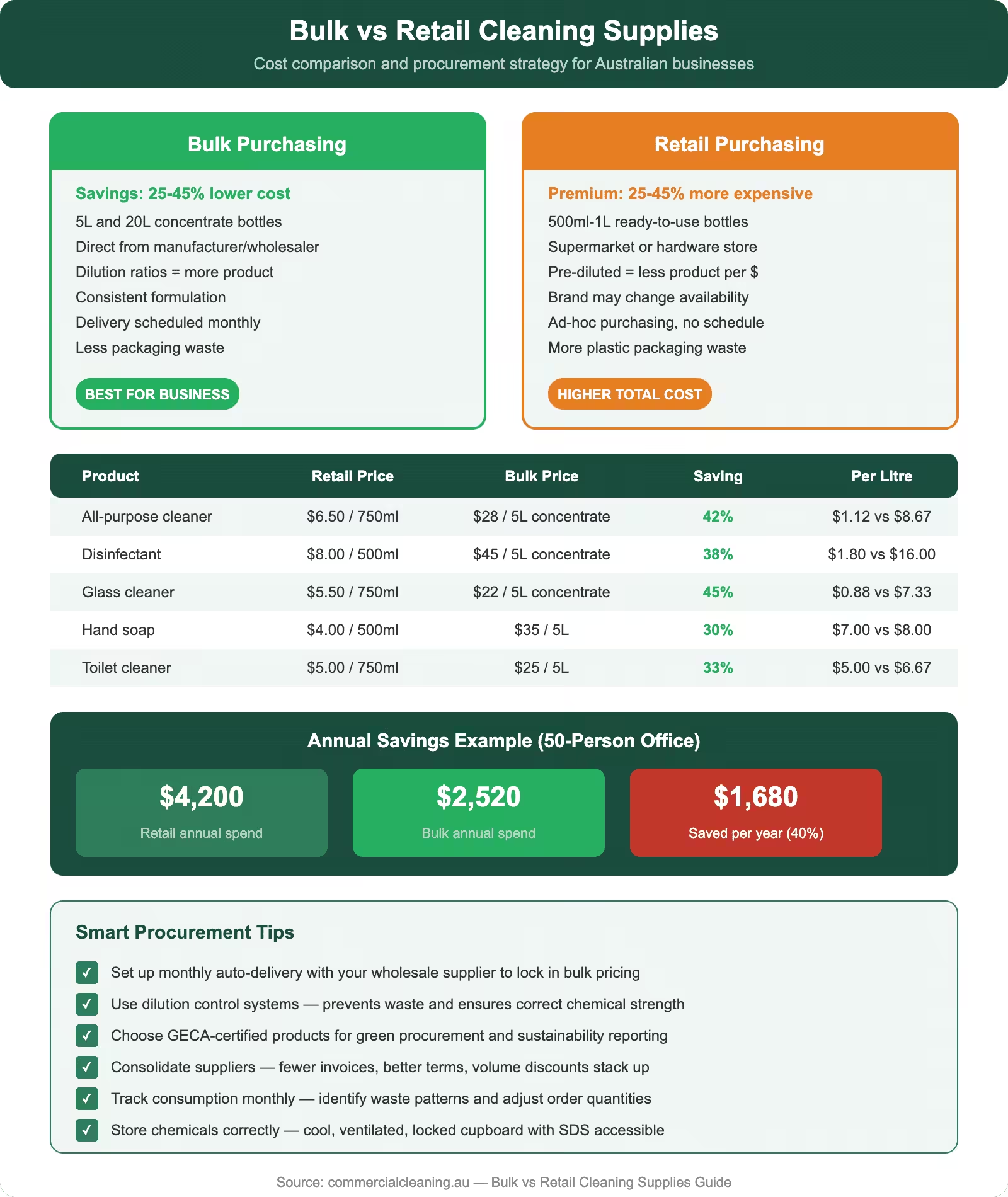
Bulk vs retail cleaning supplies cost comparison showing per-product savings, annual cost example, and smart procurement tips for Australian businesses
We track our purchasing costs meticulously, and our data shows that bulk cleaning supplies typically cost 15 to 30 percent less per unit than retail equivalents. Our team has analysed three years of procurement data across our operations and found that the average saving on concentrated cleaning chemicals bought in 20-litre drums versus 5-litre retail containers is 22 percent per litre of diluted solution. For consumables like microfibre cloths, waste bags, and paper products, bulk purchasing delivers savings of approximately 18 percent compared to retail case quantities.
We are careful to distinguish between genuine per-unit savings and the illusion of savings that comes from buying more than you need. Our team has seen facilities purchase bulk quantities that exceeded their consumption rate, resulting in products expiring before use or deteriorating in storage. We had one client in Merrylands who purchased a full pallet of surface sanitiser at an attractive bulk price, only to discover six months later that the product’s active ingredients had degraded below effective concentrations because the storage area wasn’t temperature-controlled. The apparent saving became an actual loss when the product had to be disposed of and replaced.
When Bulk Buying Makes Sense
When Bulk Buying Makes Sense involves specific protocols that we tailor to each facility based on its layout, traffic, and compliance requirements. We recommend bulk purchasing when three conditions are met: the facility has adequate compliant storage space, the consumption rate will use the product within its shelf life, and the per-unit saving exceeds the cost of storage and capital tie-up. Our team has developed a simple calculation that our clients can use — if the annual consumption of a product exceeds 100 litres of diluted solution, bulk purchasing of the concentrate almost always delivers genuine savings. Below that threshold, retail quantities often make more financial sense when you account for storage costs and waste risk.
We also find that bulk purchasing works best for stable product ranges rather than for products you’re trialling or might change. Our team buys core products — multi-purpose cleaner, bathroom disinfectant, glass cleaner, and floor solution — in bulk because these are established products we know work well and we use consistently across all our sites. We buy specialty products in smaller quantities until we’ve confirmed they meet our performance requirements. This disciplined approach prevents us from being stuck with bulk quantities of products that don’t perform as expected.
Retail Store Cleaning Zone Guide
Zone
During Trading
After Close
Weekly
Impact on Sales
Entrance/Storefront
Spot mop, glass wipe
Full mop + glass
Pressure wash
+15% foot traffic
Sales Floor
Spot clean spills
Vacuum + mop
Machine scrub
+8% dwell time
Fitting Rooms
Wipe after each use
Full sanitise
Deep clean + deodorise
+12% conversion
POS/Checkout
Hourly wipe-down
Full sanitise
Deep detail
Reduced sick leave
Stockroom
—
Sweep + tidy
Full clean + organise
Faster restocking
Hidden Costs of Bulk Purchasing
Retail Store Cleaning Zone Guide requires specific protocols that we tailor to each facility based on its layout, traffic, and compliance requirements. We have identified several hidden costs that reduce the apparent savings of bulk buying, and our team accounts for all of these in our procurement decisions. Storage space has a real cost — every square metre dedicated to chemical storage is space that could serve another purpose. Handling bulk containers requires equipment and training that retail-sized products don’t demand. Capital tied up in bulk inventory earns no return while sitting on a shelf. Insurance costs may increase with larger quantities of hazardous chemicals on site. And disposal costs for expired or deteriorated products can be significant, especially for hazardous chemical waste.
Hidden Costs of Bulk Purchasing includes specific protocols that we tailor to each facility based on its layout, traffic, and compliance requirements. We’ve also encountered quality consistency issues with some bulk suppliers. Our team has received bulk deliveries where the product concentration varied from the specification, where containers were damaged during transport — particularly pressurised dispensing units that must comply with AS 2507.1 small pressure vessel standards, or where products arrived near their expiry date despite being sold as fresh stock. We now source bulk supplies exclusively from manufacturers or authorised distributors rather than from third-party resellers, and we check batch dates and conduct basic quality verification on delivery. These quality controls add a small amount of time to our receiving process but prevent much larger costs from product failures.
Retail Purchasing: When Smaller Is Smarter
Retail Purchasing addresses specific protocols that we tailor to each facility based on its layout, traffic, and compliance requirements. We use retail-sized products in several situations where bulk buying would be wasteful or impractical. Our team purchases retail quantities for small office sites where storage space is minimal, for specialty products used infrequently, for new products we’re evaluating, and for sites with specific product requirements that differ from our standard range. We’ve found that retail purchasing from quality suppliers with good customer service often provides better overall value for these applications than bulk purchasing with its associated storage and management overhead.
We also prefer retail quantities for products with limited shelf life or stability concerns. Some disinfectants, enzyme-based cleaners, and speciality treatments have shelf lives as short as six months once opened, and buying more than you’ll use in that window is false economy regardless of the unit price. Our team maintains a product shelf-life database that informs our purchasing decisions, ensuring we never buy quantities that exceed our realistic consumption before expiry. We developed this system after calculating that product waste from over-purchasing was costing us approximately $1,730 per quarter across our operations before we implemented disciplined quantity controls.
Supplier Relationships and Negotiation
We have built strong relationships with a small number of trusted suppliers over many years, and our team has found that these relationships deliver better long-term value than constantly chasing the lowest price from multiple vendors. Our primary suppliers understand our quality requirements, provide consistent products, offer competitive pricing based on our volume commitments, and support us with technical advice when we’re evaluating new products or dealing with unusual cleaning challenges.
We negotiate annual supply agreements that lock in pricing while maintaining flexibility on delivery schedules and quantities. Our team has found that suppliers respond well to commitments — when we guarantee a minimum annual volume, they offer better unit pricing than ad-hoc purchasing at any quantity. We’ve structured agreements with our Guildford-based supplier that provide bulk pricing on regular deliveries of standard products while allowing us to order retail quantities of specialty items on the same account with consistent service standards.
Making the Right Decision for Your Facility
Making the Right Decision for Your Facility focuses on specific protocols that we tailor to each facility based on its layout, traffic, and compliance requirements. We recommend that facility managers conduct a straightforward cost analysis before committing to bulk purchasing. Our team uses a simple framework: calculate your monthly consumption of each product, determine the storage cost per unit per month, compare the bulk unit price plus storage cost against the retail unit price, and factor in waste risk from potential expiry. We’ve found that this analysis often produces surprising results — some products that appear to offer large bulk savings actually cost more when storage and waste are factored in, while others deliver even better savings than the headline discount suggests.
We also advise facilities in the Granville area and across Sydney to consider cooperative purchasing arrangements with neighbouring businesses. Our team has helped several business parks and strata complexes establish shared purchasing programs where multiple businesses combine their requirements to achieve bulk pricing without any single business needing to store large quantities. These cooperative arrangements deliver genuine savings while distributing storage requirements across multiple premises, and they work particularly well for consumable products like waste bags, paper towels, and soap that every business uses.
If you’d like help analysing your cleaning supply costs and determining the best purchasing strategy for your facility, our team can conduct a procurement review and provide specific recommendations. We bring real purchasing data and practical experience to help you make informed decisions. Contact us to learn more alongside our guide to disinfectants and sanitisers for business.
Frequently Asked Questions
How much can I save by buying cleaning supplies in bulk? We find bulk purchasing typically saves 15 to 30 percent per unit compared to retail. Our data shows an average 22 percent saving on concentrated chemicals in 20-litre drums versus 5-litre containers, and approximately 18 percent on consumables like microfibre cloths and waste bags when bought in bulk quantities.
When does bulk buying not make financial sense? We advise against bulk purchasing when storage space is limited, when consumption won’t use the product within its shelf life, when products are being trialled rather than established, or when the per-unit saving doesn’t exceed storage and capital costs. Products with shelf lives under six months are particularly risky in bulk.
What hidden costs should I consider with bulk purchasing? We account for storage space opportunity cost, handling equipment and training, capital tied up in inventory, potentially higher insurance premiums, disposal costs for expired products, and quality verification on delivery. These hidden costs can significantly reduce apparent bulk savings.
How do I calculate whether bulk or retail is cheaper for my facility? We use a simple framework: calculate monthly consumption, determine storage cost per unit per month, compare bulk unit price plus storage against retail unit price, and factor in waste risk from potential expiry. If annual consumption exceeds 100 litres of diluted solution, bulk concentrate usually wins.
Should I use one supplier or multiple suppliers? We recommend building relationships with a small number of trusted suppliers rather than constantly chasing the lowest price. Annual volume commitments typically secure better unit pricing than ad-hoc purchasing, and reliable suppliers provide consistent products and valuable technical support.
How do I avoid product waste from bulk over-purchasing? We maintain a product shelf-life database and match purchasing quantities to realistic consumption rates. We check batch dates on delivery and store products in temperature-controlled environments where required. Disciplined quantity controls based on actual usage data prevent the waste that erodes bulk purchasing savings.
Can small businesses benefit from bulk cleaning supply pricing? We help small businesses access bulk pricing through cooperative purchasing arrangements with neighbouring businesses. Multiple businesses combine their requirements to achieve bulk pricing without any single business needing large storage capacity. This works especially well for universal consumables.
What products are best suited to bulk purchasing? We buy core stable products in bulk — multi-purpose cleaner, bathroom disinfectant, glass cleaner, and floor solution — because these are established products with consistent demand. Specialty products, trial items, and products with limited shelf life are better purchased in retail quantities until needs are confirmed.
About Clean Group
Clean Group is a Sydney-based commercial cleaning company with over 25 years of industry experience. Founded by Suji Siv, our team of 50+ trained professionals services offices, warehouses, medical centres, schools, childcare facilities, retail stores, gyms, and strata properties across Sydney, Melbourne, and Brisbane.
We are active members of ISSA and the Building Service Contractors Association of Australia (BSCAA). Our operations align with ISO 9001 (Quality Management), ISO 14001 (Environmental Management), and ISO 45001 (Workplace Health and Safety) standards. We hold membership with the Green Building Council of Australia and use eco-friendly, TGA-registered cleaning products wherever possible.
Every Clean Group cleaner is police-checked, fully insured, and trained in safe work procedures under SafeWork NSW guidelines. We operate 7 days a week, including after-hours and weekend services, to minimise disruption to your business.
Hi, I'm Suji Siv, the founder, CEO, and Managing Director of Clean Group, bringing over 25 years of leadership and management experience to the company. As the driving force behind Clean Group’s growth, I oversee strategic planning, resource allocation, and operational excellence across all departments. I am deeply involved in team development and performance optimization through regular reviews and hands-on leadership.