We clean strata car parks across Sydney every week, and they are consistently the most underestimated common area in any building. Our crew services underground car parks from compact 20-space basements in Newtown to multi-level structures with 400 bays in Parramatta, and the challenges are remarkably consistent — oil stains, tyre marks, dust accumulation, drainage blockages, and the constant battle against poor ventilation. When our strata cleaners sydney team takes on a new building, the car park assessment often reveals maintenance gaps that have been building for years.
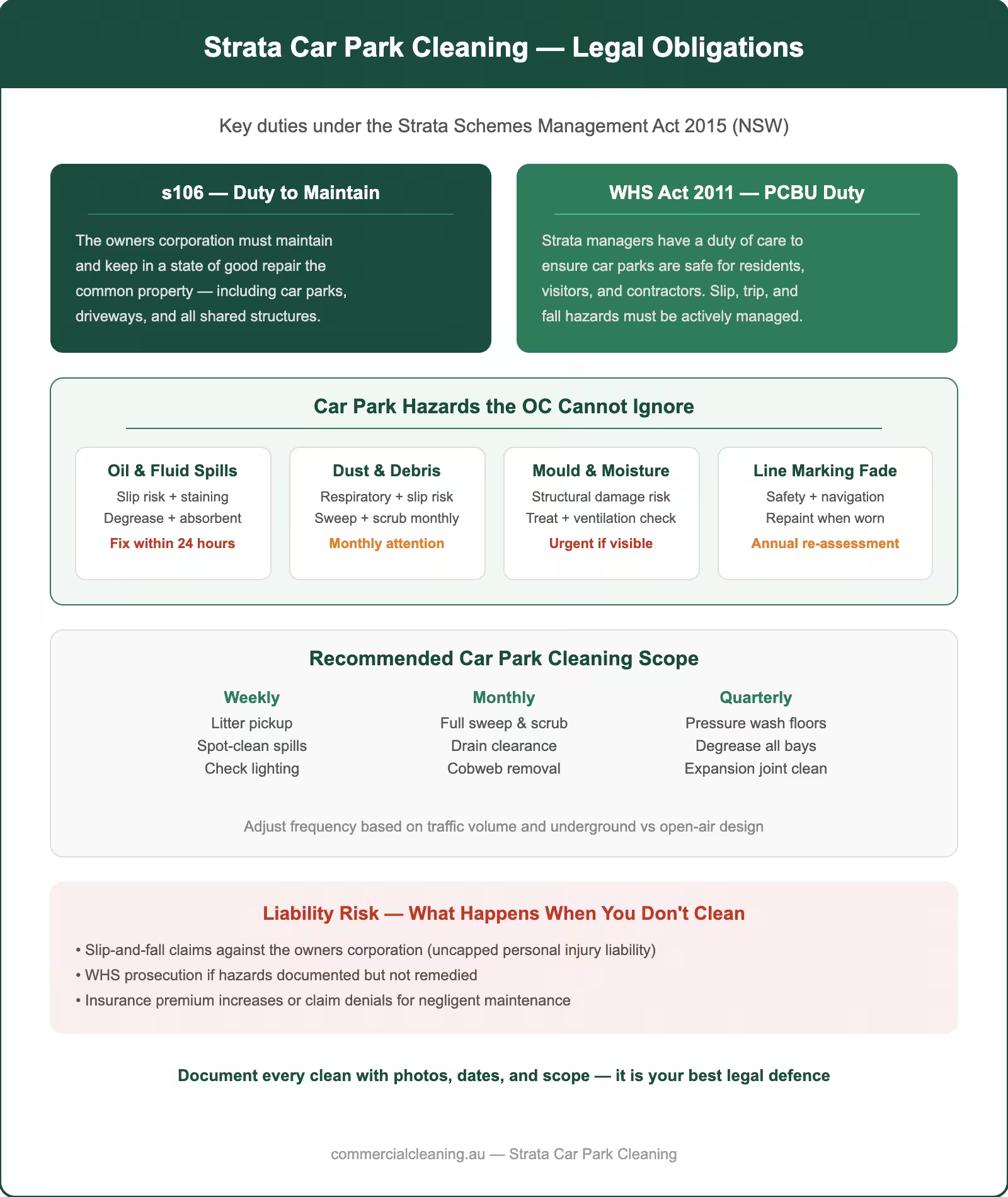
Strata car park cleaning legal obligations chart showing duties under Strata Schemes Management Act, common hazards, recommended cleaning scope, and liability risks
Legal Obligations the Owners Corporation Cannot Ignore
Legal Obligations the Owners Corporation Cannot Ignore covers specific protocols that we tailor to each facility based on its layout, traffic, and compliance requirements. We always start car park discussions with the legal baseline because most strata committees underestimate their exposure. Under the Strata Schemes Management Act 2015, the car park is common property and the owners corporation carries full responsibility for its maintenance, safety, and cleanliness. That includes slip hazard management under AS 4586, fire safety compliance under the Building Code of Australia, and stormwater protection under the Protection of the Environment Operations Act 1997. We have seen councils issue fines of $5,000 to $15,000 for stormwater contamination caused by uncontained car park wash-down water entering the drainage system.
Our team documents every car park clean with timestamped photos and inspection reports. This evidence matters at AGMs when levy spending is scrutinised, and it provides critical protection if an incident leads to a liability claim. A Chatswood building we service avoided a $45,000 slip-and-fall claim because our inspection records proved the area had been cleaned and signed with wet-floor warnings within the required timeframe.
Our Pressure Washing and Mechanical Approach
Our Pressure Washing and Mechanical Approach involves specific protocols that we tailor to each facility based on its layout, traffic, and compliance requirements. We use commercial Karcher units rated at 3,000 PSI for concrete car park surfaces, combined with ride-on scrubbers for larger facilities. Our standard protocol runs quarterly pressure washes with monthly scrubber maintenance in between. For a typical 80-bay underground car park, a full pressure wash takes our crew approximately six hours and costs the owners corporation between $1,200 and $1,800 depending on access complexity and contamination level.
Containment is non-negotiable. We deploy bunding around drain points and use vacuum recovery systems to capture all wash-down water before it enters the stormwater system. The recovered water goes to a licensed trade waste facility — we keep disposal receipts on file for every job. Our Bankstown team recently helped a strata manager pass a council environmental audit specifically because we could produce twelve months of wash-down water disposal documentation. Without that evidence, the building was facing a potential compliance notice.
Strata Common Area Maintenance Schedule
Area
Daily
Weekly
Monthly
Annual
Lobby & Foyer
Sweep, mop, glass
Deep mop, dust lights
Floor machine scrub
Strip & reseal
Lifts & Doors
Wipe panels + buttons
Full interior detail
Track & rail degrease
Deep restoration
Car Park
Litter patrol
Sweep + line check
Pressure wash bays
Full pressure + repaint
Pool/Gym
Sanitise surfaces
Deep clean equipment
Grout scrub
Full tile restoration
Bin Room
Hose down, deodorise
Deep scrub walls
Pest treatment
Full sanitise + repaint
Oil Stain Removal That Actually Works
Strata Common Area Maintenance Schedule requires specific protocols that we tailor to each facility based on its layout, traffic, and compliance requirements. We have tested dozens of degreasing products over the years and settled on a two-stage approach that delivers consistent results. Stage one applies a commercial-grade alkaline degreaser — we use products rated for AS/NZS 4360 risk management compliance — and allows 15 to 20 minutes of dwell time on fresh stains. Stage two hits the area with our 3,000 PSI pressure washer at close range. For older, set-in stains, we add a poultice treatment that draws oil out of the concrete over 24 hours before the pressure wash.
Oil Stain Removal That Actually Works includes specific protocols that we tailor to each facility based on its layout, traffic, and compliance requirements. Prevention is where we save the most money for owners corporations. We recommend installing drip trays at identified leak-prone bays and applying a penetrating concrete sealer annually. The sealer costs approximately $800 to $1,500 for a standard car park and reduces stain penetration by roughly 70 percent based on our experience across buildings in Eastwood, Homebush, and Surry Hills. One Cabramatta strata committee initially balked at the sealer cost but approved it after we showed them the $3,200 remediation bill from the previous year’s oil stain removal.
Ventilation and Air Quality in Underground Spaces
We pay close attention to car park ventilation because poor air quality creates both health risks and cleaning challenges. Dust and exhaust particulate settle faster in poorly ventilated spaces, meaning surfaces need more frequent cleaning. Our team checks mechanical ventilation systems during every car park service and flags any units running below capacity to the strata manager. We have found that roughly 30 percent of the underground car parks we assess have ventilation systems operating at reduced efficiency due to dirty filters, blocked intakes, or failed fan motors.
For buildings with persistent air quality issues, we recommend carbon monoxide monitoring aligned with AS 1668.2 ventilation requirements. Our Liverpool crew identified dangerously high CO levels in a basement car park where two exhaust fans had failed — the strata manager had no idea until our team flagged it during a routine cleaning visit. That early detection potentially prevented a serious health incident for residents using the car park daily.
Most car parks require sweeping fortnightly and full scrubbing quarterly. High-traffic locations often need weekly sweeping. Frequency depends on vehicle volume, construction activity, and whether the car park is open-air or enclosed.
What is the difference between sweeping and scrubbing?
Sweeping removes loose debris using mechanical brushes and vacuum extraction. Scrubbing applies cleaning solution, agitates with rotating pads, and vacuums dirty water. Scrubbing removes tyre marks and oil residue that sweeping cannot address.
Do strata buildings need regular car park cleaning under NSW law?
Yes. The Strata Schemes Management Act 2015 requires owners corporations to maintain all common property including car parks in a state of good repair. Neglecting car park hygiene can breach by-laws and increase liability.
Can professional car park cleaning reduce slip and fall incidents?
Regular cleaning significantly reduces risk. Oil spills and dust accumulation lower floor slip resistance per Australian Standard AS 4586. Routine cleaning restores surfaces to safe friction levels.
What equipment is used for underground car park cleaning?
Underground car parks require compact, low-emission equipment. Walk-behind sweepers and battery-powered auto-scrubbers produce zero exhaust fumes and low noise levels, important for residential buildings.
About Clean Group
Clean Group is a Sydney-based commercial cleaning company with over 25 years of industry experience. Founded by Suji Siv, our team of 50+ trained professionals services offices, warehouses, medical centres, schools, childcare facilities, retail stores, gyms, and strata properties across Sydney, Melbourne, and Brisbane.
We are active members of ISSA and the Building Service Contractors Association of Australia (BSCAA). Our operations align with ISO 9001 (Quality Management), ISO 14001 (Environmental Management), and ISO 45001 (Workplace Health and Safety) standards. We hold membership with the Green Building Council of Australia and use eco-friendly, TGA-registered cleaning products wherever possible.
Every Clean Group cleaner is police-checked, fully insured, and trained in safe work procedures under SafeWork NSW guidelines. We operate 7 days a week, including after-hours and weekend services, to minimise disruption to your business.
Hi, I'm Suji Siv, the founder, CEO, and Managing Director of Clean Group, bringing over 25 years of leadership and management experience to the company. As the driving force behind Clean Group’s growth, I oversee strategic planning, resource allocation, and operational excellence across all departments. I am deeply involved in team development and performance optimization through regular reviews and hands-on leadership.