We provide specialist confined space cleaning services across Sydney industrial facilities because this is one of the highest-risk cleaning operations in any commercial environment and it demands a level of expertise that goes far beyond standard factory cleaning. Our Industrial cleaning services in Sydney include confined space entry and decontamination for tanks, silos, pits, ducts, vessels, and any enclosed area where atmospheric hazards or restricted access create risks that must be actively managed. Our team operates across Ingleburn, Minto, and Macquarie Fields where manufacturing and processing facilities regularly require this type of specialist work.
We define a confined space using the criteria in the Work Health and Safety Regulations — an enclosed or partially enclosed area not designed for continuous human occupancy, with restricted entry or exit, and a risk of atmospheric contamination, engulfment, or entrapment. Our team has cleaned spaces that obviously qualify such as storage tanks and silos, and we have also identified confined spaces in less obvious locations such as below-ground pits, ceiling voids, large equipment housings, and drainage channels within factory buildings. We have assessed facilities in Ingleburn where the client did not realise that certain areas of their factory met the confined space definition until our assessment identified them.
We treat every potential confined space with the same level of caution regardless of how routine the entry might seem because complacency is the single biggest risk factor in confined space incidents. Our team has encountered situations in Minto facilities where workers had been entering unventilated pits without any safety precautions for years without incident, and while nothing had gone wrong yet, the atmospheric conditions we measured during our assessment confirmed that the risk was very real. Our approach is always to apply the full safety protocol even when the space appears benign.
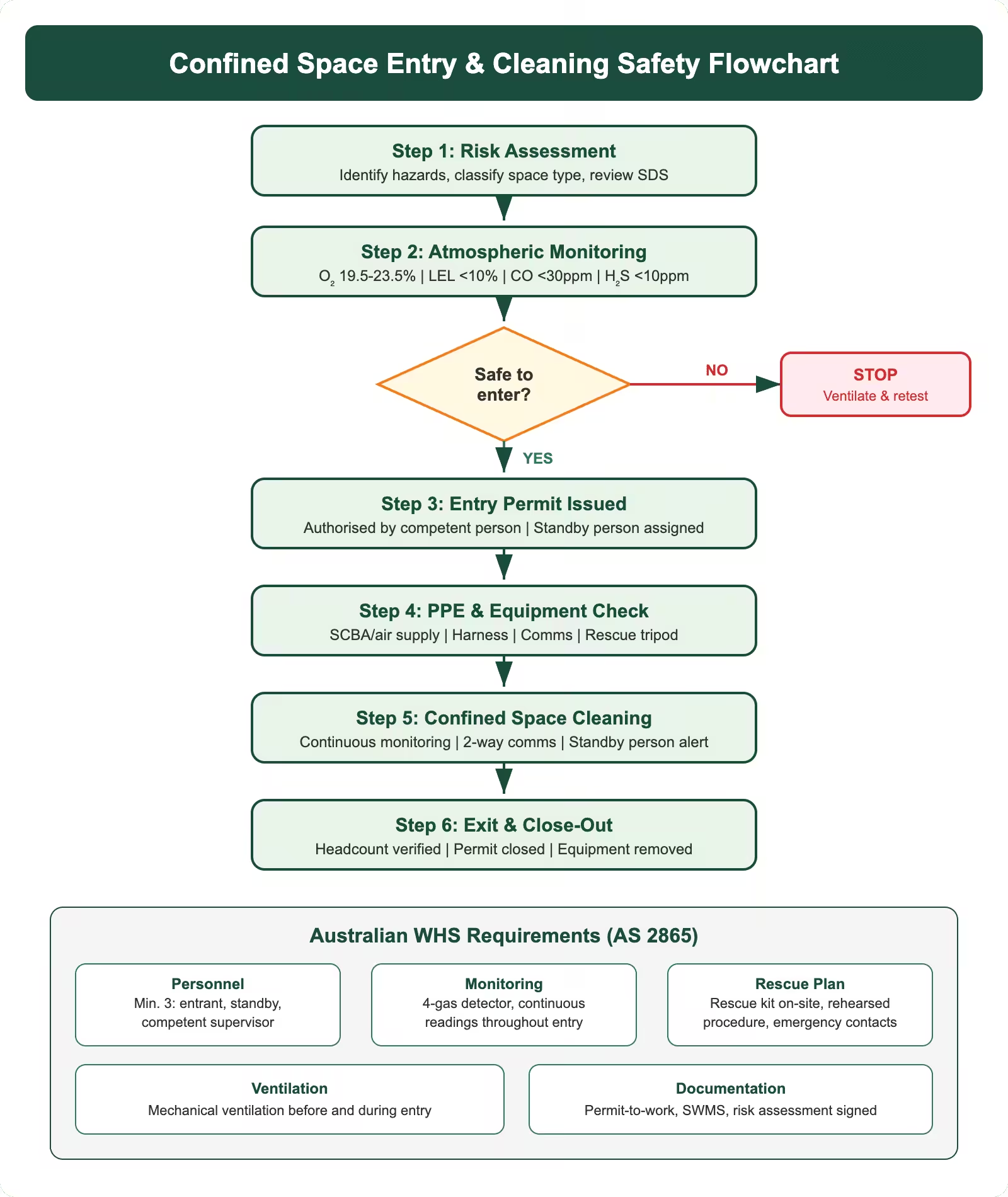
Confined space entry and cleaning safety procedure flowchart showing 6 steps from risk assessment to exit with Australian WHS requirements
Safety Protocols and Atmospheric Monitoring
Safety Protocols and Atmospheric Monitoring involves specific protocols that we tailor to each facility based on its layout, traffic, and compliance requirements. We follow a multi-stage safety protocol for every confined space entry that begins well before anyone enters the space. Our team starts with a risk assessment that identifies the potential hazards specific to that space — atmospheric contamination, flammable vapours, oxygen deficiency or enrichment, engulfment risks, and mechanical hazards from nearby equipment. We then develop a Safe Work Method Statement that documents the controls for each identified hazard and specifies the equipment, personnel, and emergency procedures required for the entry.
We conduct atmospheric testing before every entry using a four-gas monitor that measures oxygen levels, lower explosive limit, hydrogen sulphide, and carbon monoxide. Our team takes readings at multiple levels within the space because heavier-than-air gases settle to the bottom while lighter gases accumulate at the top. We have detected dangerous hydrogen sulphide concentrations in factory drainage pits in Macquarie Fields that were not evident at the entry point but reached immediately dangerous levels at the bottom of the pit. Our pre-entry testing protocol caught this hazard before anyone was exposed. We also monitor the requirements of AS 1940, the Australian Standard for the storage and handling of flammable and combustible liquids, whenever our confined space work involves cleaning tanks or vessels that have contained these materials.
Office Area Cleaning Frequency Guide
Area
Daily
Weekly
Monthly
Quarterly
Reception & Lobby
Vacuum, mop, wipe
Glass doors, furniture
Deep carpet clean
Window wash
Workstations
Surface wipe, bins
Monitor & keyboard
Drawer clean-out
Chair shampoo
Kitchen/Breakroom
Bench, sink, floor
Fridge, microwave
Deep degrease
Exhaust fan clean
Bathrooms
Full sanitise + restock
Grout scrub
Descale fixtures
Vent clean
Meeting Rooms
Table wipe, vacuum
AV equipment dust
Upholstery clean
Carpet extraction
Entry Permits and Personnel Requirements
Office Area Cleaning Frequency Guide requires specific protocols that we tailor to each facility based on its layout, traffic, and compliance requirements. We issue a formal confined space entry permit for every job that documents the space identification, the hazard assessment, the atmospheric test results, the control measures in place, the personnel involved, and the time limits for the entry. Our permits are signed by both the entry supervisor and the standby person before work begins, and they are closed out formally when the work is complete. We have found that this documentation discipline both ensures safety during the job but also provides a defensible compliance record for our clients audit files.
We assign a minimum of three personnel to every confined space cleaning job — the entrant who performs the work inside the space, the standby person who maintains visual or verbal contact from the entry point and is ready to initiate rescue if needed, and the entry supervisor who holds overall responsibility for the operation. Our standby personnel are trained in confined space rescue techniques and we carry rescue equipment including retrieval lines, harnesses, and self-contained breathing apparatus on every job. We have never had to perform an emergency rescue on any of our confined space cleaning jobs and we attribute that record entirely to the rigour of our pre-entry assessment and monitoring processes.
Cleaning Methods for Confined Spaces
Cleaning Methods for Confined Spaces addresses specific protocols that we tailor to each facility based on its layout, traffic, and compliance requirements. We select our cleaning method based on the type of contamination, the size and configuration of the space, and the ventilation conditions. Our most common approach for tanks and vessels is high-pressure water cleaning using heated water and appropriate detergent to remove residue from internal surfaces. We have cleaned storage tanks in Ingleburn food processing facilities where the tank interior had a baked-on protein residue that required sustained high-pressure treatment at specific temperatures to break down effectively. Our equipment includes long-reach lances that allow us to clean tank walls and ceilings from the access point without the entrant having to position themselves directly beneath falling debris.
We also use vacuum extraction for removing solid and semi-solid materials from confined spaces such as sludge from settlement pits, grain residue from silos, and chemical precipitate from treatment vessels. Our industrial vacuum units have HEPA filtration and can handle both wet and dry materials. We have extracted tonnes of accumulated sludge from below-ground pits in Minto industrial facilities where the material had been building up for years and was creating both a hygiene and a structural loading concern.
Ventilation Management
We maintain forced ventilation throughout every confined space entry using portable blower fans that supply fresh air to the work zone and extract contaminated air from the space. Our ventilation setup is calculated based on the space volume and the contamination type to confirm adequate air changes per hour. We position supply and extraction points to create a through-flow pattern that sweeps contaminated air away from the entrant rather than recirculating it within the space. We have tested our ventilation setups in Macquarie Fields factory tanks using smoke tubes to verify airflow patterns before the entrant goes in.
We never rely on natural ventilation alone for confined space work because atmospheric conditions inside enclosed spaces can change rapidly due to temperature fluctuations, chemical reactions, or biological processes that generate gases. Our continuous monitoring equipment alarms immediately if any measured parameter moves outside safe limits, and our standing instruction is that the entrant exits immediately upon any alarm activation regardless of how close the work is to completion. We have aborted entries on multiple occasions due to atmospheric changes detected during work and every one of those decisions was the right call.
Pricing
Pricing focuses on specific protocols that we tailor to each facility based on its layout, traffic, and compliance requirements. We price confined space cleaning based on the complexity of the entry, the size of the space, the contamination type, and the personnel requirements. Our standard confined space cleaning job for a single tank or vessel in the Ingleburn industrial area starts from around $3,370 including risk assessment, permit documentation, atmospheric monitoring, cleaning, waste removal, and post-clean verification. We provide fixed quotes so our clients know the total cost before work begins, and we include all safety equipment and personnel in the price.
We also clean factory production lines that require specialist decontamination between product changeovers, and our team recommends exploring our guide on production line cleaning for facilities that need scheduled or emergency cleaning of manufacturing equipment and conveyor systems.
Frequently Asked Questions
What is confined space cleaning?
We define confined space cleaning as professional decontamination of enclosed areas with restricted access including tanks, silos, pits, ducts, and vessels. Our work follows strict safety protocols including atmospheric monitoring, entry permits, and standby rescue personnel.
What safety certifications do your confined space cleaners hold?
We require current confined space entry certification, atmospheric monitoring training, first aid, and working at heights where applicable. Our team also holds rescue training certifications and we carry self-contained breathing apparatus on every job.
How do you test the atmosphere before entering a confined space?
We use four-gas monitors measuring oxygen, lower explosive limit, hydrogen sulphide, and carbon monoxide. Our team takes readings at multiple levels within the space and maintains continuous monitoring throughout the entry.
How much does confined space cleaning cost?
We price based on complexity, space size, and contamination type. Our standard job for a single tank in the Ingleburn area starts from around $3,370 including risk assessment, permits, monitoring, cleaning, waste removal, and verification.
Can you clean tanks that contained flammable liquids?
We follow AS 1940 requirements for work involving tanks that have stored flammable or combustible liquids. Our protocol includes gas-freeing the tank, verifying atmospheric conditions are below the lower explosive limit, and maintaining forced ventilation throughout the cleaning process.
How many people do you need for a confined space entry?
We assign a minimum of three personnel — the entrant, a standby person at the entry point, and an entry supervisor. Our standby personnel are trained in rescue techniques and we carry full rescue equipment on every job.
What cleaning methods do you use inside confined spaces?
We use high-pressure water cleaning for tank walls and surfaces, and industrial vacuum extraction for removing sludge and solid materials. Our equipment includes long-reach lances and HEPA-filtered vacuums rated for both wet and dry materials.
Do you provide documentation for compliance audits?
We issue formal entry permits documenting hazard assessments, atmospheric readings, control measures, and personnel for every job. Our records provide a complete audit trail for workplace safety compliance requirements.
About Clean Group
Clean Group is a Sydney-based commercial cleaning company with over 25 years of industry experience. Founded by Suji Siv, our team of 50+ trained professionals services offices, warehouses, medical centres, schools, childcare facilities, retail stores, gyms, and strata properties across Sydney, Melbourne, and Brisbane.
We are active members of ISSA and the Building Service Contractors Association of Australia (BSCAA). Our operations align with ISO 9001 (Quality Management), ISO 14001 (Environmental Management), and ISO 45001 (Workplace Health and Safety) standards. We hold membership with the Green Building Council of Australia and use eco-friendly, TGA-registered cleaning products wherever possible.
Every Clean Group cleaner is police-checked, fully insured, and trained in safe work procedures under SafeWork NSW guidelines. We operate 7 days a week, including after-hours and weekend services, to minimise disruption to your business.
Hi, I'm Suji Siv, the founder, CEO, and Managing Director of Clean Group, bringing over 25 years of leadership and management experience to the company. As the driving force behind Clean Group’s growth, I oversee strategic planning, resource allocation, and operational excellence across all departments. I am deeply involved in team development and performance optimization through regular reviews and hands-on leadership.