We take on medical cleaning contracts knowing that each facility presents unique challenges, and our case study at a busy medical centre in Liverpool demonstrates exactly how our Sydney commercial cleaning company approaches these challenges with systematic, evidence-based solutions. This multi-practitioner centre serves thousands of patients per month across general practice, allied health, pathology collection, and minor procedure services. When we took over this contract, the facility was struggling with inconsistent cleaning quality, inadequate documentation, and growing concerns from their infection control committee about surface hygiene standards.
The Liverpool Medical Centre Challenge
We assessed the Liverpool medical centre during our onboarding evaluation and identified several critical gaps in the existing cleaning programme. The previous provider had been using commercial-grade rather than hospital-grade disinfectants throughout the facility. There was no colour-coded cleaning system in place, which meant bathroom cloths were being used on clinical surfaces. Between-patient disinfection of examination rooms was inconsistent, with some rooms cleaned between every patient and others only cleaned ultimately. ATP testing had never been performed, so there was no objective data on surface cleanliness. The facility’s RACGP accreditation review was approaching, and the practice manager was genuinely worried about their infection control documentation.
We also discovered that the facility’s clinical waste management needed a complete overhaul. Sharps containers were being overfilled beyond the safe line, clinical and general waste were mixed in several areas, and the waste collection schedule did not match the facility’s actual generation rate. The biohazard spill response kit was expired and incomplete. These findings reinforced our view that the facility needed a detailed transition to healthcare-grade cleaning rather than incremental improvements to the existing approach. We presented our assessment to the practice partners and outlined a 90-day transition plan that would bring every aspect of their environmental cleaning up to standard before the accreditation review.
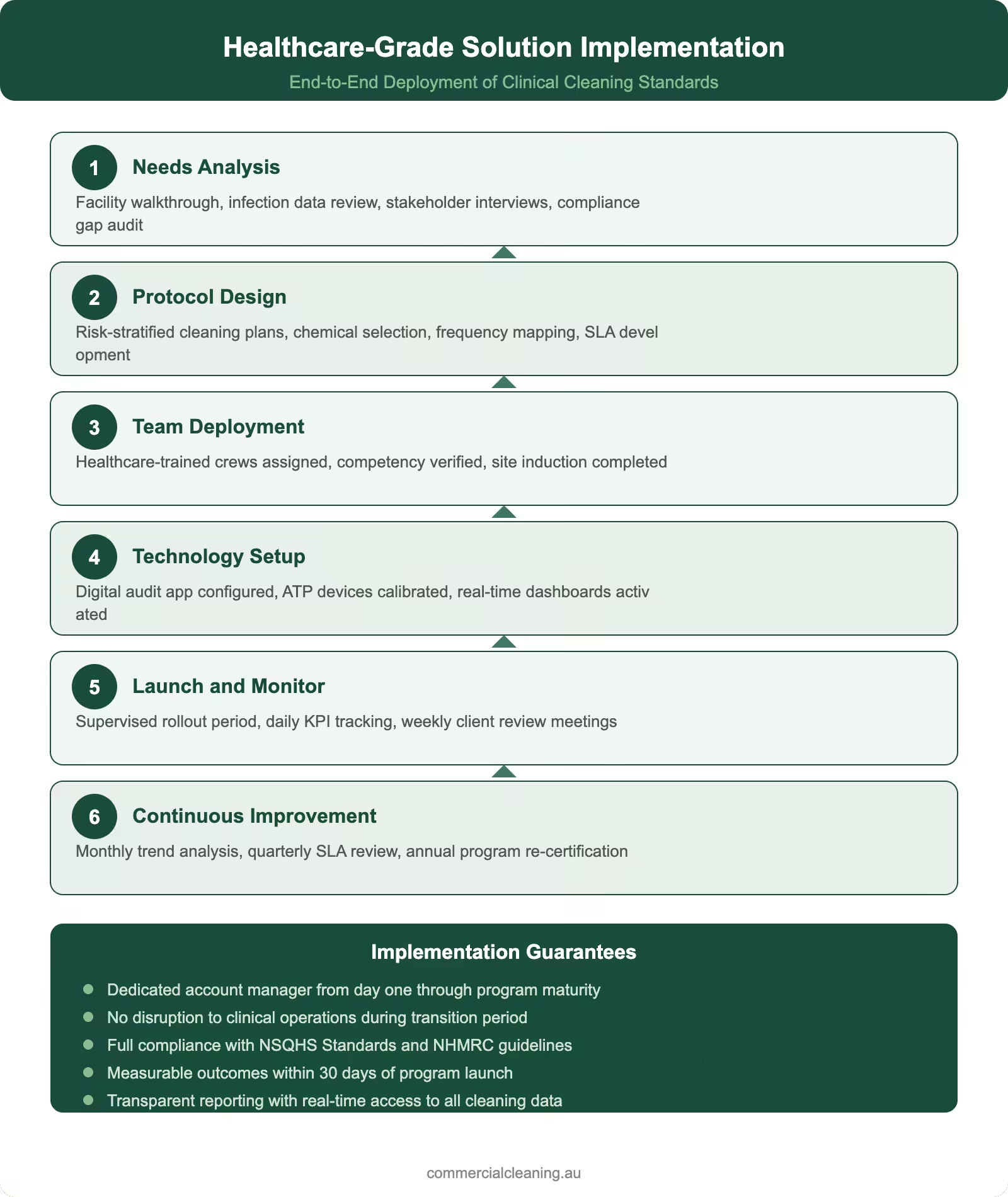
Healthcare-grade solution implementation infographic showing six deployment phases from needs analysis to continuous improvement
Our Healthcare-Grade Solution and Implementation
Our Healthcare-Grade Solution and Implementation involves specific protocols that we tailor to each facility based on its layout, traffic, and compliance requirements. We deployed a dedicated medical cleaning team of four technicians who had completed our full 40-hour healthcare cleaning induction programme. We installed a four-colour microfibre system across the facility, set up calibrated chemical dosing stations in the cleaning cupboard, and introduced our digital task management system that logs every clean with timestamps and staff identifiers. We replaced all cleaning products with TGA ARTG-registered hospital-grade disinfectants and introduced ATP bioluminescence testing on a rotating schedule covering ten high-touch surfaces per shift.
Our implementation followed a phased approach over the first 90 days. Phase one covered the immediate switch to healthcare-grade chemicals, colour-coded systems, and PPE protocols. Phase two introduced between-patient examination room cleaning with a standardised checklist and digital sign-off. Phase three established the full documentation and quality assurance programme including ATP testing, environmental sampling, and observational auditing. We ran each phase for 30 days with daily supervisor oversight before moving to the next, which allowed our team to embed each new practice before adding the next layer of complexity.
We also overhauled the clinical waste management system. We installed correctly sized sharps containers at every point of use, introduced colour-coded waste bags throughout the facility, and renegotiated the clinical waste collection schedule to match the actual generation rate. Our waste audit identified that the facility had been paying for twice-weekly clinical waste collection when weekly pickup was sufficient, saving them approximately $2,490 annually. We replaced the expired biohazard spill kit and installed two additional kits at strategic locations so our team could respond to any spill within 60 seconds from anywhere in the building.
Healthcare Cleaning Risk Zone Comparison
Zone
Risk Level
Frequency
Disinfectant Grade
PPE Required
Operating Theatre
Critical
Between every case
Hospital-grade TGA
Full gown, gloves, mask
Patient Ward
High
2× daily + discharge
Hospital-grade TGA
Gloves, apron
Waiting Room
Medium
3× daily
Commercial-grade
Gloves
Admin Office
Low
Daily
General purpose
Gloves
Bathroom/Amenities
High
4× daily minimum
Hospital-grade TGA
Gloves, apron, eyewear
Documentation, Compliance, and Electrical Safety Integration
Healthcare Cleaning Risk Zone Comparison requires specific protocols that we tailor to each facility based on its layout, traffic, and compliance requirements. We built a detailed documentation package for the Liverpool medical centre that covered every regulatory requirement they needed for their upcoming RACGP accreditation review. Our daily cleaning logs recorded the date, time, areas cleaned, products used, staff names, and any observations or incidents. ATP test results were logged digitally with room identifiers and surface types. We produced monthly performance reports with trend analysis showing how surface cleanliness scores improved over time. Quarterly microbiological culture reports from our independent laboratory provided additional objective evidence of cleaning effectiveness. We formatted every document to align with the RACGP’s infection prevention and control standard requirements.
We also integrated our cleaning documentation with the facility’s broader building compliance records. Under AS 3003, which covers electrical installations in patient areas of healthcare facilities, the building maintenance team was already maintaining records of electrical safety compliance. We aligned our cleaning audit schedule with their maintenance calendar so the facility had a unified compliance documentation system that assessors could review as a coordinated programme rather than separate disconnected records. This integration was the practice manager’s idea, and we were happy to accommodate it because coordinated compliance documentation demonstrates a mature safety culture that accreditation assessors respond to positively.
Our documentation system at the Liverpool centre includes a real-time client portal where the practice manager can view cleaning schedules, completed task logs, ATP results, and audit scores at any time. We set up automated email alerts for any ATP reading above threshold or any audit score below 95 percent, so the manager is immediately aware of any quality issue and can see how we responded to it. This level of transparency was new to the practice and they told us it was one of the most valued aspects of our service because it eliminated the uncertainty they had experienced with their previous provider.
Measurable Outcomes and Accreditation Results
Measurable Outcomes and Accreditation Results addresses specific protocols that we tailor to each facility based on its layout, traffic, and compliance requirements. We tracked outcomes rigorously from day one of our Liverpool contract. Within the first 30 days, our ATP compliance rate on clinical surfaces reached 91 percent, meaning 91 percent of tested surfaces returned readings below our 100 RLU threshold on first test. By the end of the 90-day transition period, that rate had climbed to 97 percent, which is where it has remained for the past eighteen months. For context, the facility had no ATP data at all before we started, so the improvement represents a shift from unmeasured cleaning to verified, data-driven hygiene management.
Our first quarterly microbiological sampling results showed a 68 percent reduction in total colony-forming units per square centimetre compared to baseline samples we collected during our initial assessment. High-touch surfaces in examination rooms showed the most dramatic improvement, with average CFU counts dropping from 12.4 to 2.1 per square centimetre. These numbers placed the facility well within the benchmarks published in Australian infection control literature and gave the practice partners confidence that their investment in upgraded cleaning was delivering measurable patient safety benefits.
The RACGP accreditation review took place four months after we commenced the contract. The assessor specifically noted the quality of the environmental cleaning documentation and the systematic approach to infection prevention that our programme demonstrated. The facility passed their accreditation with no findings related to environmental cleaning or infection control, which was a significant relief for the practice partners who had been concerned about this area. The practice manager in Warwick Farm, who oversees the administrative side of the Liverpool centre, told us our documentation package was the single most important factor in their successful accreditation outcome.
We also improved staff satisfaction metrics at the facility. A survey we conducted at the six-month mark showed that 94 percent of clinical staff rated the cleaning quality as good or excellent, compared to 52 percent under the previous provider. Nursing staff reported feeling more confident in examination room hygiene, and reception staff noticed that patients commented positively on the visible cleanliness improvements in waiting areas and restrooms. A team member working at a nearby clinic in Hinchinbrook heard about these results and helped us secure a new medical cleaning contract at that facility as well.
We are proud of the results we achieved at this Liverpool medical centre and the ongoing partnership we maintain with the practice team. For our detailed medical facility cleaning guide that covers the protocols we applied in this case study, read our Blacktown cleaning case study.
Frequently Asked Questions
What are NSW Health audit requirements for medical facility cleaning? NSW Health requires medical facilities to demonstrate systematic environmental cleaning programmes that are evidence-based, documented, and monitored for effectiveness. We support compliance by providing daily cleaning logs, ATP testing results, quarterly microbiological culture reports, and training documentation. Our documentation is formatted specifically for accreditation assessor review and covers every element that RACGP and NSQHS standards require.
What disinfectants are appropriate for medical centre cleaning? We use only TGA ARTG-registered hospital-grade disinfectants that have been independently tested for efficacy against healthcare-relevant pathogens. Our standard products include quaternary ammonium compounds for routine surface disinfection, accelerated hydrogen peroxide for high-level applications, and sodium hypochlorite for sporicidal treatment during outbreak situations. We select products based on activity spectrum, contact time, material compatibility, and staff safety profile.
How long does it take to transition a medical centre to healthcare-grade cleaning? We recommend a 90-day phased transition that allows each new practice to be embedded before adding the next layer. Phase one covers chemical and equipment changes, phase two introduces between-patient disinfection protocols, and phase three establishes the full documentation and quality assurance programme. Daily supervisor oversight during the transition ensures standards are met from day one and continuously improved throughout the process.
What measurable improvements can a medical centre expect from professional cleaning? Our Liverpool case study showed ATP compliance rates reaching 97 percent within 90 days from a baseline of no testing, a 68 percent reduction in surface microbial counts, and staff satisfaction ratings rising from 52 to 94 percent. We also identified waste management cost savings that partially offset the higher cleaning investment. These results are typical of the improvements we achieve when transitioning facilities from commercial to healthcare-grade cleaning.
How does professional medical cleaning support RACGP accreditation? We provide a complete documentation package covering daily logs, ATP results, microbiological reports, audit scores, and training records that directly addresses RACGP infection prevention requirements. Our systematic, evidence-based approach demonstrates the continuous improvement that assessors specifically evaluate. Multiple clients have told us our documentation was the decisive factor in their successful accreditation outcomes.
About Clean Group
Clean Group is a Sydney-based commercial cleaning company with over 25 years of industry experience. Founded by Suji Siv, our team of 50+ trained professionals services offices, warehouses, medical centres, schools, childcare facilities, retail stores, gyms, and strata properties across Sydney, Melbourne, and Brisbane.
We are active members of ISSA and the Building Service Contractors Association of Australia (BSCAA). Our operations align with ISO 9001 (Quality Management), ISO 14001 (Environmental Management), and ISO 45001 (Workplace Health and Safety) standards. We hold membership with the Green Building Council of Australia and use eco-friendly, TGA-registered cleaning products wherever possible.
Every Clean Group cleaner is police-checked, fully insured, and trained in safe work procedures under SafeWork NSW guidelines. We operate 7 days a week, including after-hours and weekend services, to minimise disruption to your business.
Hi, I'm Suji Siv, the founder, CEO, and Managing Director of Clean Group, bringing over 25 years of leadership and management experience to the company. As the driving force behind Clean Group’s growth, I oversee strategic planning, resource allocation, and operational excellence across all departments. I am deeply involved in team development and performance optimization through regular reviews and hands-on leadership.