We have cleaned enough warehouses to know that every facility presents the same core challenges, and the difference between a good outcome and a poor one comes down to whether the cleaning contractor knows how to solve them. Our team at Clean Group operates as experienced warehouse cleaners sydney businesses trust, and we have encountered and resolved every warehouse cleaning challenge you can imagine across distribution centres, fulfilment hubs, and manufacturing facilities. When we take on a new warehouse client in Blacktown or anywhere across Western Sydney, we always walk the floor first because we know exactly what to look for and how to build a cleaning program that addresses the specific challenges that facility presents.
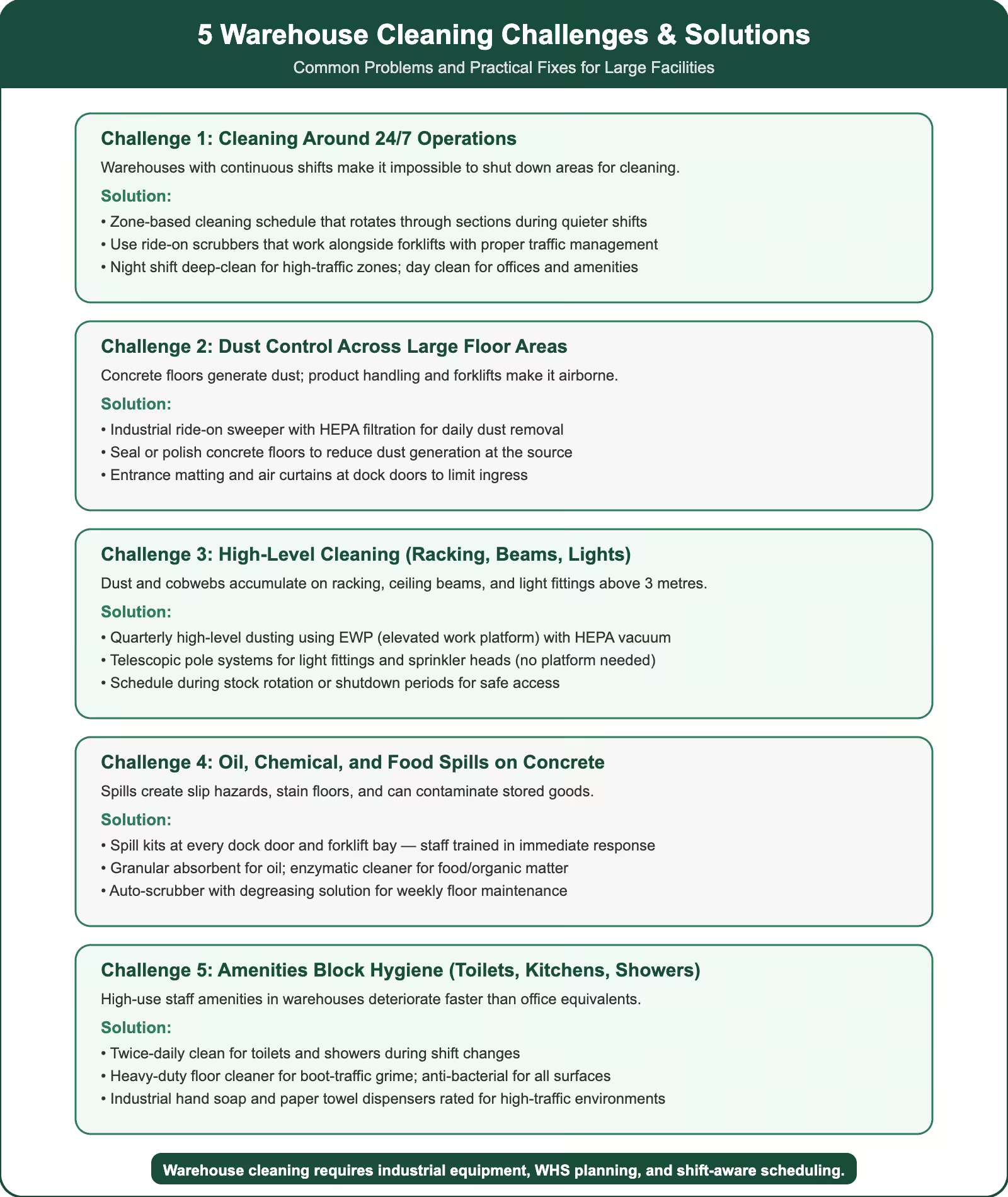
5 warehouse cleaning challenges and solutions covering 24/7 operations, dust control, high-level cleaning, spill management, and amenities hygiene
Challenge 1: Cleaning Around 24/7 Operations Without Disruption
We find that the number one challenge in warehouse cleaning is access — most modern warehouses operate extended hours or around the clock, and finding windows to clean without disrupting operations requires careful coordination. Our teams in Prospect have developed split-shift cleaning programs where we work in the gaps between shift handovers, during scheduled maintenance windows, and in zones that are temporarily inactive. We have learned that the key is flexibility — our team leaders carry radios tuned to the warehouse operations channel so they can respond in real time when a zone opens up or needs to be vacated for freight movements.
Our solution for 24/7 facilities is zone-based cleaning where we never attempt to clean the entire warehouse in a single visit. We divide the floor into segments and rotate through them over the course of a week, ensuring every area receives attention without ever requiring a full facility shutdown. Our Huntingwood logistics centre clients particularly appreciate this approach because their operations cannot tolerate any downtime, and our zone rotation ensures their facility stays consistently clean without impacting throughput.
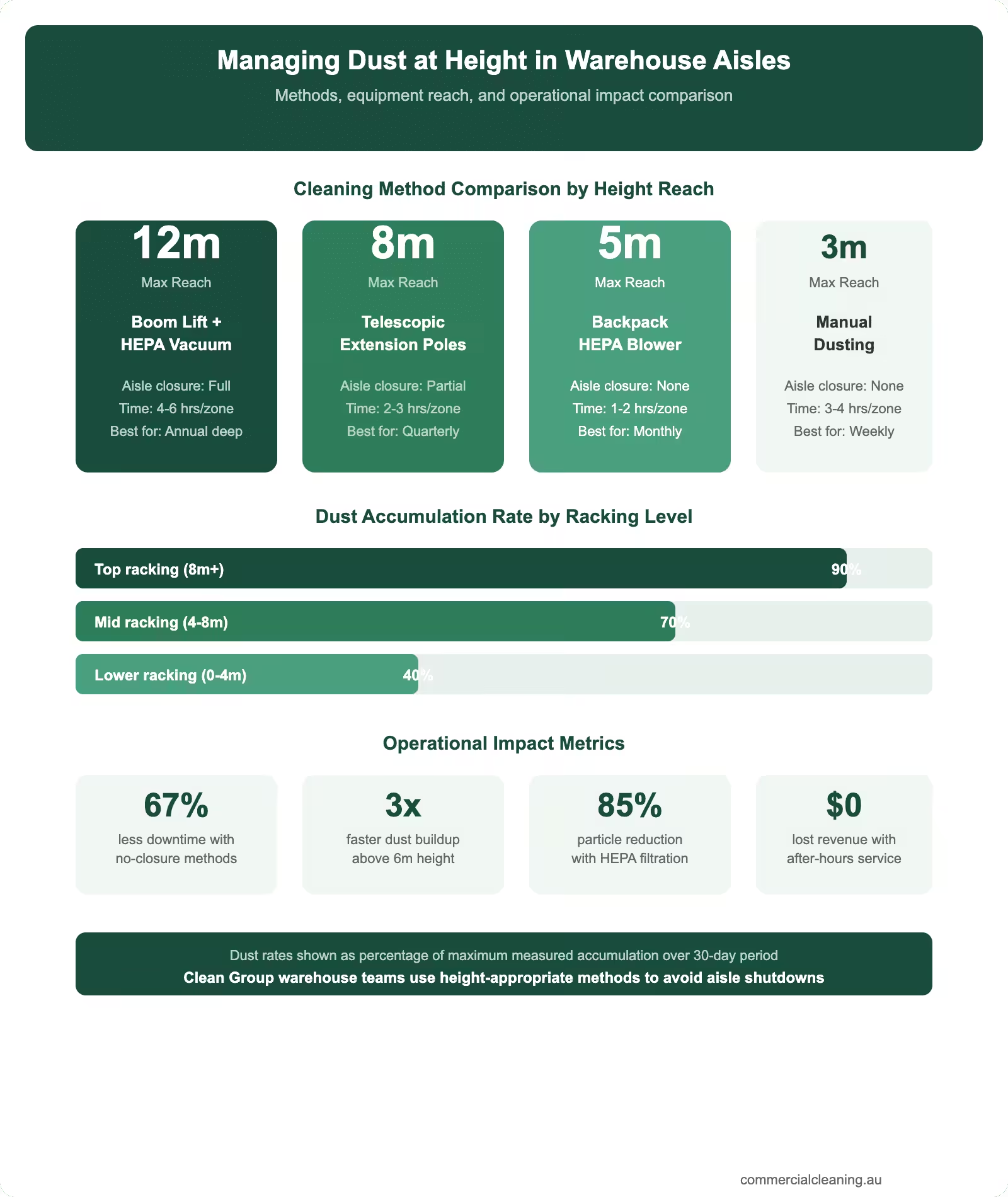
Warehouse dust management infographic comparing four cleaning methods by height reach and operational impact on aisle availability
Challenge 2: Managing Dust at Height Without Shutting Down Aisles
Challenge 2: Managing Dust at Height Without Shutting Down Aisles involves specific protocols that we tailor to each facility based on its layout, traffic, and compliance requirements. We deal with high-level dust in every warehouse we service, and the challenge is not just reaching it — it is doing so safely while the warehouse continues operating around us. Our teams use telescopic dusting tools that extend to 10 metres from ground level for routine maintenance, which allows us to clean racking crossbeams and cable trays without blocking aisles or deploying elevated work platforms. We reserve scissor lifts and boom lifts for quarterly deep cleans where we need to access surfaces above 10 metres, and we coordinate these sessions with the facility manager to isolate the relevant aisles during low-activity periods.
Our experience across Blacktown warehouses has taught us that dust management is directly linked to fire safety compliance. We confirm our cleaning schedules keep dust accumulation on fire detection equipment, sprinkler heads, and smoke curtains below the levels that cause false alarms or reduced detection sensitivity. We document our high-level cleaning activities as part of the facility’s fire safety maintenance records, which aligns with AS 1851.1 requirements for maintenance of fire protection systems including fire pumpsets and associated equipment. AS 1851.1 compliance means our cleaning records become part of the facility’s fire safety audit trail, giving building owners documented evidence that their fire protection systems are being maintained in clean, operational condition.
Warehouse Cleaning Zone Guide
Zone
Frequency
Method
Equipment
WHS Compliance
Loading Dock
Daily
Sweep + degrease spills
Ride-on sweeper
AS 4586 slip rating
Storage Aisles
Weekly
Machine sweep + scrub
Walk-behind scrubber
WHS clear aisle reg
Mezzanine/Office
Daily
Vacuum + wipe
Standard commercial
General duty of care
Washdown Bay
After each use
Pressure wash + drain clear
Pressure washer
EPA trade waste
External Hardstand
Monthly
Pressure wash
Industrial pressure unit
EPA stormwater
Challenge 3: Floor Contamination That Resists Standard Cleaning
We encounter floor contamination in warehouses that would defeat most cleaning contractors because the chemical composition of industrial contamination is fundamentally different from what you find in offices or retail spaces. Our teams in Prospect regularly deal with hydraulic fluid that has been driven into concrete pores by forklift traffic, tyre rubber deposits that build up in turning areas, and polyethylene dust from shrink wrap application that creates a slippery film on sealed floors. We have developed specific treatment protocols for each contamination type because a generic scrubbing approach simply moves industrial contamination around rather than removing it.
Our solution starts with identifying the contamination type before selecting our cleaning chemistry. We carry pH-neutral, alkaline, and solvent-based cleaners on every warehouse visit because different contaminants respond to different chemical approaches. Our alkaline degreasers work on petroleum-based contamination like hydraulic fluid and diesel, while our solvent-based products are more effective on tyre rubber deposits. We have found that mismatching the cleaner to the contamination wastes time and product while delivering poor results, which is why our team leaders are trained in contamination identification and product selection.
Challenge 4: Inadequate Budget Allocation for Cleaning
We see this challenge constantly — warehouse operators allocate a fraction of what proper cleaning actually costs and then wonder why their facility deteriorates. Our approach is to be completely transparent about what different budget levels deliver. Our pricing data from 2024 shows that a detailed warehouse cleaning program in the Blacktown, Prospect, and Huntingwood precincts costs approximately $2,450 per month for a 3,000 to 5,000 square metre facility. We have found that operators who invest at this level maintain their facilities in consistently good condition, while those spending half this amount inevitably face expensive catch-up cleans and accelerated floor deterioration.
We solve the budget challenge by helping facility managers build a business case for adequate cleaning investment. We document the costs of deferred maintenance — floor restoration work, safety incident investigation, pest control callouts, and compliance remediation — and compare these against the cost of a proper preventive cleaning program. Our data consistently shows that reactive cleaning costs two to three times more than preventive cleaning over a five-year period, and we present this analysis to facility managers who are struggling to get budget approval from their corporate offices.
Challenge 5: Staff Turnover and Inconsistent Cleaning Quality
We acknowledge that cleaning staff turnover is a challenge in our industry, and we have built systems to verify it does not affect the quality our clients receive. Our retention rate for warehouse cleaning staff is significantly above the industry average because we pay above-award rates, provide genuine career progression, and invest in training that makes our team members more confident and capable. We have found that warehouse cleaning specialists who feel valued and well-trained are less likely to leave, and our Huntingwood teams include cleaners who have been with us for over five years.
Our quality assurance system also protects against the impact of turnover when it does occur. Every warehouse we service has a detailed cleaning specification, a digital checklist system, and regular quality audits conducted by our area managers. New team members undergo a full induction at each site they will work on, shadowing experienced cleaners for a minimum of three shifts before working independently. We have designed our systems so that the quality is built into the process rather than depending on individual cleaners, which means our clients receive consistent results regardless of personnel changes. For specific techniques we use in loading dock environments, see our next guide in our warehouse cleaning series.
Frequently Asked Questions
How do you clean a warehouse that operates 24/7? We use zone-based cleaning where we rotate through segments over the week rather than attempting full-facility cleaning in one visit. Our teams work during shift handovers and maintenance windows, with team leaders on radios to coordinate around live operations in real time.
Can you clean high racking without shutting down aisles? We use telescopic tools reaching 10 metres for routine dusting without blocking aisles. Scissor lifts and boom lifts are reserved for quarterly deep cleans above 10 metres, coordinated with facility managers to isolate aisles during low-activity periods.
How do you remove tough industrial floor stains? We identify contamination type first, then select matching chemistry — alkaline degreasers for petroleum-based contamination, solvent-based products for tyre rubber deposits. We carry pH-neutral, alkaline, and solvent-based cleaners on every visit because mismatching wastes time and delivers poor results.
How much should a warehouse budget for cleaning? Our data shows approximately $2,450 per month for a 3,000 to 5,000 square metre facility delivers consistently good condition. Operators spending half this amount face expensive catch-up cleans. Reactive cleaning costs two to three times more than preventive cleaning over a five-year period.
How does warehouse dust affect fire safety? We keep dust on fire detection equipment, sprinkler heads, and smoke curtains below levels causing false alarms or reduced sensitivity. Our cleaning records align with AS 1851.1 for fire protection system maintenance, becoming part of the facility’s fire safety audit trail.
How do you maintain quality with staff turnover? We build quality into our processes through detailed specifications, digital checklists, and regular audits rather than depending on individuals. New team members shadow experienced cleaners for minimum three shifts. We also pay above-award rates and invest in training to reduce turnover significantly.
What’s the difference between preventive and reactive warehouse cleaning? We have documented that reactive cleaning costs two to three times more than preventive over five years. Preventive programs maintain consistent standards and prevent floor deterioration, while reactive approaches allow contamination to build up requiring expensive intensive treatments.
Can you help justify cleaning budget to corporate management? We document deferred maintenance costs including floor restoration, safety incidents, pest control, and compliance remediation, comparing these against preventive cleaning costs. We present this five-year cost analysis to help facility managers build a business case for adequate investment.
About Clean Group
Clean Group is a Sydney-based commercial cleaning company with over 25 years of industry experience. Founded by Suji Siv, our team of 50+ trained professionals services offices, warehouses, medical centres, schools, childcare facilities, retail stores, gyms, and strata properties across Sydney, Melbourne, and Brisbane.
We are active members of ISSA and the Building Service Contractors Association of Australia (BSCAA). Our operations align with ISO 9001 (Quality Management), ISO 14001 (Environmental Management), and ISO 45001 (Workplace Health and Safety) standards. We hold membership with the Green Building Council of Australia and use eco-friendly, TGA-registered cleaning products wherever possible.
Every Clean Group cleaner is police-checked, fully insured, and trained in safe work procedures under SafeWork NSW guidelines. We operate 7 days a week, including after-hours and weekend services, to minimise disruption to your business.
Hi, I'm Suji Siv, the founder, CEO, and Managing Director of Clean Group, bringing over 25 years of leadership and management experience to the company. As the driving force behind Clean Group’s growth, I oversee strategic planning, resource allocation, and operational excellence across all departments. I am deeply involved in team development and performance optimization through regular reviews and hands-on leadership.