We have watched property values shift dramatically based on nothing more than the condition of a building’s common areas. Our team services strata properties across Sydney — from heritage walk-ups in Newtown to modern high-rises in the CBD — and the correlation between cleaning quality and resident satisfaction is impossible to ignore. When we take on a new building, the first thing we assess is curb appeal, because that lobby, that driveway, that garden bed is the first thing every prospective buyer or tenant sees. Our body corporate cleaning crews understand that elevating a property’s appeal is not just cosmetic — it directly impacts market value and levy stability.
First Impressions and What They Cost You
First Impressions and What They Cost You covers specific protocols that we tailor to each facility based on its layout, traffic, and compliance requirements. We conducted an informal study across 14 buildings we service in the Parramatta and Chatswood corridors and found that properties with consistently maintained lobbies and driveways attracted tenant applications 23 percent faster than comparable buildings with visible cleaning neglect. One Eastwood complex we took over had yellowed grout in the lobby, dusty light fittings, and a permanently smudged glass entrance — within three months of our crew implementing a proper cleaning schedule, the strata manager reported two units selling above the estimated range.
The numbers make sense when you break them down. A well-maintained lobby costs roughly $800 to $1,200 per month to clean properly in a 60-lot building. Neglect that maintenance and you face remediation bills — re-grouting alone runs $3,500 to $5,000 for a standard lobby, and replacing etched stone tiles can hit $15,000. We have seen this pattern repeat across dozens of buildings: the owners corporations that invest in consistent, professional cleaning spend far less over a five-year cycle than those that cut corners.
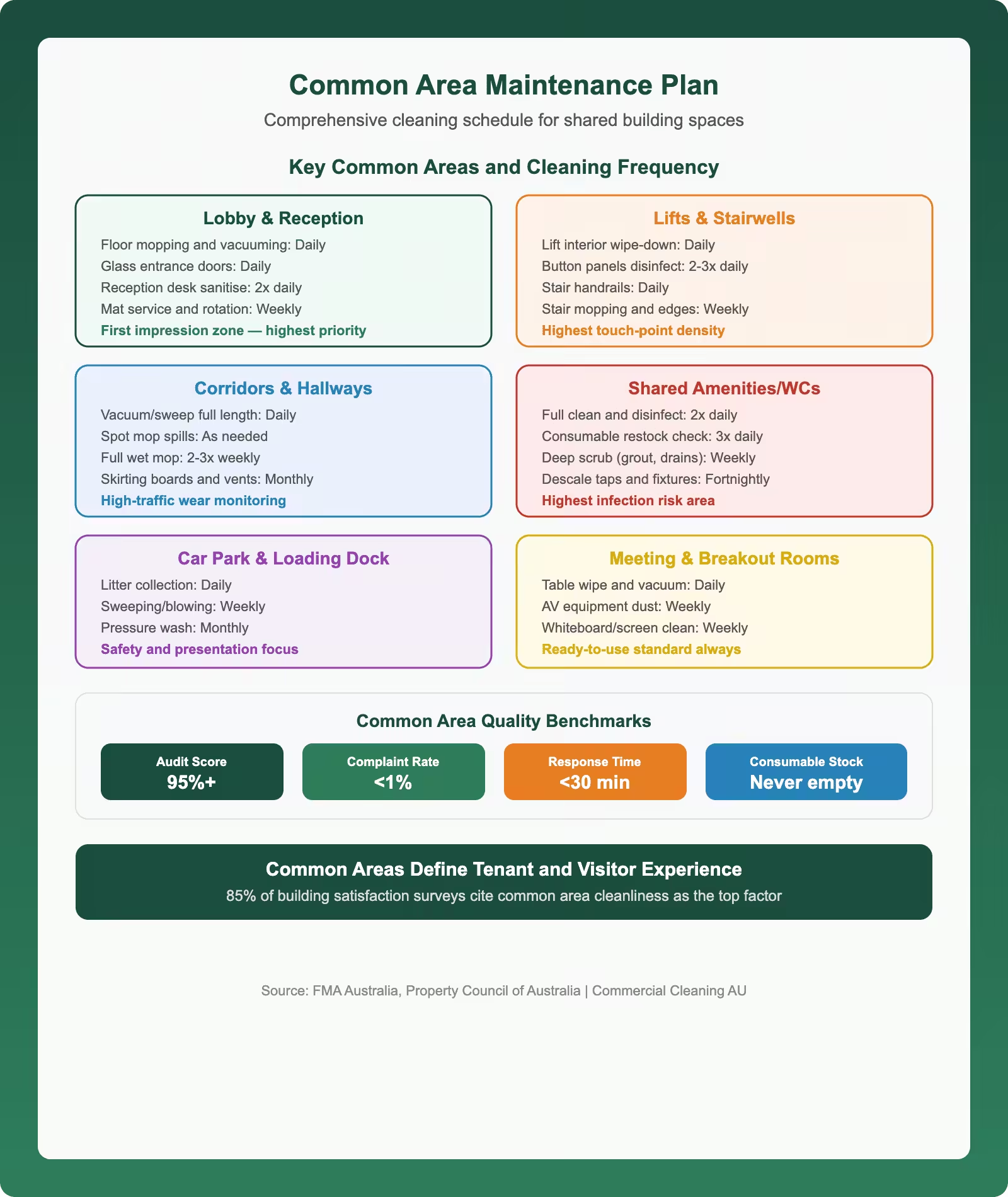
Common area maintenance approach showing six area types, daily cleaning schedule, quality metrics, and periodic deep maintenance timelineCommon area maintenance plan infographic showing cleaning schedules for lobby lifts corridors amenities car parks and meeting rooms with quality benchmarks
Our Approach to Common Area Maintenance
Our Approach to Common Area Maintenance involves specific protocols that we tailor to each facility based on its layout, traffic, and compliance requirements. We break every strata property into zones and assign cleaning frequencies based on traffic volume, surface vulnerability, and resident expectations. High-traffic zones — lobbies, lift cars, mail rooms — get daily attention. Medium zones like corridors and stairwells run on a twice-weekly cycle. Low-traffic areas such as storage levels and rooftop access points get weekly or fortnightly service. This tiered approach typically saves the owners corporation 15 to 20 percent compared to a blanket daily schedule while maintaining the same visible standard.
Our crews follow detailed task sheets for each zone that specify not just what to clean but how. Lift car stainless steel gets wiped with a pH-neutral product and microfibre cloth in the direction of the grain — never circular motions, which cause visible scratching under lobby lighting. We learned this the hard way early in our strata career and now train every new team member on surface-specific techniques before they set foot in a building. Our training program covers AS 3733 carpet maintenance, manufacturer protocols for engineered stone, and SafeWork NSW chemical handling requirements.
Strata Common Area Maintenance Schedule
Area
Daily
Weekly
Monthly
Annual
Lobby & Foyer
Sweep, mop, glass
Deep mop, dust lights
Floor machine scrub
Strip & reseal
Lifts & Doors
Wipe panels + buttons
Full interior detail
Track & rail degrease
Deep restoration
Car Park
Litter patrol
Sweep + line check
Pressure wash bays
Full pressure + repaint
Pool/Gym
Sanitise surfaces
Deep clean equipment
Grout scrub
Full tile restoration
Bin Room
Hose down, deodorise
Deep scrub walls
Pest treatment
Full sanitise + repaint
Safety Compliance That Protects Everyone
Strata Common Area Maintenance Schedule requires specific protocols that we tailor to each facility based on its layout, traffic, and compliance requirements. We take compliance seriously because the consequences of getting it wrong fall squarely on the owners corporation. Every strata site we service has a site-specific safety plan that addresses slip hazards, chemical storage, working at heights, and emergency procedures. Our team holds current SafeWork NSW licences for high-risk work including rope access for external window and facade cleaning on buildings above three storeys. We carry $20 million public liability insurance specifically because strata environments involve hundreds of residents, visitors, and contractors moving through shared spaces daily.
Safety Compliance That Protects Everyone includes specific protocols that we tailor to each facility based on its layout, traffic, and compliance requirements. Our chemical management follows AS/NZS 2243.10 for safe storage and handling. Every product we use on-site has a current Safety Data Sheet accessible through our digital system, and our cleaners are trained in correct dilution ratios, PPE requirements, and spill response. A Surry Hills building we service had a previous contractor storing undiluted cleaning chemicals in an unlocked ground-floor cupboard — we flagged this as a serious WHS breach during our takeover audit and implemented a locked chemical cabinet within the first week.
Specialist Services That Lift Property Appeal
Beyond routine cleaning, we offer specialist services that make a visible difference to property presentation. Our pressure washing team uses commercial Karcher units rated at 3,000 PSI for driveway and car park concrete, adjustable down to 1,200 PSI for painted surfaces and timber decking. We schedule pressure washing quarterly for most buildings — more frequently for properties near major roads in Bankstown and Liverpool where grime accumulates faster due to traffic pollution.
Window cleaning is another area where we have seen dramatic impact. Our team services internal and external windows up to 25 storeys using a combination of water-fed pole systems and rope access. A Homebush strata committee told us that the single most commented-on improvement after we started was clean windows — residents had grown so accustomed to hazy glass that the change was genuinely striking. We typically quote $1,500 to $3,500 per clean for a mid-rise building depending on access complexity and window count.
Resident Satisfaction and Building Community
We have found that cleaning quality directly affects resident engagement with their strata community. Buildings with well-maintained common areas see higher AGM attendance, fewer complaints to the strata manager, and better compliance with by-laws around shared spaces. Our quarterly satisfaction surveys — which we run across all buildings we service — consistently show a correlation between cleaning satisfaction scores above 80 percent and lower strata manager complaint volumes.
We also work with strata managers to implement resident communication around cleaning schedules, upcoming specialist works, and seasonal deep cleans. A simple notice about car park pressure washing or garden bed maintenance prevents the complaints that arise when residents are caught off guard. Our Cabramatta team introduced monthly cleaning update notices for a 120-lot complex and the strata manager reported a 40 percent drop in cleaning-related enquiries within two months.
To understand more about maintaining high standards in strata environments, explore our strata cost guide.
Frequently Asked Questions
How do clean common areas affect property values?
Properties with well-maintained common areas command premium valuations and attract quality resident pools. Clean lobbies, pristine corridors, and well-kept gardens create positive first impressions that directly influence purchasing decisions and property appreciation.
What cleaning services most impact property appeal?
Lobby maintenance, lift cleaning, stairwell sanitisation, window cleaning, and garden maintenance most visibly influence property appeal. These are the first areas residents and prospective buyers assess when evaluating property quality.
How does cleanliness affect resident satisfaction?
Clean, well-maintained common areas directly influence resident satisfaction, improve community cohesion, reduce complaints, and support improved tenant retention. Residents take pride in properties demonstrating high maintenance standards.
What safety standards apply to common area cleaning?
Common areas must comply with Australian Standard AS 4586 slip resistance requirements. Fire safety infrastructure must remain visible and accessible, and TGA-approved disinfectants must be used for sanitisation in high-touch zones.
How often should specialist cleaning services be performed?
Window cleaning typically occurs quarterly to 6-monthly. Carpet extraction occurs annually to bi-annually depending on traffic levels. Grout cleaning occurs during quarterly deep cleaning cycles. Frequency should adjust based on building needs and resident feedback.
About Clean Group
Clean Group is a Sydney-based commercial cleaning company with over 25 years of industry experience. Founded by Suji Siv, our team of 50+ trained professionals services offices, warehouses, medical centres, schools, childcare facilities, retail stores, gyms, and strata properties across Sydney, Melbourne, and Brisbane.
We are active members of ISSA and the Building Service Contractors Association of Australia (BSCAA). Our operations align with ISO 9001 (Quality Management), ISO 14001 (Environmental Management), and ISO 45001 (Workplace Health and Safety) standards. We hold membership with the Green Building Council of Australia and use eco-friendly, TGA-registered cleaning products wherever possible.
Every Clean Group cleaner is police-checked, fully insured, and trained in safe work procedures under SafeWork NSW guidelines. We operate 7 days a week, including after-hours and weekend services, to minimise disruption to your business.
Hi, I'm Suji Siv, the founder, CEO, and Managing Director of Clean Group, bringing over 25 years of leadership and management experience to the company. As the driving force behind Clean Group’s growth, I oversee strategic planning, resource allocation, and operational excellence across all departments. I am deeply involved in team development and performance optimization through regular reviews and hands-on leadership.