We have tested hundreds of cleaning and disinfection products for medical facility cleaning over the years, and the gap between what works in a laboratory setting and what performs reliably in a busy medical facility is wider than most people expect. Our team selects every product based on real-world clinical performance, staff safety, material compatibility, and cost efficiency. As experienced medical cleaners, we know that choosing the wrong disinfectant can damage equipment, irritate airways, or leave surfaces looking clean while pathogens survive underneath. This guide covers the product categories we trust and the criteria we use to evaluate them.
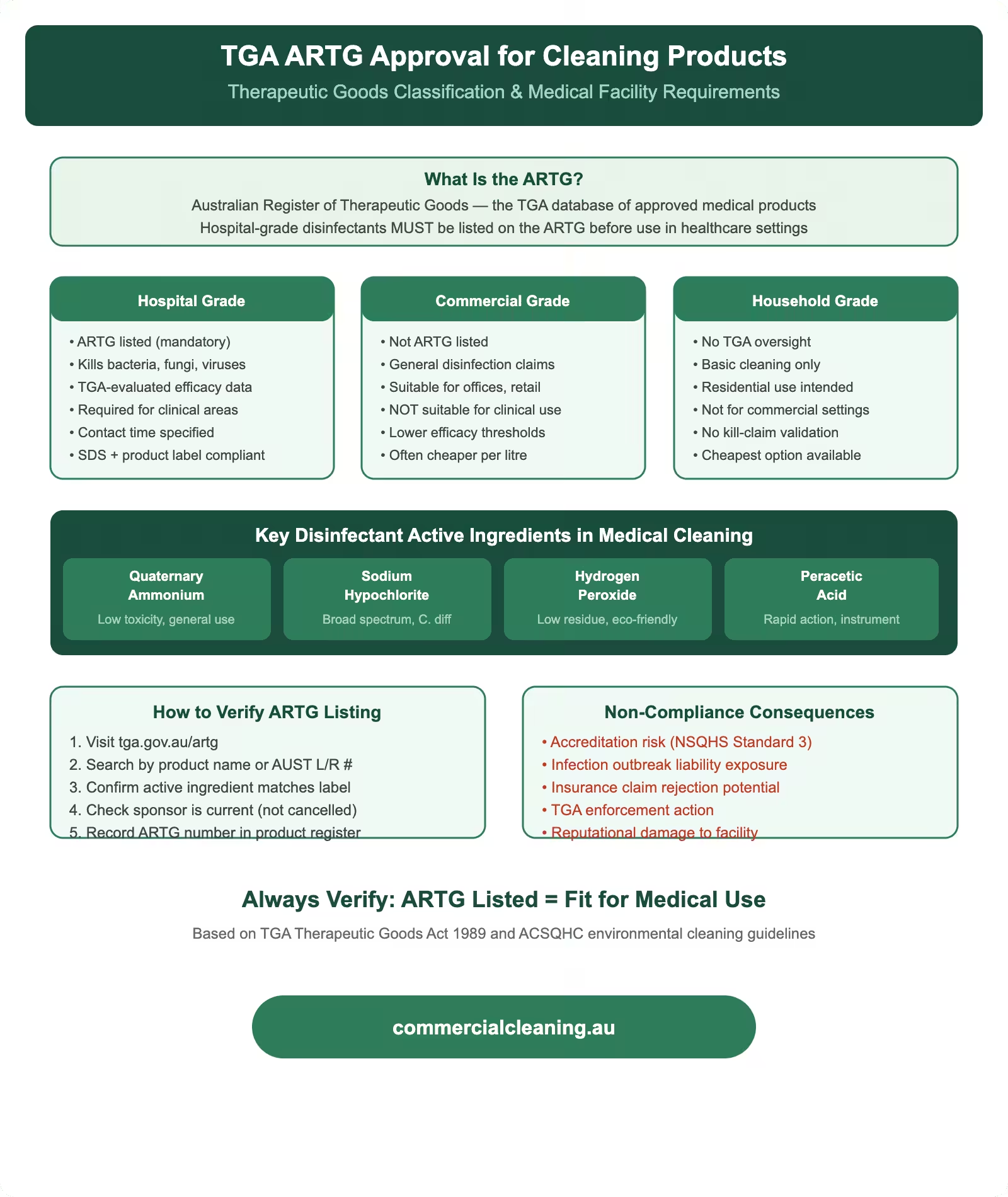
TGA ARTG approval guide for medical facility cleaning products showing hospital grade versus commercial and household classifications with verification steps
TGA ARTG Approval and Therapeutic Goods Classification
We only use disinfectants that are registered on the Australian Register of Therapeutic Goods because TGA registration confirms the product has been assessed for safety and efficacy against its claimed organisms. Our purchasing policy requires every disinfectant to carry an ARTG number on the label, and we verify that number against the TGA database before adding any product to our approved list. We have rejected products from overseas suppliers that carried impressive marketing claims but lacked TGA registration, which means their kill claims have not been independently validated under Australian regulatory standards.
Understanding the difference between a hospital-grade and a commercial-grade disinfectant matters enormously in medical settings. Hospital-grade products must demonstrate efficacy against specific test organisms including Pseudomonas aeruginosa and Staphylococcus aureus at the use-dilution stated on the label. Commercial-grade products face a lower testing threshold and are not appropriate for clinical surfaces. We have walked into facilities where the previous cleaning contractor was using a commercial-grade product in treatment rooms, which effectively meant those rooms were never being properly disinfected despite appearing clean.
Our compliance team audits product registrations quarterly because TGA listings can change. Products get suspended, conditions of registration get modified, and new efficacy data sometimes leads to revised use instructions. We maintain a live register of every approved product across our medical contracts, and any product that loses its TGA status gets pulled from service within 24 hours. This level of vigilance comes from a close call at a specialist clinic in Emu Heights where a product we had been using for two years had its registration conditions amended to exclude use on food-contact surfaces, which affected their staff kitchen area.
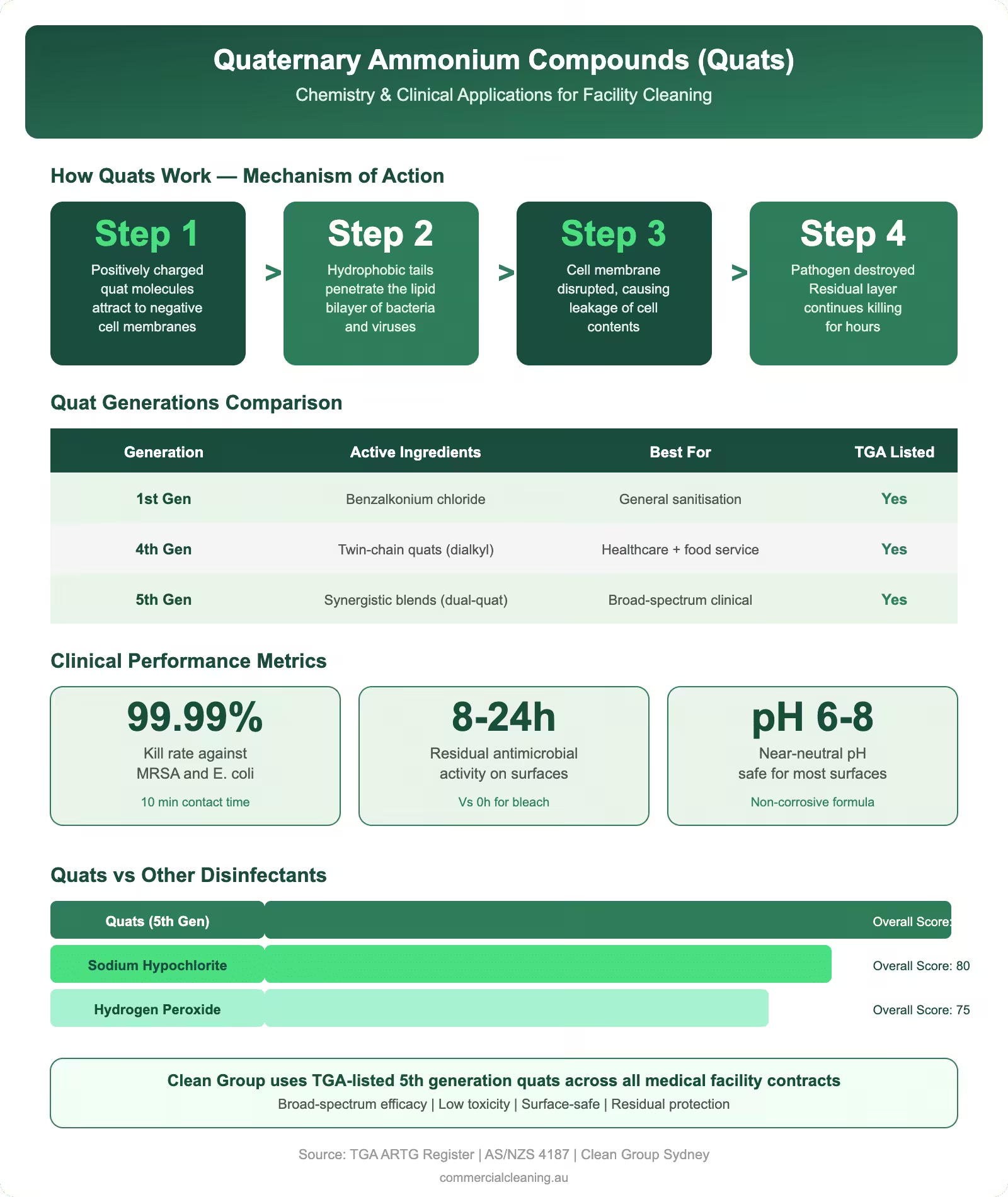
Quaternary ammonium compounds infographic showing mechanism of action quat generations comparison clinical performance metrics and disinfectant effectiveness ranking
Quaternary Ammonium Compounds: Chemistry and Clinical Application
Quaternary ammonium compounds are the workhorse disinfectants in our medical cleaning operations. We use them for daily maintenance cleaning of non-critical and semi-critical surfaces because they offer broad antimicrobial activity with a relatively low toxicity profile compared to chlorine-based alternatives. Our preferred formulations combine multiple quaternary ammonium actives in a synergistic blend that delivers faster kill times without increasing chemical concentration. We dilute from concentrated stock at our depot using calibrated dosing systems rather than relying on individual staff to measure manually, because even a small dilution error can reduce efficacy below the effective threshold.
We learned through years of trial that not all quaternary ammonium products perform equally on different surface materials. Some formulations leave a sticky residue on stainless steel that attracts dust and creates a biofilm-friendly environment. Others interact poorly with certain plastics and cause crazing or discolouration over time. Our product evaluation process includes a 30-day material compatibility trial on representative surface samples before we approve any new formulation for medical use. We run these trials at our Leonay testing area where we keep sample panels of every common medical facility surface material including vinyl, laminate, stainless steel, acrylic, and powder-coated aluminium.
One limitation of quaternary ammonium compounds that we always communicate to our clients is their poor sporicidal activity. These products are effective against vegetative bacteria, enveloped viruses, and fungi, but they do not reliably kill bacterial spores like those produced by C. difficile. When we encounter a facility with known C. difficile cases, we switch the affected zones to a sporicidal agent such as sodium hypochlorite or accelerated hydrogen peroxide. We maintain dual chemical systems in our medical cleaning kits specifically for this scenario so our teams can escalate their disinfection level on-site without waiting for a supervisor to deliver different products.
Healthcare Cleaning Risk Zone Comparison
Zone
Risk Level
Frequency
Disinfectant Grade
PPE Required
Operating Theatre
Critical
Between every case
Hospital-grade TGA
Full gown, gloves, mask
Patient Ward
High
2× daily + discharge
Hospital-grade TGA
Gloves, apron
Waiting Room
Medium
3× daily
Commercial-grade
Gloves
Admin Office
Low
Daily
General purpose
Gloves
Bathroom/Amenities
High
4× daily minimum
Hospital-grade TGA
Gloves, apron, eyewear
Hydrogen Peroxide and Peracetic Acid: High-Level Disinfectants
Healthcare Cleaning Risk Zone Comparison requires specific protocols that we tailor to each facility based on its layout, traffic, and compliance requirements. We use accelerated hydrogen peroxide products at concentrations between 0.5 and 1.4 percent for routine high-level surface disinfection in procedure rooms and treatment areas. These products break down into water and oxygen after use, which means they leave no toxic residues and are safer for staff who are exposed to them throughout their shift. Our teams appreciate the reduced respiratory irritation compared to chlorine-based products, and our occupational health incident reports related to chemical exposure dropped by over 70 percent after we transitioned our high-risk zone cleaning to AHP-based products three years ago.
Peracetic acid is our preferred choice for high-level disinfection of semi-critical equipment like endoscope housings, nebuliser components, and respiratory circuits. We use it at concentrations between 0.2 and 0.35 percent with a minimum five-minute contact time. The product is highly effective against mycobacteria, bacterial spores, and non-enveloped viruses, making it one of the most versatile high-level disinfectants available. Our annual chemical spend on peracetic acid across medical contracts runs approximately $1,590 per facility, which reflects both the higher unit cost and the smaller volumes needed compared to lower-level disinfectants.
We store hydrogen peroxide and peracetic acid products in dedicated ventilated cabinets because both are oxidising agents that degrade when exposed to heat or light. Our storage protocols comply with the Safety Data Sheet requirements and our own internal chemical management procedures. We had a batch of accelerated hydrogen peroxide lose its potency at a medical centre in Glenmore Park because the storage room lacked adequate ventilation and temperature control. We now include a storage assessment as part of every new medical facility onboarding, and we supply temperature loggers for any chemical storage area that sits outside our acceptable range of 15 to 25 degrees Celsius.
We match every disinfectant product to the correct Spaulding classification level, and we train our teams to make this connection automatically. Non-critical items like countertops, chairs, and floor surfaces get low-level disinfection with quaternary ammonium compounds. Semi-critical items that contact mucous membranes or non-intact skin get high-level disinfection with peracetic acid or accelerated hydrogen peroxide. Critical items that enter sterile tissue require sterilisation, which falls outside our scope as environmental cleaners but we still need to understand the category to avoid accidentally applying a lower level of treatment to an item that should be in sterile processing.
Our product selection matrix maps every surface type in a medical facility to a specific disinfectant product, dilution ratio, application method, and contact time. We print this matrix as a laminated quick-reference card that lives on every cleaning trolley. The card is colour-coded to match our zone system so a team member can look at the zone colour, find the matching row on the card, and immediately know which product to use and how to apply it. We update these cards every six months or whenever we change a product formulation. This system has virtually eliminated product selection errors across our medical contracts.
We also consider the specific pathogen risks at each facility when building our product matrix. A facility that treats immunocompromised oncology patients needs sporicidal capability in more zones than a general practice clinic. A dental surgery requires products compatible with amalgam surfaces and suction equipment components. We customise the product matrix for every medical facility during onboarding and review it annually. Our teams working at facilities in the Emu Heights and Leonay area handle both GP clinics and specialist consulting suites, and each site gets its own custom matrix even though they share the same cleaning crew.
Disinfectant Concentration, Contact Time, and Efficacy Relationship
We have seen more cleaning failures caused by incorrect concentration and insufficient contact time than by any other factor. Our standard operating procedures specify both the dilution ratio and the minimum wet contact time for every product we use, and we treat both parameters as equally critical. A hospital-grade quaternary ammonium product diluted at 1:128 might require eight minutes of wet contact to achieve its listed kill claims, while the same product at 1:64 might achieve the same result in four minutes. We choose our dilution ratios based on the practical realities of each facility, balancing efficacy against chemical cost, staff exposure, and surface compatibility.
We test contact time compliance through a simple but effective method. Our supervisors apply disinfectant to a surface and start a timer, then return to check whether the surface is still visibly wet at the labelled contact time. If it has dried before the timer expires, we know the application volume was insufficient or the room conditions are causing rapid evaporation. We encountered this issue frequently at a medical centre near Glenmore Park where the air conditioning system created a strong airflow across treatment room surfaces that dried our disinfectant within two minutes. We solved the problem by switching to a thicker gel-format disinfectant for that specific facility that maintained surface wetness for the required duration.
Our sharps disposal practices also tie into product safety. Under AS 4261, which covers reusable containers for the collection of sharp items, we confirm every treatment room and procedure area has compliant sharps containers positioned within arm’s reach of the point of use. We check fill levels during every clean and replace containers at the three-quarter mark rather than waiting until they are full, because overfilled sharps containers are one of the leading causes of needlestick injuries in healthcare settings. We order replacement containers through our central procurement system to maintain consistent quality and compliance across all sites. For guidance on cleaning frequency standards and scheduling, we recommend exploring our next guide in our medical cleaning series on complete guide medical.
Frequently Asked Questions
What does TGA ARTG registration mean for disinfectants? TGA ARTG registration means the disinfectant has been assessed by the Therapeutic Goods Administration for safety and efficacy against its claimed organisms under Australian regulatory standards. We only use ARTG-registered products in medical facilities because unregistered products have not had their kill claims independently validated. We verify every product’s registration number against the TGA database before approving it for use on our contracts.
What concentration of quaternary ammonium disinfectant should I use? The correct concentration depends on the specific product formulation and the target organisms. Most hospital-grade quaternary ammonium products are effective at dilutions between 1:64 and 1:128 when applied with the labelled contact time. We always follow the manufacturer’s recommended dilution and use calibrated dosing equipment rather than manual measurement to verify accuracy on every application.
How long should hydrogen peroxide disinfectant contact surfaces? Accelerated hydrogen peroxide products typically require between one and five minutes of wet contact depending on the concentration and the target pathogen. Our standard products achieve broad-spectrum efficacy within five minutes at 0.5 percent concentration. The surface must remain visibly wet for the entire contact period, so we adjust application volumes based on room temperature and airflow conditions.
What is the difference between low-level, high-level, and sterilisation disinfection? Low-level disinfection kills most vegetative bacteria, some fungi, and enveloped viruses using products like quaternary ammonium compounds. High-level disinfection destroys all microorganisms except large numbers of bacterial spores, using agents like peracetic acid or hydrogen peroxide. Sterilisation eliminates all forms of microbial life including spores and is achieved through autoclaving or chemical sterilants. We match the appropriate level to each surface based on the Spaulding Classification system.
How should disinfectant products be stored in medical facilities? We store all disinfectant products in ventilated cabinets away from direct sunlight and heat sources, maintaining temperatures between 15 and 25 degrees Celsius. Oxidising agents like hydrogen peroxide and peracetic acid require dedicated storage separate from other chemicals. We conduct storage condition assessments during onboarding and supply temperature loggers for any area that falls outside our acceptable range to protect product potency and staff safety.
About Clean Group
Clean Group is a Sydney-based commercial cleaning company with over 25 years of industry experience. Founded by Suji Siv, our team of 50+ trained professionals services offices, warehouses, medical centres, schools, childcare facilities, retail stores, gyms, and strata properties across Sydney, Melbourne, and Brisbane.
We are active members of ISSA and the Building Service Contractors Association of Australia (BSCAA). Our operations align with ISO 9001 (Quality Management), ISO 14001 (Environmental Management), and ISO 45001 (Workplace Health and Safety) standards. We hold membership with the Green Building Council of Australia and use eco-friendly, TGA-registered cleaning products wherever possible.
Every Clean Group cleaner is police-checked, fully insured, and trained in safe work procedures under SafeWork NSW guidelines. We operate 7 days a week, including after-hours and weekend services, to minimise disruption to your business.
Hi, I'm Suji Siv, the founder, CEO, and Managing Director of Clean Group, bringing over 25 years of leadership and management experience to the company. As the driving force behind Clean Group’s growth, I oversee strategic planning, resource allocation, and operational excellence across all departments. I am deeply involved in team development and performance optimization through regular reviews and hands-on leadership.