We created our warehouse cleaning checklist after years of learning what gets missed when cleaning teams work without a structured system. Our team at Clean Group delivers warehouse cleaning across Sydney’s major industrial corridors, and we developed this checklist because we kept finding the same areas overlooked in facilities that relied on ad hoc cleaning rather than a documented procedure. When we audit a new warehouse client’s existing cleaning program, the first thing we ask for is their checklist — and more often than not, they do not have one.
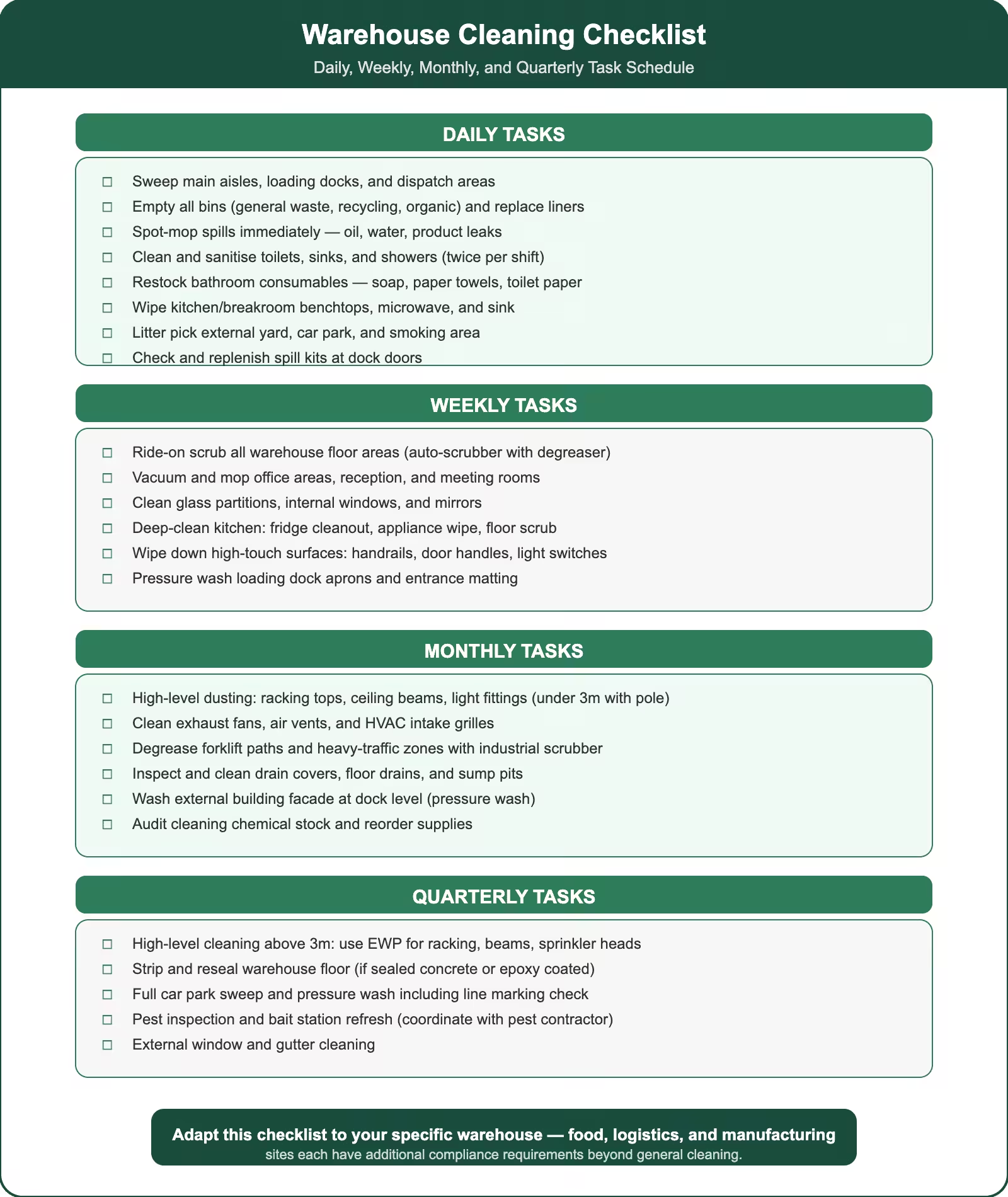
Warehouse cleaning checklist with daily, weekly, monthly, and quarterly task schedules for floor care, amenities, high-level cleaning, and maintenance
Download Your Warehouse Cleaning Checklist (PDF) Printable daily, weekly, monthly and quarterly warehouse cleaning checklists with zone-specific protocols.
Download PDF Checklist
We break our warehouse cleaning checklist into daily, weekly, and monthly tasks because different areas deteriorate at different rates. Our daily tasks focus on the high-traffic zones that accumulate contamination fastest. Our teams servicing Prestons logistics centres sweep all pedestrian walkways and forklift travel lanes every shift, because we have found that even a single day of missed sweeping allows grit and debris to embed in sealed concrete surfaces. We also empty all waste bins daily and check loading dock areas for spills or contamination from inbound deliveries.
Our daily checklist includes break room and amenities cleaning because we have learned that warehouse staff often eat meals in areas adjacent to the warehouse floor. Our teams in Liverpool distribution centres clean staff kitchens, wipe down tables, restock consumables, and sanitise high-touch surfaces in amenities blocks every day without exception. We track completion of every daily task through our digital checklist system, which timestamps each item and requires our team leader to sign off before leaving site. We implemented this system in 2020 and it has eliminated the inconsistency that plagued our earlier paper-based approach.
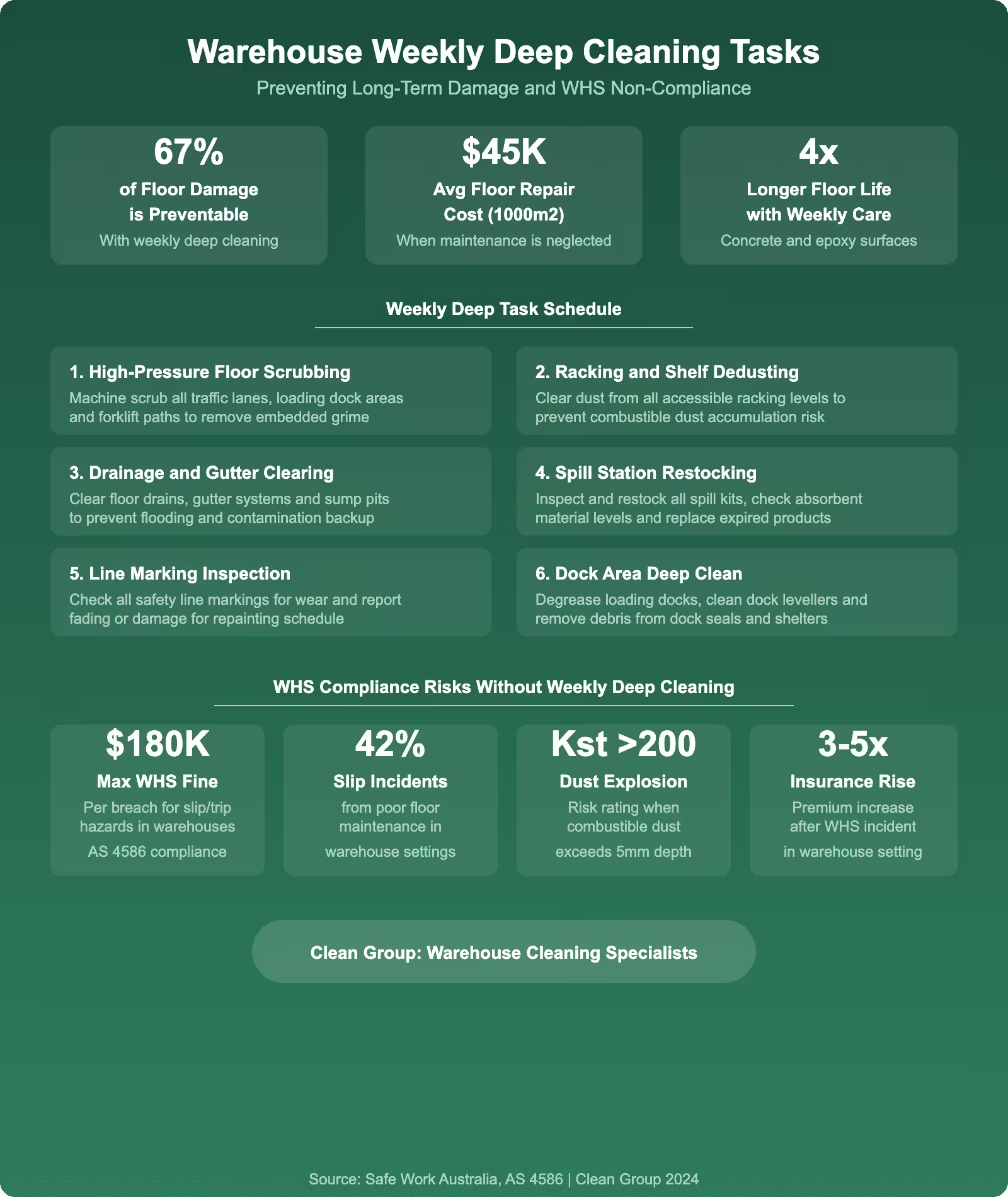
Warehouse weekly deep cleaning tasks infographic showing floor maintenance schedule WHS compliance risks combustible dust prevention and cost of neglecting warehouse cleaning
Weekly Deep Tasks That Prevent Long-Term Damage
Weekly Deep Tasks That Prevent Long-Term Damage involves specific protocols that we tailor to each facility based on its layout, traffic, and compliance requirements. Our weekly checklist tasks address the contamination that builds up too slowly to notice day by day but creates serious problems if left for a month. We schedule mechanical floor scrubbing weekly for all main warehouse aisles and receiving areas because our experience across Moorebank industrial estates has shown us that weekly scrubbing prevents the tyre mark and fluid contamination layer from bonding permanently to the floor surface. We use ride-on scrubbers for areas over 1,000 square metres and walk-behind units for tighter zones around racking and staging areas.
Our weekly checklist also includes detailed attention to loading dock areas where we apply degreasing agents to oil and diesel stains, scrub dock leveller plates, and clean the dock door tracks that accumulate dirt and debris from roller shutter operation. We have found that neglecting dock door tracks leads to premature wear on the door mechanisms, and several of our Prestons clients have reported reduced maintenance callouts for dock doors since we added track cleaning to our weekly program. We also inspect and clean all safety signage and line markings weekly because visibility of these elements is critical for warehouse traffic management compliance under AS 2890.1 for parking and traffic flow standards.
Warehouse Cleaning Zone Guide
Zone
Frequency
Method
Equipment
WHS Compliance
Loading Dock
Daily
Sweep + degrease spills
Ride-on sweeper
AS 4586 slip rating
Storage Aisles
Weekly
Machine sweep + scrub
Walk-behind scrubber
WHS clear aisle reg
Mezzanine/Office
Daily
Vacuum + wipe
Standard commercial
General duty of care
Washdown Bay
After each use
Pressure wash + drain clear
Pressure washer
EPA trade waste
External Hardstand
Monthly
Pressure wash
Industrial pressure unit
EPA stormwater
Monthly Specialist Tasks for Detailed Coverage
Warehouse Cleaning Zone Guide requires specific protocols that we tailor to each facility based on its layout, traffic, and compliance requirements. Our monthly checklist tasks tackle the areas that need periodic intensive attention rather than routine maintenance. We schedule high-level dusting of all racking crossbeams, cable trays, lighting fixtures, and fire detection equipment on a monthly cycle for most warehouses. Our teams working across the Liverpool industrial precinct use scissor lifts and telescopic dusting tools to reach surfaces up to 12 metres, and we have found that monthly frequency is sufficient to prevent dust accumulation from reaching levels that affect air quality or trigger false fire alarms.
Monthly Specialist Tasks for Detailed Coverage includes specific protocols that we tailor to each facility based on its layout, traffic, and compliance requirements. We also include monthly floor condition assessments in our checklist where we inspect the floor sealer for wear, identify any areas of concrete deterioration, and document the condition of expansion joints. Our teams in Moorebank have caught early-stage concrete spalling through these monthly inspections, allowing our clients to schedule repair work before the damage becomes a safety hazard or requires costly full-depth patching. We photograph the condition of the floor during each monthly assessment and include the images in our cleaning report so facility managers have a visual record of floor condition over time.
Cost of Implementing a Structured Checklist Program
We believe in transparency about what a detailed warehouse cleaning checklist program costs to implement and maintain. Our pricing data from 2024 shows that a structured checklist-based cleaning program for a typical warehouse in the Prestons, Liverpool, or Moorebank industrial areas costs approximately $2,370 per month for a facility of 3,000 to 5,000 square metres. That figure covers daily, weekly, and monthly tasks plus the digital tracking system, quality audits, and reporting that make the checklist approach effective. We have found that this structured approach typically costs 10 to 15 percent more than ad hoc cleaning but delivers measurably better outcomes and eliminates the costly catch-up cleans that unstructured programs inevitably require.
Our experience has shown that the real value of a checklist approach is consistency and accountability. We have documented cases where facilities operating without a structured program accumulated enough floor contamination over six months to require a full floor restoration costing several thousand dollars — work that would have been completely unnecessary if a proper cleaning checklist had been followed from the outset. We share our checklist templates with clients during onboarding so they understand exactly what we do at each visit and can verify completion through our digital reporting portal.
Customising the Checklist for Different Warehouse Types
We do not use a generic checklist because every warehouse operates differently, and we have learned that a cold storage facility needs a fundamentally different cleaning approach than an ambient distribution centre. Our teams customise the checklist for each client based on the products stored, the traffic patterns, the floor type, the ceiling height, and the specific compliance requirements that apply. We have developed checklist variants for food-grade warehouses, pharmaceutical storage facilities, general logistics centres, and manufacturing environments, and each variant includes tasks specific to that operation’s needs.
Our Prestons food distribution warehouse clients have checklists that include daily sanitisation of temperature-controlled zones, allergen management protocols for facilities handling mixed product categories, and pest monitoring station checks that we integrate with our cleaning visits. Our Liverpool automotive parts warehouses have checklists focused on oil and chemical spill response, metal swarf collection from machining areas, and paint booth cleaning schedules. We review and update each facility’s checklist quarterly to confirm it reflects any operational changes, and our team leaders walk through the checklist with the facility manager during each quarterly review meeting.
Digital Tracking and Quality Assurance
Digital Tracking and Quality Assurance focuses on specific protocols that we tailor to each facility based on its layout, traffic, and compliance requirements. We moved our entire checklist system to a digital platform in 2020, and the improvement in accountability and transparency has been significant. Our cleaners complete each task on a tablet device that records the time, location, and completion status of every checklist item. We have found that this digital approach eliminates the disputes that sometimes arose with paper checklists about whether specific tasks were actually completed. Our facility managers in Moorebank particularly appreciate the photographic evidence feature, where our teams photograph completed work areas as proof of completion for tasks that are difficult to verify visually later.
Our quality assurance program builds on the checklist data by identifying patterns and trends across multiple visits. We analyse completion rates, identify tasks that are consistently taking longer than expected, and flag any recurring issues that suggest a change in facility conditions. We have used this data to identify a ventilation system failure in a Liverpool warehouse — our teams noticed that dust accumulation rates on high surfaces increased sharply over three consecutive monthly cleans, and when we reported this to the facility manager, they discovered a failed intake filter in the HVAC system. We believe this demonstrates the value of structured cleaning data beyond just ensuring tasks get done.
We encourage every warehouse operator to adopt a structured checklist approach to cleaning because the evidence from our portfolio is overwhelming — consistency, accountability, and documented procedures deliver better outcomes than any amount of reactive cleaning. For practical strategies on maintaining these standards efficiently, see our next guide in our warehouse cleaning series which covers the operational systems that make checklist compliance sustainable over the long term.
Frequently Asked Questions
What should be included in a warehouse cleaning checklist? We break our checklist into daily tasks like sweeping walkways and emptying bins, weekly tasks like mechanical floor scrubbing and loading dock degreasing, and monthly tasks like high-level dusting and floor condition assessments. Each category addresses contamination that accumulates at different rates. We customise the specific tasks based on each warehouse’s operations, products stored, and compliance requirements.
How often should warehouse floors be scrubbed? We recommend weekly mechanical scrubbing for main aisles and receiving areas. Our experience has shown that weekly frequency prevents tyre marks and fluid contamination from bonding permanently to floor surfaces. We use ride-on scrubbers for areas over 1,000 square metres and walk-behind units for tighter zones around racking.
How much does a checklist-based warehouse cleaning program cost? Our data shows a structured checklist program costs approximately $2,370 per month for a 3,000 to 5,000 square metre warehouse. This covers daily, weekly, and monthly tasks plus digital tracking, quality audits, and reporting. We have found this costs 10 to 15 percent more than ad hoc cleaning but prevents costly catch-up cleans.
Why is a digital checklist better than paper? We switched to digital in 2020 and found it eliminates disputes about task completion, provides timestamped accountability, and enables photographic evidence of completed work. Our digital system also allows trend analysis across multiple visits, helping identify operational issues like ventilation failures through changing contamination patterns.
How do you customise checklists for different warehouse types? We develop checklist variants for food-grade warehouses, pharmaceutical storage, general logistics, and manufacturing environments. Each includes tasks specific to that operation — food warehouses include daily sanitisation and allergen protocols, while automotive warehouses focus on oil spill response and metal swarf collection. We review and update quarterly.
What compliance standards affect warehouse cleaning checklists? We verify our checklists address WHS requirements including working at heights protocols and traffic management compliance under AS 2890.1 for parking and traffic flow. Our weekly checklist includes inspection of safety signage and line marking visibility, which is critical for warehouse traffic management compliance.
How do you verify that checklist tasks are actually completed? Our digital system timestamps each task and requires team leader sign-off. We include photographic evidence for tasks difficult to verify visually later, and our quality assurance program analyses completion rates and identifies patterns across multiple visits. Facility managers access completion data through our digital reporting portal.
Should loading docks be cleaned separately from the main warehouse? We treat loading docks as a separate zone in our checklist because they have unique contamination patterns from vehicles transitioning between indoor and outdoor areas. Our protocol includes daily sweeping, weekly degreasing of oil stains and dock leveller plates, and cleaning of dock door tracks that accumulate debris from roller shutter operation.
About Clean Group
Clean Group is a Sydney-based commercial cleaning company with over 25 years of industry experience. Founded by Suji Siv, our team of 50+ trained professionals services offices, warehouses, medical centres, schools, childcare facilities, retail stores, gyms, and strata properties across Sydney, Melbourne, and Brisbane.
We are active members of ISSA and the Building Service Contractors Association of Australia (BSCAA). Our operations align with ISO 9001 (Quality Management), ISO 14001 (Environmental Management), and ISO 45001 (Workplace Health and Safety) standards. We hold membership with the Green Building Council of Australia and use eco-friendly, TGA-registered cleaning products wherever possible.
Every Clean Group cleaner is police-checked, fully insured, and trained in safe work procedures under SafeWork NSW guidelines. We operate 7 days a week, including after-hours and weekend services, to minimise disruption to your business.
Hi, I'm Suji Siv, the founder, CEO, and Managing Director of Clean Group, bringing over 25 years of leadership and management experience to the company. As the driving force behind Clean Group’s growth, I oversee strategic planning, resource allocation, and operational excellence across all departments. I am deeply involved in team development and performance optimization through regular reviews and hands-on leadership.