Cleaning Checklist for Fitness Centres: Daily, Weekly and Monthly Schedule
A well-structured cleaning checklist is the backbone of every successful fitness centre hygiene program, and we have built ours from years of hands-on experience as gym cleaners servicing facilities across Campbelltown, Ingleburn, and Minto. Our team uses checklists not as simple tick-box exercises but as accountability tools that confirm every surface, fixture, and zone receives the attention it needs at the right frequency. We have refined these checklists through thousands of cleaning shifts and they reflect real-world conditions rather than theoretical ideals.
We developed our checklist system after observing that gyms without structured task lists consistently missed critical cleaning touchpoints. Our crews in Campbelltown documented which surfaces were being overlooked during ad-hoc cleaning routines, and the patterns were alarming — weight adjustment pins, ventilation grilles, and the undersides of bench seats were routinely skipped. We built our checklists to eliminate these blind spots and verify detailed coverage across every shift.
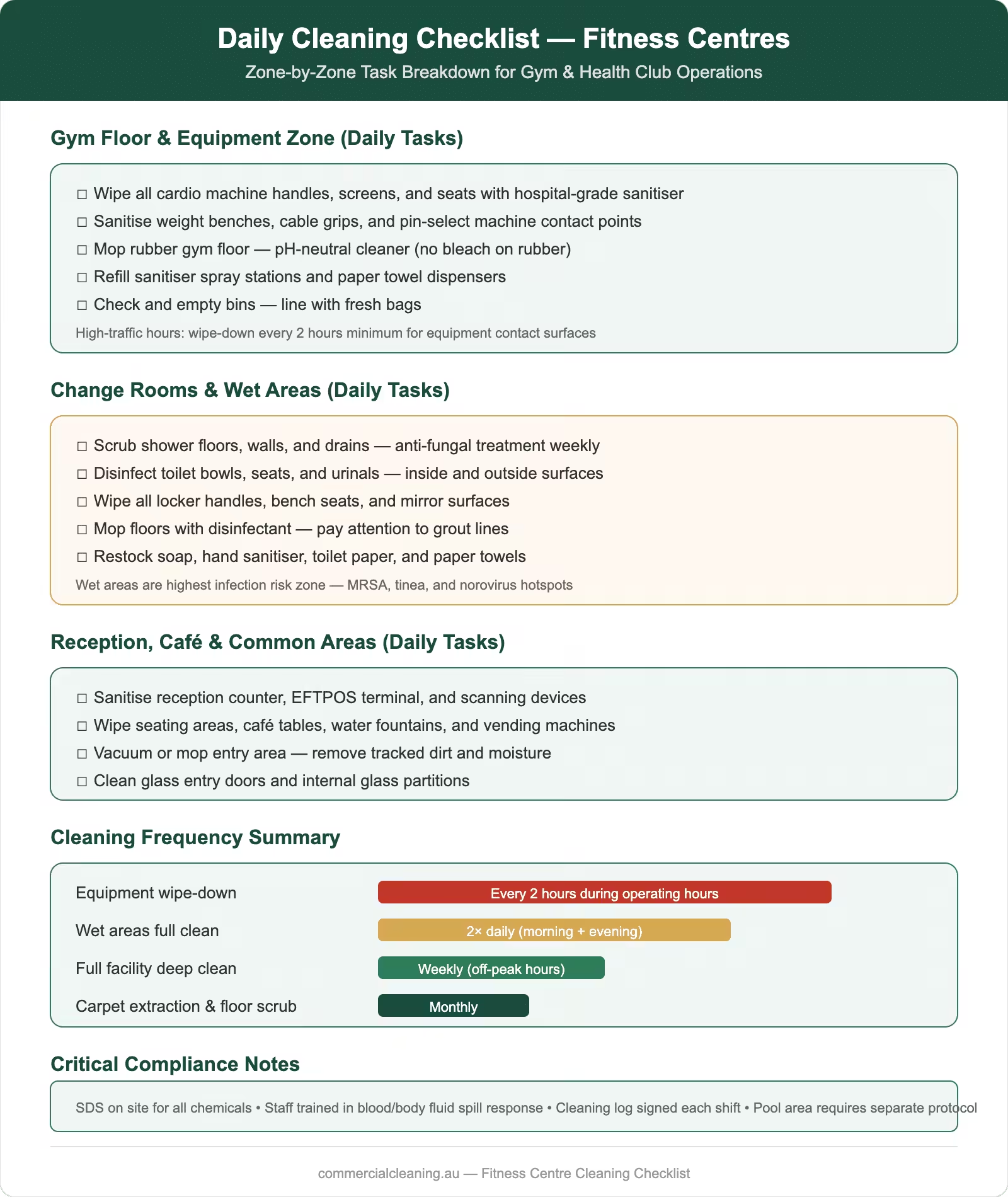
A printable checklist covering daily opening, mid-session, and closing tasks plus weekly and monthly deep cleans — built for gyms and fitness centres.
Download PDF Checklist
For more insights, see our guide on fitness centre hygiene management guide.
Daily Cleaning Checklist for Fitness Centre Operations
Daily Cleaning Checklist for Fitness Centre Operations covers specific protocols that we tailor to each facility based on its layout, traffic, and compliance requirements. We break our daily checklist into three shift segments: opening preparation, mid-session maintenance, and closing deep clean. Our opening preparation tasks include equipment surface disinfection, mirror cleaning, floor inspection, and amenities restocking. We have found that completing opening tasks before the first members arrive sets the tone for the entire day. Our Ingleburn gym clients reported that member satisfaction scores improved measurably after we implemented structured opening protocols rather than rushing through tasks as members were already training.
Our mid-session maintenance checklist focuses on high-touch surface wipe-downs, floor spot-mopping around water stations, and bathroom checks every 90 minutes during peak usage. We assign these tasks to dedicated crew members who circulate through the facility on a timed rotation. We have tracked mid-session contamination rates in our Minto facilities and found that 90-minute bathroom check intervals keep surfaces within acceptable hygiene thresholds even during the busiest after-work rush. Our closing deep clean checklist is the most detailed — it covers full equipment disinfection, floor scrubbing, change room restoration, and waste removal across every zone.
Weekly and Monthly Deep Cleaning Tasks
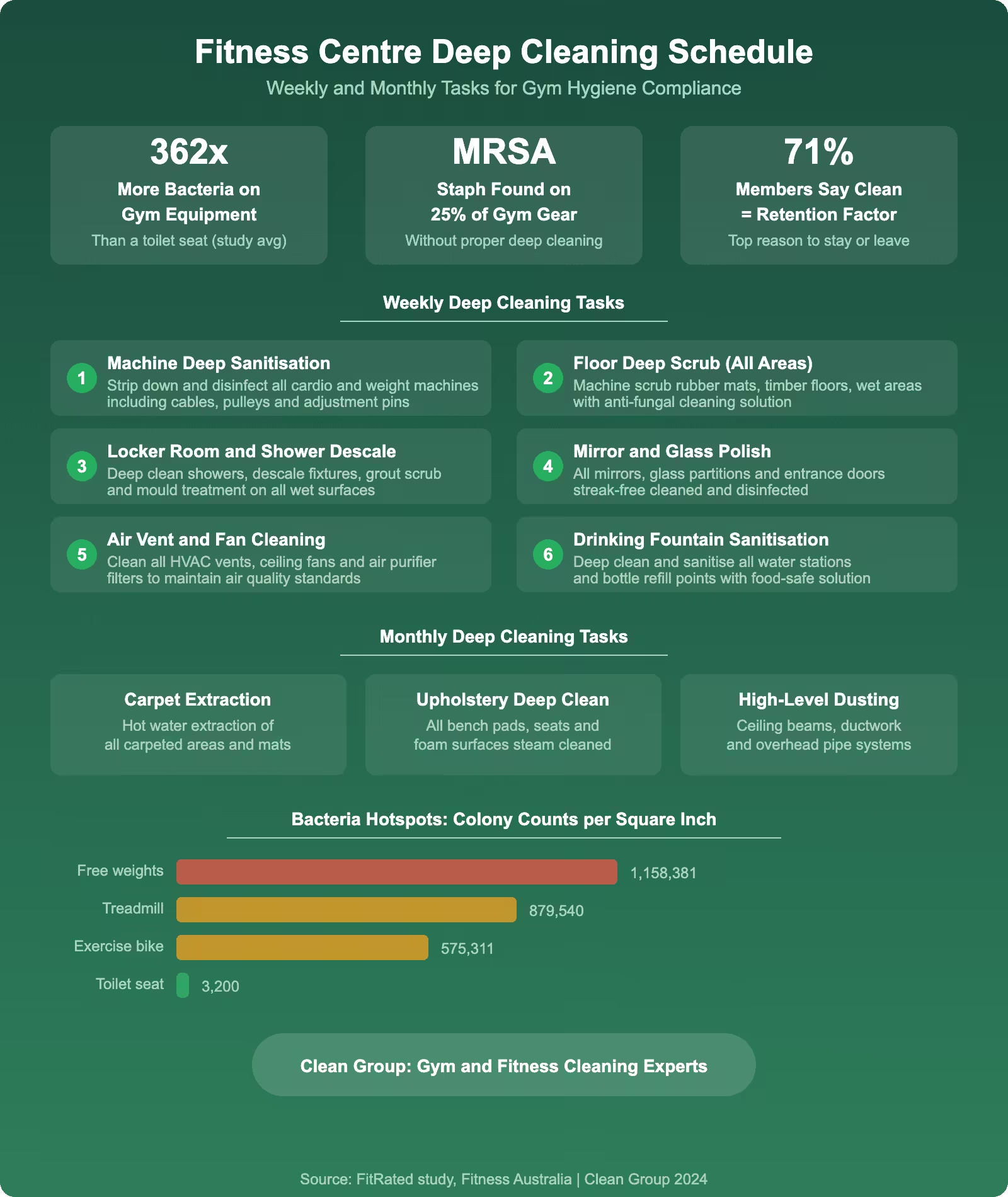
We schedule weekly tasks that daily cleaning cannot adequately address. Our weekly checklist includes carpet extraction in stretching areas, detailed equipment pad conditioning, air vent cleaning, and grout scrubbing in wet areas. We have found that skipping weekly tasks for even a fortnight leads to visible deterioration that members notice immediately. Our team in Campbelltown manages weekly scheduling through our digital task management system so nothing falls through the cracks regardless of which crew members are rostered on a given day.
Our monthly checklist covers major maintenance items including full floor stripping and resealing, high-level dusting of ceiling fixtures and exposed ductwork, deep cleaning of all locker interiors, and detailed disinfection of sauna and steam room surfaces where applicable. We align our laundry management for gym towels and cleaning cloths with AS 4146.3 requirements for operational laundry practices, ensuring that textile items used in our cleaning processes are laundered at temperatures sufficient to eliminate pathogens and prevent cross-contamination between facilities. We discovered through testing at our Ingleburn contracts that improperly laundered microfibre cloths were redepositing bacteria on surfaces rather than removing them — implementing AS 4146.3 compliant laundering protocols eliminated this issue entirely.
Gym Equipment Cleaning Protocol
| Equipment Type | Between Users | Daily Close | Weekly | Infection Risk |
|---|---|---|---|---|
| Cardio Machines | Antibacterial wipe | Full sanitise handles | Deep clean internals | MRSA, Staph |
| Free Weights | User wipe + spray | Full rack sanitise | Soak small items | Ringworm, E. coli |
| Mats/Flooring | Spray after class | Machine mop | Deep scrub + disinfect | Athletes foot, HPV |
| Bathrooms/Showers | — | 3× daily sanitise | Full tile + grout | Legionella, mould |
| Stretching Zone | Spray after use | Vacuum + wipe | Steam clean | Dermatitis, fungal |
Checklist Compliance and Accountability Systems
Gym Equipment Cleaning Protocol requires specific protocols that we tailor to each facility based on its layout, traffic, and compliance requirements. We use digital checklists on tablets rather than paper because we have found that digital systems provide better accountability, time-stamped evidence, and easier auditing. Our crew members photograph completed tasks at key checkpoints, and these images are uploaded to our cloud-based quality management system in real time. We have implemented this across all our Minto gym contracts and facility managers can review completed work from their phone within minutes of task completion.
Checklist Compliance and Accountability Systems includes specific protocols that we tailor to each facility based on its layout, traffic, and compliance requirements. Our supervisors review checklist completion rates weekly and flag any patterns of missed or incomplete tasks. We have built automatic alerts into our system that notify both our operations team and the facility manager if a scheduled task is not completed within its designated window. We spend approximately $1,220 per quarter on our digital compliance infrastructure for a typical gym contract — covering tablet hardware, software licensing, and supervisor audit time. Our clients in Campbelltown, Ingleburn, and Minto tell us this transparency is one of the main reasons they stay with our service rather than switching to lower-cost competitors who cannot demonstrate the same level of accountability.
We encourage fitness centre operators who want to see how our checklist approach extends to specialised facilities to explore the next guide in our gym cleaning series for detailed protocols covering club and recreational venue maintenance.
Frequently Asked Questions About Fitness Centre Cleaning Checklists
What should be on a daily gym cleaning checklist?
We include equipment surface disinfection, mirror cleaning, floor inspection, amenities restocking, mid-session high-touch wipe-downs, bathroom checks every 90 minutes, and a detailed closing deep clean. Our team has refined this daily task list across dozens of facilities in Campbelltown and surrounding areas.
How often should gym equipment be wiped down?
We disinfect high-touch equipment surfaces at minimum twice daily — during mid-session maintenance and the closing deep clean. Our team has found that peak-usage facilities benefit from a third round during morning rush periods to maintain acceptable hygiene levels throughout trading hours.
Should gym cleaning checklists be digital or paper-based?
We strongly recommend digital checklists because they provide time-stamped evidence, photographic verification, and easier auditing. Our team switched from paper to digital systems across all our contracts and saw immediate improvements in completion rates and accountability.
What weekly cleaning tasks do fitness centres need?
We schedule weekly carpet extraction, equipment pad conditioning, air vent cleaning, and grout scrubbing. Our experience across Ingleburn facilities shows that skipping weekly tasks for even a fortnight leads to visible deterioration that members notice immediately.
How do you make sure cleaning checklists are actually followed?
We use digital task management with photographic checkpoints, automatic alerts for missed tasks, and fortnightly supervisor audits. Our system notifies both our operations team and the facility manager if any scheduled task is not completed within its designated window.
What laundry standards apply to gym cleaning cloths?
We follow AS 4146.3 for operational laundry practices, ensuring cleaning textiles are laundered at pathogen-eliminating temperatures. Our team discovered that improperly laundered microfibre cloths were redepositing bacteria, and AS 4146.3 compliant protocols eliminated this issue.
How much does a checklist compliance system cost for a gym?
We invest approximately $1,220 per quarter on digital compliance infrastructure for a typical gym contract, covering tablet hardware, software licensing, and supervisor audit time. Our clients tell us this accountability is a key reason they stay with our service.
Can gym owners customise their cleaning checklists?
We build every checklist specifically for the individual facility based on layout, equipment mix, operating hours, and member traffic patterns. Our team conducts a detailed walkthrough assessment before creating any checklist so it reflects the actual cleaning needs of that specific gym.
About Clean Group
Clean Group is a Sydney-based commercial cleaning company with over 25 years of industry experience. Founded by Suji Siv, our team of 50+ trained professionals services offices, warehouses, medical centres, schools, childcare facilities, retail stores, gyms, and strata properties across Sydney, Melbourne, and Brisbane.
We are active members of ISSA and the Building Service Contractors Association of Australia (BSCAA). Our operations align with ISO 9001 (Quality Management), ISO 14001 (Environmental Management), and ISO 45001 (Workplace Health and Safety) standards. We hold membership with the Green Building Council of Australia and use eco-friendly, TGA-registered cleaning products wherever possible.
Every Clean Group cleaner is police-checked, fully insured, and trained in safe work procedures under SafeWork NSW guidelines. We operate 7 days a week, including after-hours and weekend services, to minimise disruption to your business.
About the Author

Stephen Matthews
Hi, my name is Steve. I have been working as a Regional Operations Manager in Sydney Clean Group for almost four years now and manage a team of 10. I have more than three decades of experience in the commercial cleaning industry. My responsibilities include the day-to-day management of cleaning operations, planning, online quotation to clients, managing cleaners’ performance, collecting clients\' feedback, and ensuring proper & regular maintenance of cleaning equipment. Get in touch for a quick chat about your cleaning needs.
Read More About Stephen
