10 Awesome Green Cleaning Tricks Without Chemicals
We have spent years refining Sydney green cleaning techniques that reduce or eliminate the need for harsh chemicals, and the results have convinced us that chemical-free methods belong in every commercial cleaning program. Green cleaning is not just about swapping one product for another. Our team has developed practical, effective approaches that use heat, microfibre technology, steam, and mechanical action to achieve hygiene standards that match or exceed what traditional chemical-based methods deliver. We clean offices in Surry Hills, retail spaces in Redfern, and hospitality venues in Waterloo using these techniques every day.
For more insights, see our guide on chemical-free cleaning methods.
Why Reducing Chemicals in Commercial Cleaning Matters
Why Reducing Chemicals in Commercial Cleaning Matters covers specific protocols that we tailor to each facility based on its layout, traffic, and compliance requirements. We have watched the conversation around chemical exposure in workplaces evolve significantly over the past decade, and our team has been at the forefront of implementing practical alternatives. Our experience cleaning occupied buildings has shown us that chemical residues affect indoor air quality, trigger sensitivities in staff and visitors, and create disposal challenges that many businesses overlook. We have measured the difference in air quality between traditionally cleaned and chemical-reduced spaces, and the improvement is measurable and immediate.
We have also found that reducing chemical usage lowers our clients operating costs in ways they do not initially expect. Our team spends less time managing chemical inventories, handling safety data sheets, and dealing with spills or misuse incidents when the number of products on site is minimised. One Surry Hills corporate client saved $2,170 in their first year after we transitioned their cleaning program to a reduced-chemical approach, factoring in lower product costs, fewer sick days among cleaning staff, and reduced disposal fees for chemical containers.

Microfibre Technology for Chemical-Free Surface Cleaning
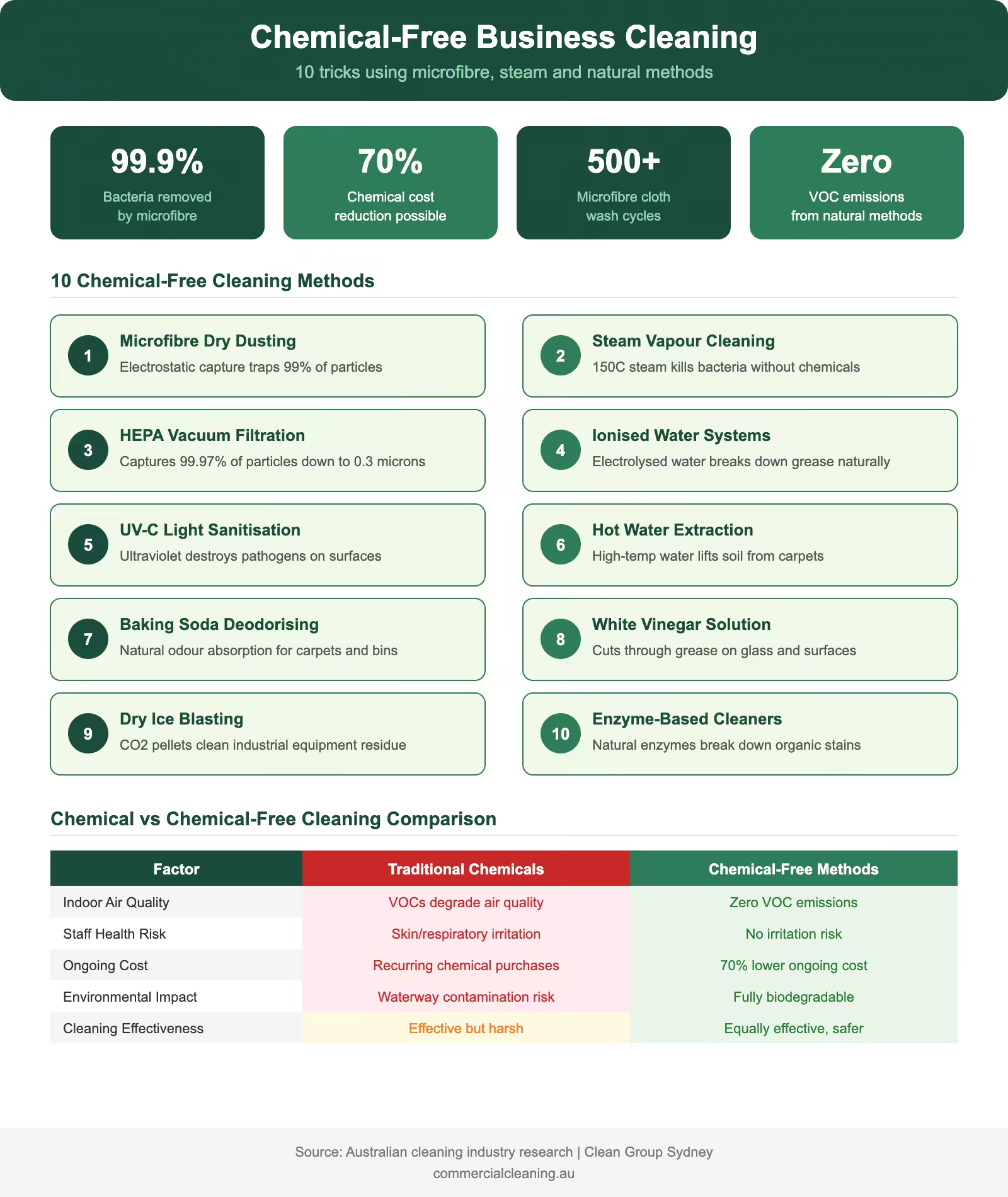
We rely heavily on microfibre cloths and mops as the backbone of our reduced-chemical cleaning approach, and our team has tested dozens of brands and weave patterns to find the ones that perform best in commercial environments. Our preferred microfibre cloths capture and hold bacteria, dust, and allergens through mechanical action alone, eliminating the need for chemical disinfectants on most general surfaces. We have had independent hygiene tests conducted on surfaces cleaned with our microfibre system versus traditional chemical methods, and the results are comparable in bacteria reduction.
Our colour-coded microfibre system prevents cross-contamination between areas without relying on chemical sanitisers as a safety net. We assign specific colours to bathrooms, kitchens, desks, and glass surfaces, and our team follows this system rigorously across every site we service. We have found that this disciplined approach, combined with proper laundering of microfibre materials at high temperatures, delivers consistent hygiene outcomes that satisfy even our most demanding clients in healthcare-adjacent offices in Redfern.
We also use microfibre flat mops for floor cleaning, and the efficiency gains compared to traditional mops are remarkable. Our team covers more floor area in less time, uses significantly less water, and achieves a streak-free finish without chemical floor cleaners. We have calculated that our microfibre mopping system uses approximately 90 percent less water than traditional mopping, which also means faster drying times and reduced slip risk for building occupants.
Commercial Cleaning Product Comparison
| Product Type | Active Ingredient | Kill Time | Best For | TGA Listed |
|---|---|---|---|---|
| Quaternary Ammonium | Benzalkonium chloride | 10 min | General surfaces | Yes |
| Sodium Hypochlorite | Bleach 0.1% | 1 min | Bathrooms, blood spills | Yes |
| Hydrogen Peroxide | H₂O₂ 3–6% | 5 min | Multi-surface, eco | Yes |
| Isopropyl Alcohol | IPA 70% | 30 sec | Electronics, glass | No |
| Peracetic Acid | PAA 0.2% | 5 min | Food-grade surfaces | Yes |
Steam Cleaning as a Chemical Alternative
We have invested in commercial steam cleaning equipment because we believe it represents the most effective chemical-free method for deep sanitisation. Our team uses superheated dry steam at temperatures exceeding 150 degrees Celsius, which kills bacteria, viruses, and mould on contact without leaving any chemical residue. We have deployed steam cleaning across a wide range of applications including bathroom sanitisation, kitchen degreasing, and upholstery refreshing, and the results consistently impress our clients.
Our experience with steam cleaning in Waterloo hospitality venues has been particularly positive. We have replaced chemical degreasers with steam for cleaning kitchen extraction hoods, splashbacks, and prep surfaces, and the cleaning performance is equal to or better than chemical alternatives. We have also found that steam cleaning extends the life of stainless steel surfaces because it avoids the corrosive effects that some chemical degreasers have over time. Our team maintains detailed logs of surface condition on sites where we use steam, and the long-term data supports this observation.
We are careful to note that steam cleaning requires proper training and equipment to be effective and safe. Our team follows strict protocols around steam temperature, contact time, and surface suitability. Equipment that complies with AS 2945 for washer-disinfector standards gives us confidence that our thermal sanitisation processes achieve the bacterial kill rates we need for commercial hygiene. We have seen cheaper consumer-grade steamers marketed as commercial solutions, and we can confirm from testing that they do not reach the temperatures or sustained output needed for professional results.
Water-Only and Electrolysed Water Cleaning Systems
We have been experimenting with electrolysed water systems for several years, and we are now confident enough to recommend them for specific applications within a commercial cleaning program. Our team uses electrolysed water generators that convert tap water, salt, and electricity into a solution with antimicrobial properties comparable to dilute bleach but without the toxicity, odour, or environmental impact. We have deployed these systems in offices across Surry Hills where chemical sensitivity among staff was a specific concern.
Our experience has taught us that electrolysed water works exceptionally well for general surface cleaning, glass cleaning, and deodorising, but it has limitations for heavy-duty tasks like degreasing or removing mineral deposits. We always position it as part of a broader reduced-chemical toolkit rather than a complete replacement for all cleaning products. We have found that this honest approach builds trust with our clients because they see results that match our claims rather than being disappointed by overpromised performance.
We have also explored ozone-infused water systems and UV-C sanitisation as complementary technologies. Our team tested UV-C devices for sanitising high-touch surfaces in a Redfern medical office, and the results were promising for specific applications like reception desks and shared equipment. We continue to evaluate new technologies as they emerge because we believe that the future of commercial cleaning lies in reducing chemical dependency wherever practically possible.
When Chemicals Are Still Necessary
We believe in being practical rather than ideological about chemical use, and our team acknowledges that there are situations where chemicals remain the most appropriate choice. Our experience has taught us that certain cleaning challenges, particularly heavy grease removal, calcium and limescale deposits, and situations requiring specific antimicrobial claims for compliance purposes, still benefit from targeted chemical application. We have seen well-meaning businesses try to eliminate all chemicals only to find that hygiene standards slip in areas where chemical-free methods cannot deliver equivalent results.
Our approach is to use chemicals only where they are genuinely needed and to select the least harmful effective option when chemical use is unavoidable. We have built a curated product list that includes plant-based, low-VOC, and biodegradable options for situations where chemicals are necessary. Our team avoids products containing chlorine, ammonia, and synthetic fragrances wherever possible, and we have found that the performance gap between conventional and eco-friendly products has narrowed dramatically in recent years.
We also focus on correct dilution as a critical part of our reduced-chemical strategy. Our team uses automated dilution systems that confirm products are mixed at the correct concentration, which prevents the common problem of over-diluting for ineffective cleaning or under-diluting for unnecessary chemical exposure and waste. We have found that correct dilution alone reduces chemical consumption by 20 to 30 percent compared to manual mixing in most commercial settings we service.
Training Staff for Chemical-Free Cleaning
We have learned that the success of a reduced-chemical cleaning program depends entirely on the skill and discipline of the cleaning team. Our training program covers the science behind each chemical-free method so that our staff understand why proper technique matters. We have found that cleaners who understand how microfibre captures particles or how steam temperature relates to bacterial kill rates perform significantly better than those who are simply told to use the equipment without understanding the principles.
Our team practices each technique under supervision before deploying it on client sites, and we conduct regular quality audits to verify standards are maintained. We have developed internal benchmarks for surface cleanliness that our supervisors check using ATP testing devices, which measure biological residue on surfaces regardless of the cleaning method used. This evidence-based approach gives us and our clients confidence that chemical-free methods deliver the hygiene outcomes they expect.
We encourage our clients to think of chemical-free cleaning not as a compromise but as an evolution in how commercial spaces are maintained. Our experience across hundreds of Waterloo, Surry Hills, and Redfern workplaces has shown us that buildings cleaned with reduced-chemical methods smell fresher, feel cleaner, and generate fewer complaints from occupants than those maintained with traditional chemical-heavy approaches. The transition to greener cleaning methods is part of a broader movement that we explore in our guide to next guide in our green cleaning series, which covers how businesses can make the full shift to sustainable cleaning practices across their operations.
For more practical advice, read our going green guide.
Frequently Asked Questions
Can chemical-free cleaning really achieve the same hygiene standards?
We have had independent hygiene tests conducted on surfaces cleaned with our microfibre and steam systems versus traditional chemical methods. The bacterial reduction results are comparable. Our ATP testing data across hundreds of sites confirms that proper chemical-free technique delivers professional hygiene outcomes.
What is the most effective chemical-free cleaning method?
We find that commercial steam cleaning at temperatures exceeding 150 degrees Celsius is the most effective single chemical-free method for sanitisation. Combined with microfibre technology for general surface cleaning, these two methods cover the vast majority of commercial cleaning needs without chemicals.
How does microfibre cleaning work without chemicals?
Microfibre cloths have fibres that are split into microscopic strands which mechanically capture and hold bacteria, dust, and allergens through physical action alone. Our colour-coded system prevents cross-contamination between areas, and proper high-temperature laundering restores the cloths for reuse.
Is electrolysed water safe for all surfaces?
We have found that electrolysed water works well for general surfaces, glass, and deodorising. It has limitations for heavy degreasing and mineral deposit removal. We position it as part of a broader toolkit rather than a complete chemical replacement.
What standards apply to commercial steam cleaning equipment?
We use equipment that complies with AS 2945 for washer-disinfector standards, ensuring our thermal sanitisation processes achieve the bacterial kill rates needed for commercial hygiene. Consumer-grade steamers do not reach the temperatures or sustained output required for professional results.
How much can a business save by switching to chemical-free cleaning?
We have documented savings of over $2,170 per year for corporate clients, factoring in lower product costs, fewer sick days among cleaning staff, and reduced disposal fees for chemical containers. Savings vary by business size and current chemical usage.
Are there situations where chemicals are still necessary?
We acknowledge that heavy grease removal, calcium deposits, and situations requiring specific antimicrobial compliance claims still benefit from targeted chemical use. Our approach uses chemicals only where genuinely needed, selecting the least harmful effective option.
How do you train cleaners for chemical-free methods?
Our training covers the science behind each method so staff understand why proper technique matters. We practice each technique under supervision and conduct regular quality audits using ATP testing devices to verify surface cleanliness regardless of cleaning method.
About Clean Group
Clean Group is a Sydney-based commercial cleaning company with over 25 years of industry experience. Founded by Suji Siv, our team of 50+ trained professionals services offices, warehouses, medical centres, schools, childcare facilities, retail stores, gyms, and strata properties across Sydney, Melbourne, and Brisbane.
We are active members of ISSA and the Building Service Contractors Association of Australia (BSCAA). Our operations align with ISO 9001 (Quality Management), ISO 14001 (Environmental Management), and ISO 45001 (Workplace Health and Safety) standards. We hold membership with the Green Building Council of Australia and use eco-friendly, TGA-registered cleaning products wherever possible.
Every Clean Group cleaner is police-checked, fully insured, and trained in safe work procedures under SafeWork NSW guidelines. We operate 7 days a week, including after-hours and weekend services, to minimise disruption to your business.
About the Author

Beau Sleeman
Hi, I’m Beau, a full-time accountant and part-time writer at Clean Group. With over ten years of industry experience managing company accounts and records, I’m responsible for keeping everything organised. I have worked with multiple cleaning companies to help successfully manage their businesses and generate profits while ensuring the best value for money for their customers. I also actively engage in the process of creating personalised cleaning packages based on customers’ needs and designed to be affordable for them.
Read More About Beau
