Commercial Floor Tiles: AS 4586 Slip Resistance & Maintenance Guide
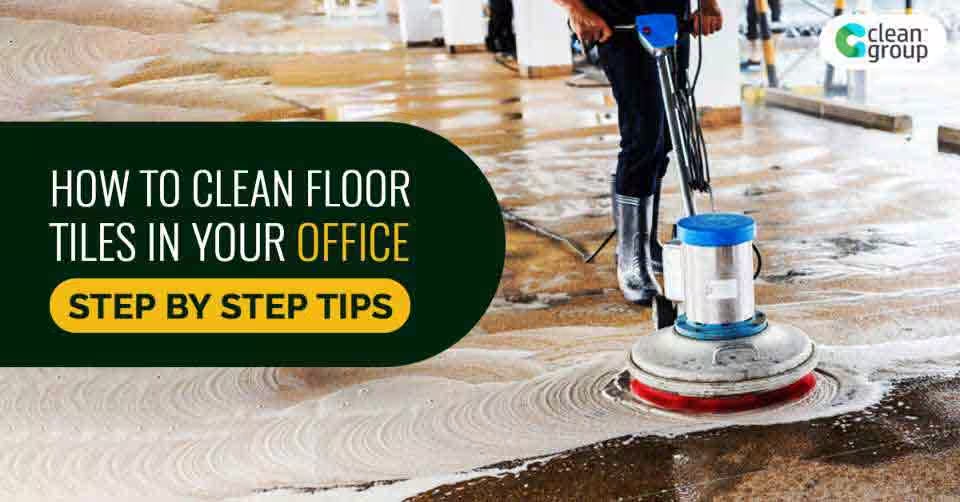
We have cleaned thousands of commercial floor tiles across Sydney over the past two decades and one thing we have learned is that a reactive approach always costs more than a planned maintenance program. Our team works with property managers in Bankstown, Bass Hill and Revesby who rely on us to keep their retail and office floors looking sharp week after week. If you need professional floor cleaning sydney services that actually extend the life of your tiles, we are the team to call.
For more insights, see our guide on high-touch surface cleaning frequency.
Why Commercial Floor Tiles Need a Different Cleaning Approach
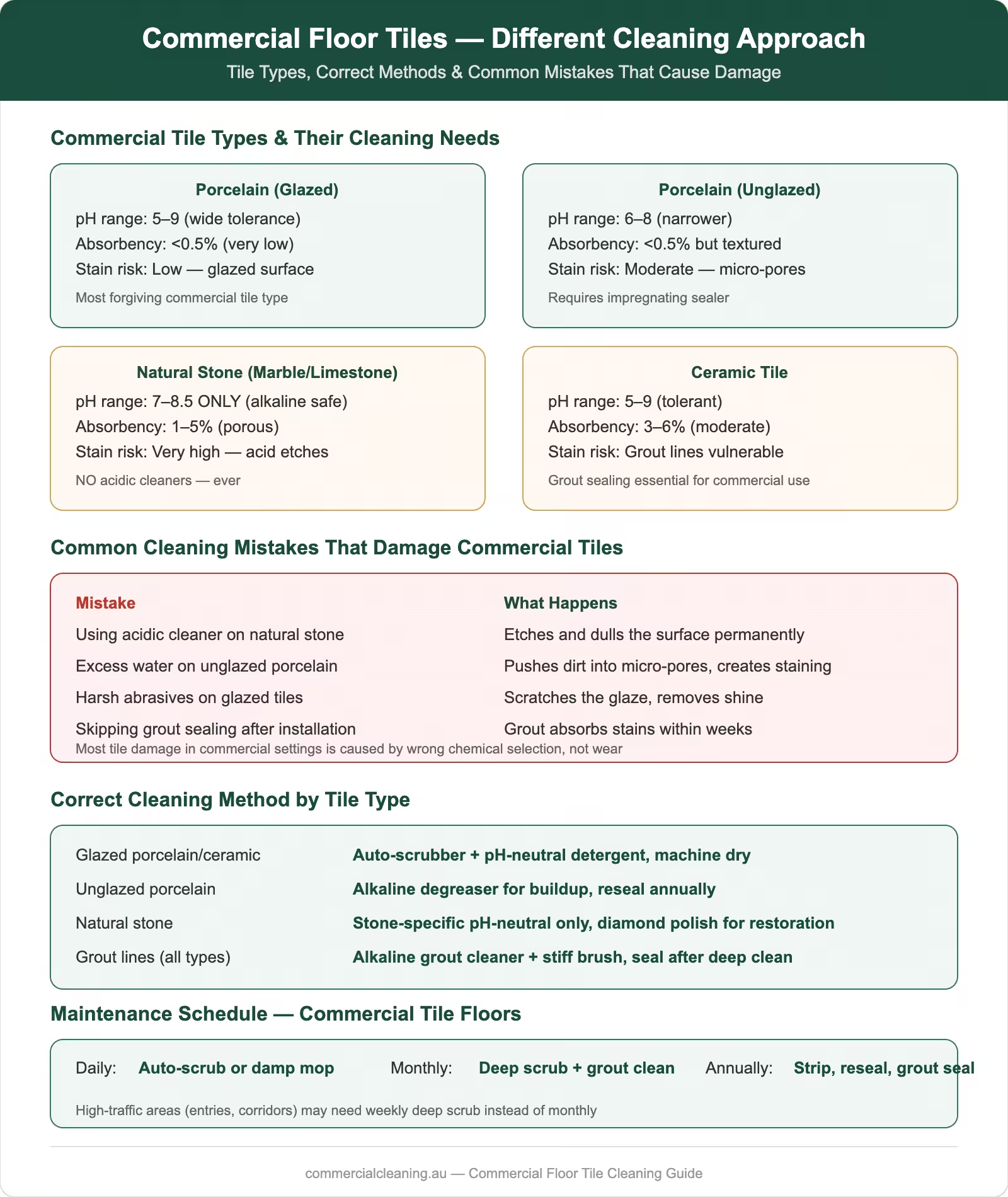
Why Commercial Floor Tiles Need a Different Cleaning Approach covers specific protocols that we tailor to each facility based on its layout, traffic, and compliance requirements. We see it constantly: businesses using the same mop-and-bucket routine they would use at home. Commercial floor tiles endure foot traffic volumes that residential surfaces never face. A busy Bankstown shopping arcade might see 3,000 pairs of shoes per day grinding dirt into grout lines and scratching protective sealants. Our experience tells us that without the right chemical balance and equipment, you accelerate wear rather than prevent it.
We have found that most porcelain and ceramic tiles in commercial settings lose their factory finish within 18 months if they are not maintained correctly. Our team follows AS 4459.3 guidelines for determining abrasion resistance of tiles, which helps us select the right cleaning agents and pad pressures for each surface type. This standard is something most cleaning companies never reference, but it is critical to preserving your floor investment.
The Step-by-Step Process Our Team Uses on Commercial Tiles
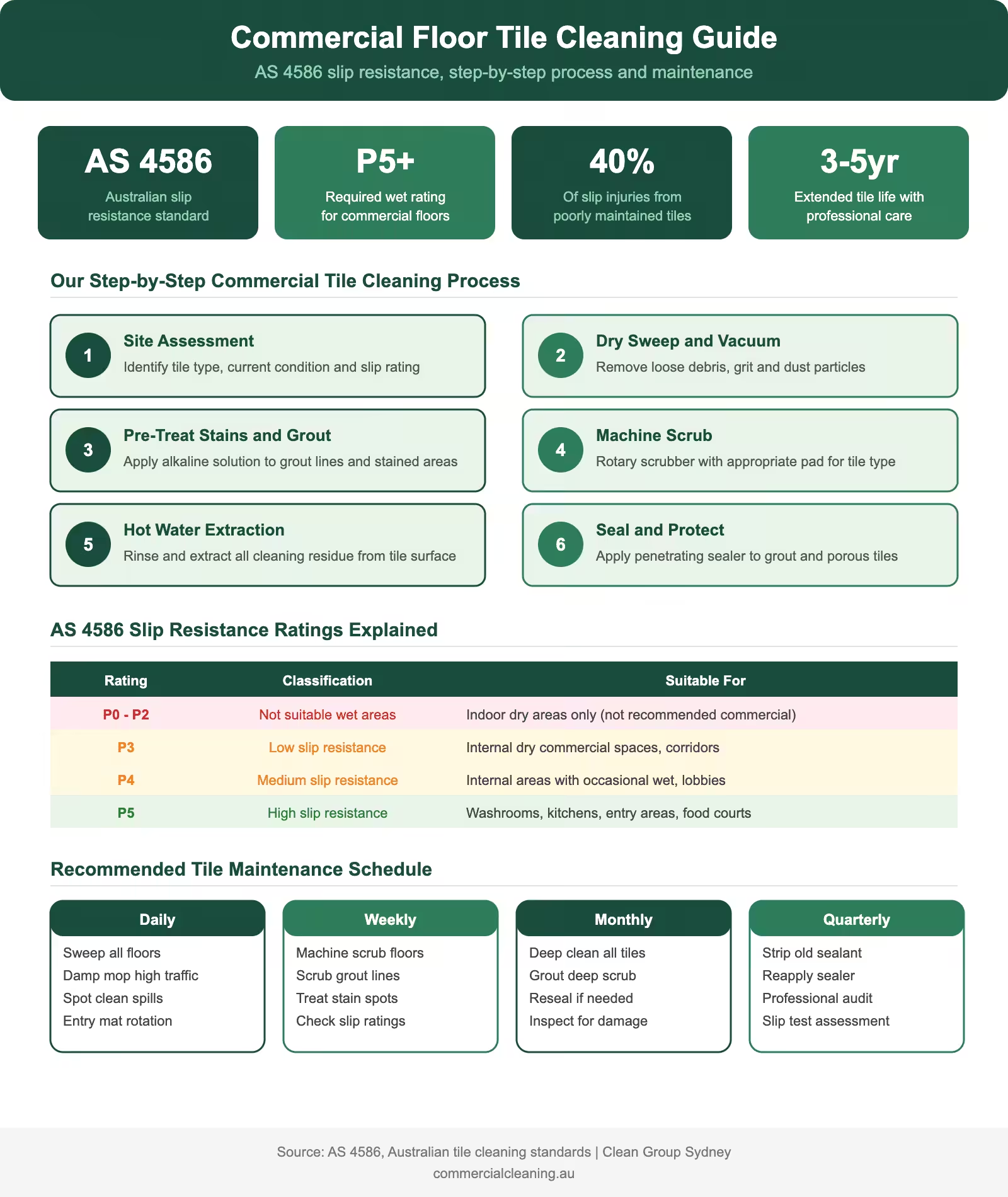
The Step-by-Step Process Our Team Uses on Commercial Tiles involves specific protocols that we tailor to each facility based on its layout, traffic, and compliance requirements. Every job we take on starts with a hands-and-knees inspection. We check grout condition, identify sealant breakdown, and test slip resistance before we even unload equipment from the van. Our technicians in Bass Hill and surrounding suburbs carry portable tribometers so we can give you a baseline reading and compare it to post-clean results.
We pre-treat grout lines with an alkaline solution that breaks down embedded oils and biological matter. This sits for 15 minutes while we set up our rotary scrubber with diamond-impregnated pads. We then work the floor in overlapping passes, feeding clean solution ahead of the machine and extracting dirty water simultaneously. Our team has refined this technique over thousands of commercial jobs and it consistently delivers results that standard mopping cannot match.
After scrubbing, we rinse twice with pH-neutral water to remove all chemical residue. We have learned the hard way that leaving even trace amounts of alkaline cleaner on tiles creates a film that attracts dirt faster than an untreated surface. The final step is applying a penetrating sealant to grout lines, which typically lasts six to twelve months depending on traffic volume.
Floor Type Cleaning Comparison
| Floor Type | Method | Frequency | Cost per m² | Drying Time |
|---|---|---|---|---|
| Ceramic Tile | Machine scrub + seal | Quarterly | $4.00–$6.50 | 2–4 hrs |
| Vinyl/Linoleum | Strip, seal & polish | Bi-annually | $5.50–$8.00 | 4–6 hrs |
| Polished Concrete | Diamond grind + densify | Annually | $8.00–$15.00 | 24–48 hrs |
| Natural Stone | pH-neutral mop + reseal | Quarterly | $6.00–$12.00 | 1–2 hrs |
| Timber | Buff and re-coat | Annually | $7.00–$14.00 | 12–24 hrs |
Choosing the Right Cleaning Products for Each Tile Type
Floor Type Cleaning Comparison requires specific protocols that we tailor to each facility based on its layout, traffic, and compliance requirements. We work with porcelain, ceramic, natural stone, vinyl composite and terrazzo on a daily basis and each one demands a different chemical approach. Our team keeps a chemical compatibility chart in every van because using an acidic cleaner on polished limestone, for example, will etch the surface permanently. We have seen other contractors make this mistake in Revesby office buildings and the repair bill ran into thousands.
Choosing the Right Cleaning Products for Each Tile Type includes specific protocols that we tailor to each facility based on its layout, traffic, and compliance requirements. For standard ceramic and porcelain tiles, we use a mildly alkaline degreaser at around pH 10. Natural stone gets a pH-neutral cleaner every time. Vinyl composite tiles respond best to a diluted hydrogen peroxide solution that lifts stains without softening the binder. Our technicians are trained to test every product on an inconspicuous area before full application, which is a step we have never skipped in over twenty years of operation.
Cost Considerations for Commercial Tile Cleaning in Sydney
Cost Considerations for Commercial Tile Cleaning in Sydney addresses specific protocols that we tailor to each facility based on its layout, traffic, and compliance requirements. We believe in transparent pricing because our clients in Bankstown, Bass Hill and Revesby have told us that hidden charges are their biggest frustration with cleaning contractors. For a standard commercial tile clean including grout treatment, our clients typically invest around $1,550 for a 200-square-metre area. This covers pre-inspection, chemical treatment, machine scrubbing, double rinse and grout sealing. We find this investment pays for itself by extending floor life and reducing slip-and-fall liability.
Our team also offers maintenance contracts that reduce the per-visit cost by up to 30 percent. We have clients on quarterly schedules who pay significantly less per clean than one-off customers, and their floors consistently look better because we are catching wear before it becomes visible damage.
Common Mistakes We See Businesses Make With Floor Tiles
We could write a book on the floor cleaning mistakes we have encountered over the years. The most common one is using too much water on grout lines, which saturates the substrate and promotes mould growth. We have pulled up tiles in Bankstown retail spaces and found black mould colonies growing underneath because someone had been flooding the floor with a hose every week.
Another mistake we see regularly is using abrasive pads on polished porcelain. Our team tested this on sample tiles and found that even a single pass with a green scouring pad reduced gloss levels by 15 percent. We always use white or red pads on polished surfaces and reserve aggressive pads for unglazed quarry tiles only. Following AS 4459.3 abrasion resistance testing protocols helps us match pad aggressiveness to tile hardness every time.
How We Handle Slip Resistance After Cleaning
We take slip resistance seriously because a freshly cleaned floor can actually become more slippery if the wrong sealant or finish is applied. Our team measures slip resistance using a pendulum tester calibrated to AS 4586 classification standards after every job. We aim for a minimum P4 rating on wet surfaces in commercial environments, which gives building owners confidence that their duty of care obligations are met.
We have found that some sealants marketed as “non-slip” actually reduce wet friction after a few weeks of traffic wear. Our team only uses products we have independently tested over multiple cleaning cycles. This is one of the reasons our clients in Revesby and Bass Hill keep coming back — we do not just clean the floor, we make sure it is safe to walk on when we leave.
If you want your commercial tiles maintained by a team that understands both the chemistry and the safety standards, we are ready to help. Check out our next guide in our floor cleaning series for more practical advice on maintaining hard floors in high-traffic environments.
Frequently Asked Questions About Commercial Floor Tile Cleaning
How often should commercial floor tiles be professionally cleaned?
We recommend quarterly deep cleaning for high-traffic retail and office spaces. Lighter-use areas like boardrooms and executive suites can stretch to every six months. Our clients in Bankstown who follow quarterly schedules consistently report fewer grout stain complaints and longer intervals between full resealing jobs.
Can you clean floor tiles without shutting down our business?
We do this regularly. Our team schedules after-hours and weekend work for retail spaces in Bass Hill and Revesby so there is zero disruption to trading. We section the floor into zones and clean one area at a time, placing barriers and signage so staff and customers can still move safely through the building.
What is the difference between tile sealing and tile coating?
Sealing penetrates the grout and tile pores to create an invisible barrier against moisture and stains. Coating sits on top of the surface and creates a visible sheen. We prefer penetrating sealers for most commercial applications because coatings wear unevenly under heavy foot traffic and require more frequent maintenance.
Do you remove old tile coatings before applying new ones?
Yes. We strip existing coatings with a chemical stripper and abrasive pad combination before applying anything new. Layering coatings on top of each other causes yellowing, peeling and uneven slip resistance. Our team has stripped and recoated floors in shopping centres, warehouses and office buildings across western Sydney.
How much does commercial tile cleaning cost per square metre?
Our clients typically invest around $1,550 for a standard 200-square-metre commercial tile clean including grout treatment and sealing. Per-square-metre pricing varies depending on tile type, condition and access. We always provide a fixed written quote after our free on-site inspection so there are no surprises on the invoice.
Can professional cleaning restore discoloured grout?
In most cases, yes. We use alkaline grout cleaners and rotary brushes that lift years of embedded dirt. Our team has restored grout in Bankstown retail spaces that owners assumed needed regrounting. If the grout is structurally sound, cleaning and resealing usually brings it back to near-original colour.
What safety standards do you follow for slip resistance?
We test every floor after cleaning using a pendulum tester calibrated to AS 4459.3 abrasion resistance standards. We aim for a minimum P4 wet slip rating in all commercial environments. Our technicians document the before-and-after readings so building managers have evidence of compliance for their records.
Do you offer ongoing maintenance contracts for floor tiles?
We do, and most of our commercial clients prefer this arrangement. Maintenance contracts reduce the per-visit cost by up to 30 percent compared to one-off bookings. Our team schedules visits at intervals matched to your traffic levels so the floor never reaches a point where heavy restoration is needed.
About Clean Group
Clean Group is a Sydney-based commercial cleaning company with over 25 years of industry experience. Founded by Suji Siv, our team of 50+ trained professionals services offices, warehouses, medical centres, schools, childcare facilities, retail stores, gyms, and strata properties across Sydney, Melbourne, and Brisbane.
We are active members of ISSA and the Building Service Contractors Association of Australia (BSCAA). Our operations align with ISO 9001 (Quality Management), ISO 14001 (Environmental Management), and ISO 45001 (Workplace Health and Safety) standards. We hold membership with the Green Building Council of Australia and use eco-friendly, TGA-registered cleaning products wherever possible.
Every Clean Group cleaner is police-checked, fully insured, and trained in safe work procedures under SafeWork NSW guidelines. We operate 7 days a week, including after-hours and weekend services, to minimise disruption to your business.
About the Author

Beau Sleeman
Hi, I’m Beau, a full-time accountant and part-time writer at Clean Group. With over ten years of industry experience managing company accounts and records, I’m responsible for keeping everything organised. I have worked with multiple cleaning companies to help successfully manage their businesses and generate profits while ensuring the best value for money for their customers. I also actively engage in the process of creating personalised cleaning packages based on customers’ needs and designed to be affordable for them.
Read More About Beau
