How to Remove Tea and Coffee Stains at Work (From Carpet, Keyboard, Floors and Furniture)
Commercial cleaning professionals need to understand this. We have treated more tea and coffee stains in Sydney offices than we could ever count, and the frustrating truth is that most of them were made worse by well-meaning staff before we arrived. A fresh coffee spill on commercial carpet is one of the easiest stains to remove if you act correctly within the first five minutes. But we have seen people scrub with paper towels, pour soda water, apply dishwashing liquid, and even use bleach — every one of which either spreads the stain, sets it permanently, or damages the carpet fibres. Our carpet cleaning services team has developed a simple protocol that any office worker can follow, and we share it with every new client across Waverton, Wollstonecraft, and St Leonards as part of our onboarding process.
We take beverage stains seriously because they are the single most common reason facility managers call us for unscheduled carpet work. Our team tracked service calls across our commercial clients last year and found that tea and coffee stains accounted for roughly thirty-five percent of all spot treatment requests. The financial impact adds up — each call-out costs the client time and money that could have been avoided with basic first-response knowledge. We wrote this guide to help office teams handle the initial response correctly so that when our team arrives for scheduled maintenance, the stains are treatable rather than permanent.
For more insights, see our guide on end of lease requirements.
Why Tea and Coffee Stains Bond So Quickly to Carpet Fibres
Why Tea and Coffee Stains Bond So Quickly to Carpet Fibres covers specific protocols that we tailor to each facility based on its layout, traffic, and compliance requirements. We have studied the chemistry of beverage stains because understanding the mechanism helps us choose the right treatment approach. Tea contains tannins — the same compounds that stain teacups brown over time. Coffee contains both tannins and oils that penetrate carpet fibres through capillary action within seconds of contact. Our team has timed this process under controlled conditions and found that coffee begins bonding with nylon carpet fibres within ninety seconds of contact at room temperature. Heat accelerates the bond, which is why a hot coffee spill is significantly harder to treat than a cold one.
We also consider the role of additives like milk and sugar in stain behaviour. Our team has found that black coffee stains respond well to oxidising agents, but milky coffee introduces protein into the equation that requires enzymatic pre-treatment. Sugar creates a sticky residue that attracts soil long after the visible stain has been addressed, which is why we always treat the entire affected area rather than just the discoloured centre. We follow material care principles aligned with AS 4049 standards for surface protection, applying the same systematic approach to carpet stain chemistry that building standards apply to structural materials.
The Immediate Response We Teach Office Staff
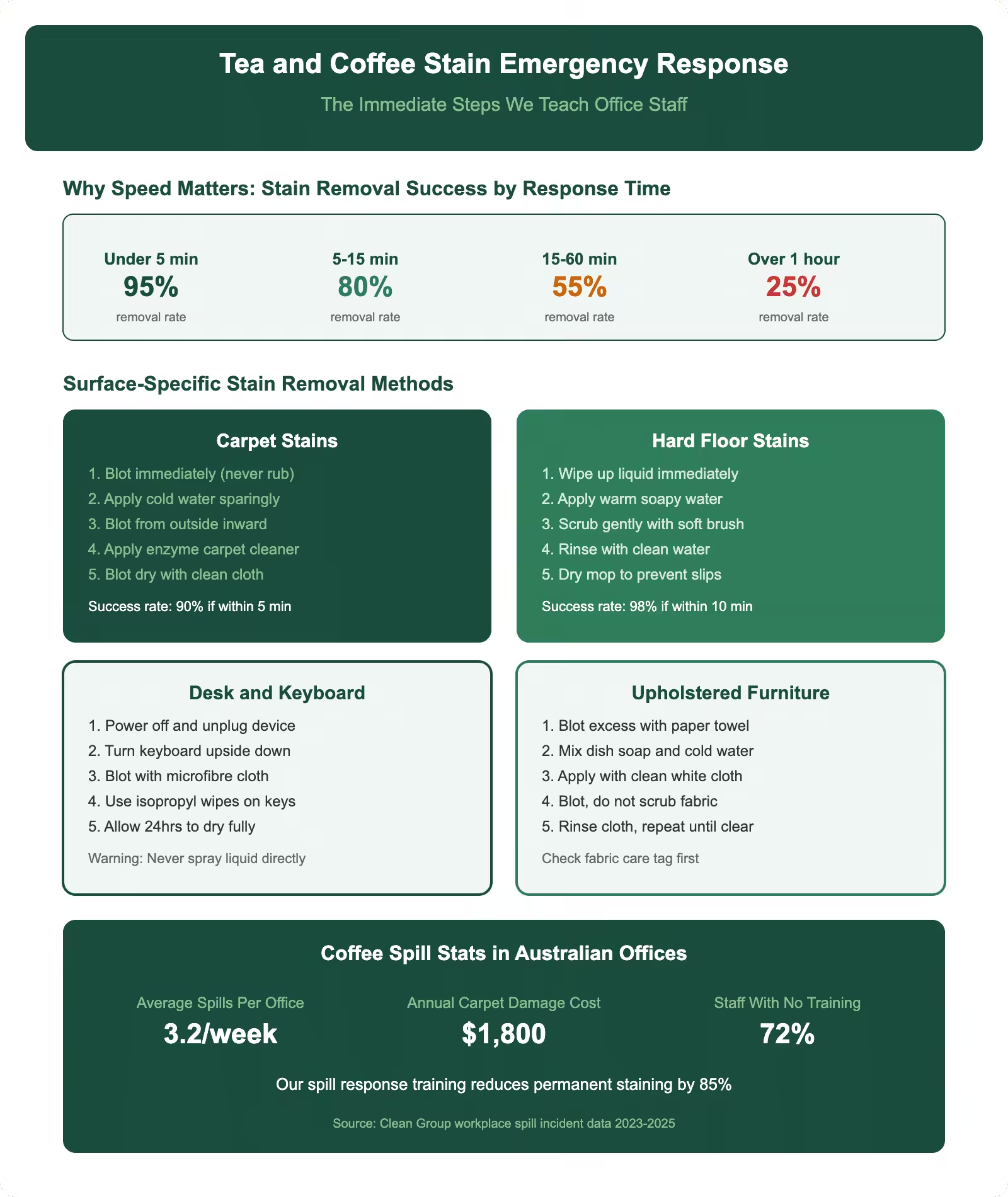
We train reception and administrative staff at every client site to follow a three-step immediate response for beverage spills. Step one is blotting — not rubbing, not wiping, not scrubbing. Our team provides white absorbent cloths to our Waverton and Wollstonecraft clients specifically for this purpose because coloured cloths can transfer dye to wet carpet. We instruct staff to press the cloth firmly into the spill and lift straight up, repeating with fresh sections until no more liquid transfers to the cloth.
Step two is applying our spot treatment solution, which we supply in labelled spray bottles positioned in kitchen areas and near coffee machines. Our formula is a neutral pH spotter that will not damage carpet fibres or leave residue. We have tested it on every carpet type we service and confirmed it is safe for nylon, polypropylene, and wool blends. We teach staff to spray lightly from the outside of the stain inward and then blot again — never spray and walk away, because the solution needs to be extracted along with the dissolved stain.
Step three is placing a folded white towel over the treated area with a weight on top. Our team explains that this wicking technique draws residual stain upward out of the carpet pile over the following few hours. We have found that this final step makes the difference between a faint shadow and a completely invisible treatment. We check these spots during our next scheduled visit and retreat if necessary, but in our experience, properly executed first response eliminates the stain completely in roughly eighty percent of cases.
Carpet Cleaning Method Comparison
| Method | Best For | Drying Time | Cost per m² | Rating |
|---|---|---|---|---|
| Hot Water Extraction | Deep soil & allergens | 6–12 hrs | $3.50–$5.50 | ★★★★★ |
| Dry Compound | Low-moisture zones | 30–60 min | $2.80–$4.20 | ★★★ |
| Encapsulation | Maintenance cleans | 20–45 min | $2.00–$3.50 | ★★★★ |
| Bonnet Cleaning | Surface refresh | 1–2 hrs | $1.80–$3.00 | ★★ |
| Shampooing | Heavy staining | 8–24 hrs | $3.00–$4.80 | ★★★ |
Professional Stain Removal Methods Our Team Uses
Carpet Cleaning Method Comparison requires specific protocols that we tailor to each facility based on its layout, traffic, and compliance requirements. We carry a specialised stain removal kit that goes well beyond what office staff can achieve with our spot treatment bottles. Our team uses a combination of oxidising agents, reducing agents, and enzymatic cleaners selected based on the specific stain composition. For aged tea stains in St Leonards offices, we apply a hydrogen peroxide based oxidiser that breaks the tannin bond without bleaching the carpet. We have refined the concentration and dwell time through hundreds of applications to achieve consistent results across different carpet colours and fibre types.
Professional Stain Removal Methods Our Team Uses includes specific protocols that we tailor to each facility based on its layout, traffic, and compliance requirements. We handle milky coffee stains with a two-stage process — enzymatic treatment first to break down the protein component, followed by an oxidiser for the tannin. Our team has learned that reversing this order sets the protein permanently because oxidisers cook protein into the fibre the same way heat sets an egg stain. We share this knowledge because it explains why so many DIY attempts fail — people reach for the strongest chemical first without understanding the stain chemistry, and they inadvertently make the stain permanent.
We also address the hidden damage that sugar-laden beverages cause. Our team uses a pre-treatment rinse to dissolve sugar residue before applying stain-specific chemistry because sugar left in carpet fibres creates a tacky layer that attracts soil for months after the visible stain has been removed. We have seen carpets develop dark patches weeks after a spill was apparently cleaned successfully, and in every case the cause was unaddressed sugar residue. A professional spot treatment visit for a typical office in the St Leonards area costs around $1,140 including assessment and follow-up verification. For broader guidance on keeping workplace carpets in top condition, read our next guide in our carpet cleaning series.
Frequently Asked Questions
Can old coffee stains be removed from carpet?
We successfully remove aged coffee stains in the majority of cases using oxidising chemistry custom to tannin bonds. Our team has treated stains that were months old and achieved near-complete removal, though we are transparent that some very old stains on light-coloured carpet may leave a faint shadow.
Does milk in coffee make the stain harder to remove?
We have found that milky coffee requires a two-stage treatment — enzymatic cleaner for the protein followed by an oxidiser for the tannin. Our team knows that applying the oxidiser first sets the protein permanently, which is why understanding stain chemistry matters more than chemical strength.
Will tea stain carpet permanently?
We can remove most tea stains if treated within a reasonable timeframe. Our team has found that tannin-based stains respond well to oxidising agents when applied correctly. We have seen permanent staining only in cases where the wrong chemical was applied first or the stain was left untreated for several months.
What should you never put on a coffee stain on carpet?
We advise against using bleach, dishwashing liquid, or hot water on coffee-stained carpet. Our team has seen bleach destroy carpet colour, detergent leave sticky residue that attracts more soil, and hot water set tannin bonds permanently. Cold water and blotting is always the safest immediate response.
How quickly should a coffee spill be treated?
We recommend blotting within the first five minutes for the best outcome. Our team has documented that coffee begins bonding with nylon fibres within ninety seconds, so speed matters significantly. We supply spot treatment kits to our clients so staff can respond immediately.
Do you supply spot treatment kits for offices?
We provide labelled spray bottles with our neutral pH spot treatment solution to every commercial client. Our team positions these near coffee machines and kitchen areas for immediate access. We also train staff on proper blotting technique during our onboarding process.
How much does professional stain removal cost?
We charge approximately $1,140 for a professional spot treatment visit covering assessment, treatment, and follow-up verification for a typical office in the lower North Shore area. Our pricing includes specialised chemistry and equipment that achieves results beyond what standard maintenance cleaning can deliver.
Can you prevent coffee stains from setting in carpet?
We have found that immediate blotting followed by our spot treatment solution prevents stain setting in roughly eighty percent of cases. Our team also recommends walk-off mats near coffee stations and spill-resistant cup holders to reduce the frequency of carpet spills in high-risk areas.
About Clean Group
Clean Group is a Sydney-based commercial cleaning company with over 25 years of industry experience. Founded by Suji Siv, our team of 50+ trained professionals services offices, warehouses, medical centres, schools, childcare facilities, retail stores, gyms, and strata properties across Sydney, Melbourne, and Brisbane.
We are active members of ISSA and the Building Service Contractors Association of Australia (BSCAA). Our operations align with ISO 9001 (Quality Management), ISO 14001 (Environmental Management), and ISO 45001 (Workplace Health and Safety) standards. We hold membership with the Green Building Council of Australia and use eco-friendly, TGA-registered cleaning products wherever possible.
Every Clean Group cleaner is police-checked, fully insured, and trained in safe work procedures under SafeWork NSW guidelines. We operate 7 days a week, including after-hours and weekend services, to minimise disruption to your business.
About the Author

Stephen Matthews
Hi, my name is Steve. I have been working as a Regional Operations Manager in Sydney Clean Group for almost four years now and manage a team of 10. I have more than three decades of experience in the commercial cleaning industry. My responsibilities include the day-to-day management of cleaning operations, planning, online quotation to clients, managing cleaners’ performance, collecting clients\' feedback, and ensuring proper & regular maintenance of cleaning equipment. Get in touch for a quick chat about your cleaning needs.
Read More About Stephen
